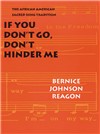
Off the Shelf: If You Don’t Go, Don’t Hinder Me by Bernice Johnson Reagon

Reagon Read from the opening essay, "Twentieth-Century Gospel: As the People Moved They Sang a New Song" in If You Don't Go, Don't Hinder Me: The African American Sacred SongTradition by Bernice Johnson Reagon:

"I joined my first and only gospel choir when I joined the church at eleven years of age. It was the first gospel choir at Mt. Early Baptist, a small rural church in Dougherty County pastored by my father, Rev. Jessie Johnson. My sister Fannie, who played the piano, organized the choir. It was 1954—gospelwas everywhere. Most of the Baptist and Pentecostal churches inside the city of Albany, the county seat of Dougherty, already had gospel choirs. However, the country churches were sometimes a decade behind the city churches."

Continue reading “Off the Shelf: If You Don’t Go, Don’t Hinder Me by Bernice Johnson Reagon”

The University of Nebraska Press has a new director

Exciting news for us. Following is the official statement about our new leader:

LINCOLN, Neb. — Donna A. Shear has been named director of the University of Nebraska Press effective March 1.

Shear has been involved with scholarly publishing for many years. She comes to the University of Nebraska-Lincoln from the Northwestern University Press in Evanston, Ill., where she has been director since 2003. She became interim director in 2002 after joining Northwestern's Press in 2000 as associate director and chief financial officer.

During her tenure at Northwestern, the Press forged alliances with other divisions of the university. Collaborations with the Block Museum, Medill School of Journalism, Kellogg School of Management and the library led to joint publishing ventures. She also led successful fundraising efforts and worked with the library to develop a scholarly communications digital repository policy.

Continue reading “The University of Nebraska Press has a new director”

Happy (early) birthday, Abraham Lincoln!

Abraham Lincoln’s birthday is still more than a month away, but we’re already celebrating. Why? Well, for a couple of reasons. Honest Abe turns 200 this February 12, which is certainly a milestone worth celebrating. In addition, Lincoln, Nebraska, is the home of the University of Nebraska Press, and we thought it would be nice to honor our community's namesake. Today through February 28, all Abraham Lincoln titles are on 25 percent off – including The Inner Life of Abraham Lincoln: Six Months at the White House. Author F. B. Carpenter was a painter who struck up a friendship with … Continue reading Happy (early) birthday, Abraham Lincoln!

Linking in Lincoln: January 15, 2009

New this month from the University of Nebraska Press: West Virginia Politics and Government, second edition. West Virginia Politics and Government offers the only recent study of politics in the Mountain State. Combining new empirical information about political behavior with a close examination of the capacity of the state’s government, this second edition is a comprehensive and pointed study of the ability of the state’s government to respond to the needs of a largely rural and relatively low-income population. The book also examines the nature of the state’s constitution and the role of governmental institutions, including the state legislature, the … Continue reading Linking in Lincoln: January 15, 2009

More Americans are reading fiction

Just more than half of American adults have read at least one novel, poem, play or short story in the past year, according to story that ran earlier this week in the New York Times. The article cites a 2008 National Endowment for the Arts survey, which found that 50.2 percent of American Adults had read at least one work of fiction in the preceding year. The last time the survey was conducted, in 2002, 46.7 percent of adults admitted to having read at least one novel, short story, poem or play. Why the increase? The article suggests several theories: Maybe … Continue reading More Americans are reading fiction

Tuesday Trivia: January 13, 2009

During his lifetime, Wyatt Earp wore many hats: buffalo hunter, bodyguard, detective, bounty hunter, gambler, boxing referee, prospector, saloon keeper, Dodge City lawman, and, most notably, participant in the famed 1881 shootout at O.K. Corral. Inventing Wyatt Earp: His Life and Many Legends, new this month from the University of Nebraska Press, explains how Earp lived a life (at times embellished) that became the stuff movies are made of.  And in fact, a movie was made about Earp in 1994. And Earp had a link to Hollywood long before that movie was made. In his later years, Earp lived in Los … Continue reading Tuesday Trivia: January 13, 2009

The Most Beautiful Man in the World

Today’s Lincoln Journal Star features a story about Paul Swan, a dancer known for as much for his physical beauty as for his talent. Swan was also the subject of a 2006 biography, The Most Beautiful Man in the World: Paul Swan, from Wilde to Warhol, written by Janis and Richard Londraville and published by the University of Nebraska Press. In addition to being a dancer, Swan was a gifted artist who painted portraits of Willa Cather, Charles Lindbergh and Benito Mussolini, among others. In 1922, he painted a portrait of a woman believed to have been his lover. But the … Continue reading The Most Beautiful Man in the World

Off the Shelf: Narrative Beginnings edited by Brian Richardson

Read from the introduction of Narrative Beginnings: Theories and Practices edited by Brian Richardson: "The beginning is a foundational element of any narrative, fictional or nonfictional, public or private, official or subversive. The full importance of beginnings, however, has long been neglected or misunderstood and is only recently becoming known. Currently, only a handful of studies address this surprisingly rich and elusive subject. Others, many of them represented in this volume, are now starting to give beginnings the historical, theoretical, and ideological analysis they require. This critical and theoretical neglect is particularly surprising given the power beginnings possess for the … Continue reading Off the Shelf: Narrative Beginnings edited by Brian Richardson

Guest blogger: Kate Flaherty

Lopate and Loren: Two Reasons to Fall in Love with the Essay All Over Again
By Kate Flaherty
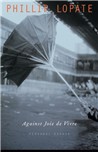
Againstjoiedevivre Let me begin by telling you I love essays. I was one of the two kids in my high school English class who was sorry when the Emerson and Thoreau unit ended. My favorite scene in the Little House books by Laura Ingalls Wilder did not have to do with her move to the great plains in a wagon or riding a wild mustang or meeting her true love Almonzo, but instead with when she was able to go to high school and write her first composition (her topic was “ambition”).

And when I first began working at Prairie Schooner, I loved everything in the magazine—poetry, interviews, stories (what can I say, I’m a bookworm)—but the essays were my favorite sons and daughters. Sydney Lea, Paul Mariani, Nancy Willard, Linda Pastan, JoAnn Beard, Maxine Kumin—these writers were the scientists of literature, examining nature or people or truth with a microscopic eye and sharing their discoveries with their readers. It didn’t matter to me if the essays were about tramping around in the Loreneiseley Vermont woods, following the descent into madness of a brilliant poet, attending a wedding in an Iowa cornfield, or dissecting the meaning behind the random murder of a family member in Detroit. I loved the attention to detail, the connections writers made between one world and others, the thoughtfulness of their meditations, and the fact (and yes, fact is an important word in the world of the essay) that it all was real.
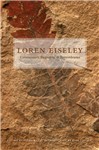
So it should be no surprise I was thrilled Bison Books has republished the collection of essays Against Joie de Vivre by Phillip Lopate, one of the modern masters of the essay form, and republished a collection of essays about poet and literary nonfiction writer Loren Eiseley, Loren Eiseley: Commentary, Biography, and Remembrance, a collection that originally was a special issue of Prairie Schooner edited by Hilda Raz. These are two distinctly different essay collections—the Lopate book is a collection of essays by Lopate, and the Eiseley book is a collection of essays by other writers about Eiseley—and yet they appeal to me for the same reasons. The work in these two books makes me want to revisit writers or worlds I have loved, seek out new writing or new worlds I have yet to discover, and meditate on my own writing and the world I live in right now. 

Continue reading “Guest blogger: Kate Flaherty”