Off the Shelf: My Ruby Slippers by Tracy Seeley
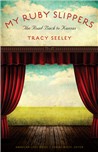
Seeley Read the beginning of Chapter 2, "The Good Land" from My Ruby Slippers: The Road Back to Kansas by Tracy Seeley:

"I shiver in the backseat in the corner against the door. I hold my cheek against the cold metal until it hurts. I hold myself very still. I am five, and we are moving away. My father drives. My mother sits next to him and says nothing. I will not look at them. Instead, I stare out the window and hear the car tires slub, slub, slub on the
red brick streets. My chest hurts. The narrow dark windows of my school slide by—window, window, window, window. I can’t see in. But I know that Mrs. Little’s kindergarten is going on without me. The children are using quiet voices, cutting paper and coloring, reading and writing in the big yellow workbooks with smooth, dry pages and an elephant on the front. They are listening to stories and taking a quiet nap on cool mats with the lights turned out. I had waited a whole year for school, while my older sister fell in love with Mrs. Little and sat in a circle on the braided rug and came home singing new songs. All of that has been mine for less than half a year. I can hardly breathe. My throat aches. I do not speak or cry. We turn a corner and the brick streets end. We are moving away.

Continue reading “Off the Shelf: My Ruby Slippers by Tracy Seeley”

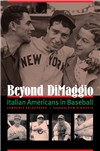
Off the Shelf: Beyond DiMaggio: Italian Americans in Baseball by Lawrence Baldassaro

Baldassaro Read the beginning of Chapter 1, "Ed Abbaticchio: Forgotten Pioneer" from Beyond DiMaggio: Italian Americans in Baseball by Lawrence Baldassaro, Foreword by Dom DiMaggio:

"In one of the first stories on Joe DiMaggio to appear in a national publication, Quentin Reynolds, associate editor of Collier’s magazine, recounted the following exchange among baseball writers covering spring training in 1936: “‘He says you pronounce it Dee-Mah-gee-o,’ one of the sports writers said gloomily. ‘That’s a very tough name to pronounce and also tough to spell,’ another added. ‘DiMaggio sounds like something you put on a steak,’ one writer said in disgust.”1

Continue reading “Off the Shelf: Beyond DiMaggio: Italian Americans in Baseball by Lawrence Baldassaro”

Off the Shelf: Christine by Laura Curtis Bullard

Bullard Read the beginning of the Introduction from Christine: Or Woman's Trials and Triumphs by Laura Curtis Bullard, edited and with an introduction by Denise M. Kohn:

"When Laura Curtis Bullard wrote Christine: Or Woman’s Trials and Triumphs she created one of antebellum America’s most radical heroines: a woman’s rights leader. Through the creation of her unconventional title character, Curtis Bullard gave voice to her own support for female suffrage, careers, and economic independence, which was termed the “woman’s rights” movement in the mid-nineteenth century and was considered scandalous, even sinful, by many Americans.1 Curtis Bullard was twenty-five when Christine, her second novel, was published in 1856, and she was the editor of a newspaper for women, the Ladies’ Visitor. She continued her career after she was married and became a mother, and in 1870 she succeeded Elizabeth Cady Stanton and Susan B. Anthony as editor of the suffrage newspaper the Revolution, publishing essays about the social problems caused by women’s inequality that she had earlier dramatized in Christine.

Continue reading “Off the Shelf: Christine by Laura Curtis Bullard”

Off the Shelf: Local Wonders by Ted Kooser

Kooser Read an excerpt from the 2011 One Book One Nebraska selection, Local Wonders: Seasons in the Bohemian Alps by Ted Kooser:

"In the weeks just before Christmas, my father’s store was busiest, its narrow aisles crowded with shoppers, its carefully arranged displays rumpled and disarrayed, and its floors slippery with melting snow. On Saturdays and when school let out in the afternoons, my sister and I helped out. She worked on the sales floor, and I made bows for the women in the gift-wrap booth.

Continue reading “Off the Shelf: Local Wonders by Ted Kooser”

Off the Shelf: Footprints in the Dust edited by Colin Burgess

Burgess Read the beginning of Chapter 1, "The Whole World Was Watching" from another featured gift book, Footprints in the Dust: The Epic Voyages of Apollo, 1969-1975 edited by Colin Burgess, foreword by Richard F. Gordon:

"The world watched and listened, breathless and mesmerized.

“Houston, this is Neil. Radio check.”

Could this really be happening? It all just seemed so . . . what’s the word for it? Unreal. That’s it. Unreal. This stuff happened in comic books, not in real life.

Continue reading “Off the Shelf: Footprints in the Dust edited by Colin Burgess”

Off the Shelf: In Trace of TR by Dan Aadland

Aadland Read the beginning of the Introduction from a freatured gift book ideaIn Trace of TR: A Montana Hunter's Journey by Dan Aadland:

"Fifty years ago I sat on a wooden rail enclosing a large observation deck behind the visitor’s center at Mount Rushmore. Encircled by a crowd of chattering siblings, so many of them that my father required us to count off military style each time we reentered the car, I watched a bedecked Sioux pose for pictures with admiring tourists. He was having a fine time, a midsummer Santa Claus with headdress, surrounded by suitors—and so were the tourists.

Continue reading “Off the Shelf: In Trace of TR by Dan Aadland”

Off the Shelf: In Search of Powder by Jeremy Evans

Evans Read the beginning of Chapter 1, "Shangri-la" from one of our featured gift books, In Search of Powder: A Story of America's Disappearing Ski Bum by Jeremy Evans, Foreword by Glen Plake:

"Shangri-la, as described by James Hilton in Lost Horizon, is a place where the mind, body, and soul is at peace, where sparkling emerald grasses spray across a mountain valley broken by tumbling waterfalls, where the people who inhabit this utopia are as virtuous as the essence of its existence. For decades this refuge, rumored to be in a secret region of Tibet, has baffled those who have sought its coordinates, but the fortunate who have found it never needed a map to locate it. In 1973, an impressionable college student named Johnny Davis, escaping a disjointed childhood in Kona, Hawaii, stumbled upon his Shangri-la.

Continue reading “Off the Shelf: In Search of Powder by Jeremy Evans”

Off the Shelf: Beneficial Bombing by Mark Clodfelter

Clodfelter Read the beginning of Chapter 1, "Genesis in the Great War" from Beneficial Bombing: The Progressive Foundations of American Air Power, 1917-1945 by Mark Clodfelter:

 "29 May 1910

On a warm Sunday morning, U.S. Military Academy cadets assembled at Trophy Point to witness a spectacular event. Aviation pioneer Glenn Curtiss had announced that he would pilot his thirty-foot-long biplane from Albany to New York and claim the New York World's prize of ten thousand dollars for making the first flight between the two cities. The initial leg of his journey had gone well: Curtiss had taken off shortly after 7:00 a.m., had stopped for fuel at Camelot, and had taken off again at 9:30. Yet as he approached Storm King Mountain a few minutes later at an altitude of one thousand feet, violent air currents above the Hudson River plummeted his frail craft to within fifty feet of the water. He struggled with the flight controls to prevent a further loss of altitude and, as he did so, flew past West Point. His dive hid the airplane from the cadets’ view and caused them to run to Cullum Hall, perched high on a bluff overlooking the Hudson. From there they could clearly see the tiny craft, the first flying machine that most of them had ever witnessed. Oblivious to the pilot’s difficulty, the cadets tossed their caps into the air and shouted their favorite football cheer, with a slight modification: “Rah, rah, ray!
Rah, rah, ray! West Point, West Point, Armay! Curtiss! Curtiss! Curtiss!”1

Continue reading “Off the Shelf: Beneficial Bombing by Mark Clodfelter”

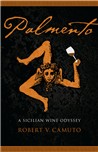
Off the Shelf: Palmento by Robert V. Camuto

Palmento Read the beginning of Chapter 1, "Benvenuti in Sicilia" from one of our featured holiday gift books, Palmento: A Sicilian Wine Odyssey by Robert V. Camuto:

"I had arrived in Sicily only a few hours earlier, and on the drive to dinner I would break more laws than I had violated during any prior twenty minutes of my life. Indeed, I could always say that I was an innocent straniero merely following a lawless guide in Valeria, the waif with the brick-sized monogrammed Dolce & Gabbana belt buckle and the ever-singing telefonino, who greeted me at Azienda Agricola COS, which I’d chosen as my first stop in Sicily for all noble reasons. I was here because—more than two and a half decades after its founding by a group of university friends—COS had become a thriving symbol of the new Sicily. Its wines were fashionably sipped in cosmopolitan capitals the world over, and COS was considered on the cutting edge of the growing and wholesome natural wine movement. Indigenous grape varietals were farmed biodynamically (using herbal tea treatments and a few practices that resembled alchemy tied to the phases of the moon) and wines were produced with naturally occurring yeasts found in grapes and with minimal added sulfur (sulfites). More than that—burnishing COS’s authenticity credentials—the winery had been fermenting some of its wines not in wood barrels or steel or cement vats but in clay amphorae, a process reminiscent of the Greeks who had first settled Sicily; and therefore it elevated my role here to something like an epicurean archaeologist.

Continue reading “Off the Shelf: Palmento by Robert V. Camuto”

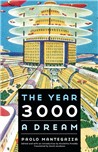
Off the Shelf: The Year 3000 by Paolo Mantegazza

Mantegazza Read the beginning of Chapter 1 from The Year 3000: A Dream by Paolo Mantegazza, edited and with an introduction by Nicoletta Pireddu, translated by David Jacobson:

"Paolo and Maria left Rome, capital of the United States of Europe, in the largest of their aerotachs, the one intended for long trips.

This is an electrically run airship. By releasing a spring, they convert the two comfortable armchairs in the middle of the ship into quite comfortable beds. Opposite the chair-beds are a compass, a small table, and a quadrant bearing the three words motion, heat, light.

Continue reading “Off the Shelf: The Year 3000 by Paolo Mantegazza”