Off the Shelf: Stolen Horses by Dan O’Brien

Stolen Horses cover image
Read the beginning of the first chapter from Stolen Horses by Dan O'Brien:

"Since Erwin Benson was a young man he has been an early riser. Belief that the darkness would cease and that the sun was on its way made him hopeful and was as close to religion as he ever managed. From time to time he wished he could believe in more. He always knew that such a leap would have made life easier, but he could never take that leap and had to settle for the predawn. His early morning ritual has served him well enough. He was eighty-five years old and still working. Already this morning he made his way in the dark from his house on Calvert Street to his office in the Lakota County courthouse. He moved through the inky air like a blind man in his own home, navigated by the scent of waning lilac and columbine. By feel he found the office key on a ring of many. Without switching on the light, he puttered with the coffeepot and wandered the three rooms of the county prosecutor’s office waiting for it to perk. He glanced out the window and was pleased to find the darkness still exhilarating. There was still the sense of risk. There was a chance that today was the day the sun would not rise. Rising early was an act of faith.

Continue reading “Off the Shelf: Stolen Horses by Dan O’Brien”

Off the Shelf: Corkscrewed by Robert V. Camuto

Corkscrewed cover image New in paperback, read from the Introduction to Corkscrewed: Adventures in the New French Wine Country by Robert V. Camuto:

"It was a perfect day to lose faith in wine. By midmorning on June 21, 2005, the heat and humidity were conspiring to make it another in a series of stifling hot days in Bordeaux. I’d set out from Saint-Émilion in my tiny Citroën rental car—windows rolled down to make up for the lack of air conditioning—en route to Vinexpo, the world’s largest wine convention held once every two years in the sprawling convention site north of the city.

Continue reading “Off the Shelf: Corkscrewed by Robert V. Camuto”

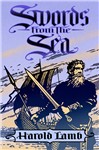
Off the Shelf: Swords from the Sea by Harold Lamb

Swords from the Sea cover image Read the beginning of the Introduction from Swords from the Sea by Harold Lamb, edited by Howard Andrew Jones, Introduction by S. M. Stirling:

"One thing we tend to forget about the pulps was how many of them there were, and how much was written for them. The science-fiction and fantasy segments and the superhero pulps remain freshest in memory, because they were at the root of traditions that have continued and flourished ever since; and the Western, if not in such condition, is not forgotten. But in fact, the adventure pulps contained dozens of distinct subgenres: Western, Oriental, Detective, South Seas, any number of historical types such as the pirate story or the tale of the Crusades. And miscegenation in plenty—tales of detectives having adventures in Chinatown, for example, or of super-science set among Tibetan mahatmas (the last a specialty of Talbot Mundy, a contemporary of Lamb’s), or psychic Chinese detectives involving “spicy” tales of white slavery.

Continue reading “Off the Shelf: Swords from the Sea by Harold Lamb”

Off the Shelf: Nature’s Aristocracy by Jennie Collins

Read from the Editor's Introduction to Nature's Aristocracy: A Plea for the Oppressed by Jennie Collins, edited and with an introduction by Judith A. Ranta: "Jennie Collins wrote Nature’s Aristocracy; or, Battles and Wounds in Time of Peace: A Plea for the Oppressed at a time when questions about the meaning of work and about relations between labor and capital were being passionately debated. During the headlong postbellum expansion of American industry, people struggled to understand the changing workplace. One journalist wrote in 1869, “It is becoming more and more plain, and being more and more freely admitted, that this … Continue reading Off the Shelf: Nature’s Aristocracy by Jennie Collins

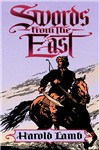
Off the Shelf: Swords from the East by Harold Lamb

Swords from the East cover image Read from the Foreword to Swords from the East by Harold Lamb, edited by Howard Andrew Jones:

"Harold Lamb wrote that he’d found something “gorgeous and new” when he discovered chronicles of Asian history in the libraries of Columbia University. He remained fascinated with the East thereafter, which is evident from his first stories of western adventurers in Asia to the last book published before his death in 1962, Babur the Tiger. All of his popular fiction is anchored in Asia, whether it be the cycle of Khlit the Cossack, descended from the Tatar hero Kaidu, or Durandal’s Sir Hugh of Taranto, who travels into Asia during the conquests of Genghis Khan, or even the adventures of Genghis Khan himself, as related in “The Three Palladins” in this volume.

Continue reading “Off the Shelf: Swords from the East by Harold Lamb”

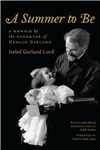
Off the Shelf: A Summer to Be by Isabel Garland Lord

A Summer to Be Cover image Read the beginning of the Introduction from A Summer to Be: A Memoir by the Daughter of Hamlin Garland by Isabel Garland Lord, edited and with an introduction by Keith Newlin:

"Readers who come to A Summer to Be because of an interest in Hamlin Garland will discover a fascinating side of the writer that he never revealed in his eight volumes of autobiography—the intensely-loving, domineering father whose deep love for his eldest daughter led him to change the trajectory of his career even as that love impeded his daughter's independence. Garland was ill equipped by temperament for marriage and fatherhood, to which he came late, marrying in 1899 at age thirty-nine. He had spent his adulthood in almost incessant travel as he fulfilled lecture engagements and indulged his own wanderlust by exploring the West, by visiting the goldfields in the Yukon, and by journeying to England to meet the authors with whom he had been corresponding. As he entered his fourth decade, he found it difficult to break his solitary habits and enter the inevitable compromises of marriage and family life. Though he was a devoted father who spared no effort to ease the passage into adulthood of his two daughters, Mary Isabel, born in 1903, and Constance, born in 1907, his fatherly guidance was as often overbearing as it was loving—as Isabel (who dropped her first name in her late teens) amply illustrates in her memoir.

Continue reading “Off the Shelf: A Summer to Be by Isabel Garland Lord”

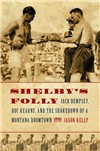
Off the Shelf: Shelby’s Folly by Jason Kelly

Shelby's Folly cover image Read the beginning of Chapter 1, "High Noon in Shelby", from Shelby's Folly: Jack Dempsey, Doc Kearns, and the Shakedown of a Montana Boomtown by Jason Kelly:

"Dust kicked up around Shelby, Montana, at dawn on July 4, 1923, as thousands of people started venturing into the streets. From cots in overcrowded hotel lobbies, sleeping cars on railroad sidings, and campsites along the Marias River, boxing fans awakened to a holiday festival before the heavyweight championship fight between Jack Dempsey and Tommy Gibbons. Still more arrived by train and car, clogging the town that had hoped for many more free-spending tourists despite having no place to put them.

Continue reading “Off the Shelf: Shelby’s Folly by Jason Kelly”

Off the Shelf: In the School of War by Roger J. Spiller

SpillerRead from the introduction to In the School of War by Roger J. Spiller:

"After artillery deploys for battle, arranges itself into batteries, a commander usually orders a ranging shot, a round or two meant to estimate how far his guns will reach. Or so it was before modern science intervened. Although we don’t know for sure, someone among Henry V’s archers at Agincourt—masters of the lethal, indirect firepower that would turn that day in his favor—must have fired such a shot, adding one more tactical detail to the King’s picture of the field where he and his men were about to fight. Centuries later, Robert E. Lee reserved to himself the order for the first shot as he looked over the open fields at Fredericksburg and General Burnside’s Grand Divisions forming for their attack. In those days, after throwing a few cannonballs in the enemy’s direction, a commander could see for himself just when the enemy’s advancing troops might fall under the shadow of his imaginary artillery fan. Then he could decide whether to open up his artillery to spoil the attack or, waiting longer, to kill it outright—the “it” being hundreds or even thousands of other human beings.

Continue reading “Off the Shelf: In the School of War by Roger J. Spiller”

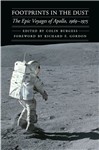
Off the Shelf: Footprints in the Dust edited by Colin Burgess

Footprints in the Dust cover imageRead the beginning of the Prologue, "Realization of a Dream of Ages" by Colin Burgess from Footprints in the Dust: The Epic Voyages of Apollo, 1969-1975:

"It was the spring of 1961, and the United States was in desperate need of some good news. The nation was experiencing considerable pain and undergoing an inescapable insight, with a mounting number of civil rights protests highlighting a desire for profound attitudinal change. At the heart of this movement was the spreading use of nonviolent “sit-ins,” for the most part courageously led by young black college students protesting against enforced segregation in department stores, supermarkets, theaters, libraries, and elsewhere. Over the next few years these demonstrations would escalate in size and turmoil, often marred by violence, deaths, and bloody divisions across the nation.

Continue reading “Off the Shelf: Footprints in the Dust edited by Colin Burgess”

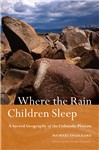
Off the Shelf: Where the Rain Children Sleep by Michael Engelhard

Where the Rain Children Sleep cover image
Read from "Skiing Walhalla" in Where the Rain Children Sleep: A Sacred Geography of the Colorado Plateau by Michael Engelhard with new essays and a new preface by the author:

"I awaken to dishwater light and the SHUSHing of snow sliding down the tent fly. Poking my head through the entrance I find our campsite muffled by cloudbanks. Already, Kate hovers near the canyon rim, eager to capture the sweet light of morning with her camera. By the time I’ve wriggled into my ski pants—condensation showering me from the domed ceiling—and coffee is steaming on the stove, there is movement in the abyss. Wet shrouds drag across ponderosa-clad slopes. Where the fabric thins, the sun bleeds through in an amorphous smear. Elsewhere, gashes reveal Toroweap ridges and pinnacles perched atop raw-boned Coconino scarps. To the northeast, a thick broth spills across the Painted Desert, barely contained by the glowing rim of Vermilion and Echo cliffs.

Continue reading “Off the Shelf: Where the Rain Children Sleep by Michael Engelhard”