Off the Shelf: More Than Winning by Tom Osborne

Read from the new introduction to More Than Winning by Tom Osborne with John E. Roberts: "Following the 1983 football season I was approached by a publisher to write a book. I was asked to write about my life experiences, starting with my formative years on through coaching the Nebraska Cornhusker football team. Special emphasis was placed on my years as head coach at the university from 1973-83. Jack Roberts, who at that time was working with the Fellowship of Christian Athletes in Kansas City, Missouri, agreed to help write the book. Jack and I had a series of interviews, … Continue reading Off the Shelf: More Than Winning by Tom Osborne


Off the Shelf: Call Me Ahab by Anne Finger

Finger Read from "Helen and Frida" in Call Me Ahab: A Short Story Collection by Anne Finger:

"I’m lying on the couch downstairs in the tv room in the house where I grew up, a farmhouse with sloping floors in upstate New York. I’m nine years old. I’ve had surgery, and I’m home, my leg in a plaster cast. Everyone else is off at work or school. My mother re-covered this couch by hemming a piece of fabric that she bought from a bin at the Woolworth’s in Utica (“Bargains! Bargains! Bargains! Remnants Priced as Marked”) and laying it over the torn upholstery. Autumn leaves—carrot, jaundice, brick—drift sluggishly across a liver-brown background. I’m watching the Million Dollar Movie on our black-and-white television: today it’s Singin’ in the Rain. These movies always make me think of the world that my mother lived in before I was born, a world where women wore hats and gloves and had cinched-waist suits with padded shoulders as if they were in the army. My mother told me that in The Little Colonel Shirley Temple had pointed her finger and said, “As red as those roses over there,” and then the roses had turned red and everything in the movie was in color after that. I thought that was how it had been when I was born, everything in the world becoming both more vivid and more ordinary, and the black-and-white world, the world of magic and shadows, disappearing forever in my wake.

Continue reading “Off the Shelf: Call Me Ahab by Anne Finger”

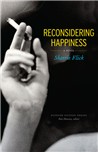
Off the Shelf: Reconsidering Happiness by Sherrie Flick

Reconsidering Happiness cover image Read from the first chapter of Reconsidering Happiness: A Novel by Sherrie Flick:

"Vivette knew nothing about Des Moines except for the lovely ease of the letters—the way its name sounded out like a yoga chant, exotic and foreign. Des Moines, with those silent s’s beckoning with a sexy finger, a promise. It whispered to her as she lay in her tousled New Hampshire bedsheets. The wooden shutters on her windows escorting cross-stitched moonlight across the dusty floor. The tugboats, with their deep-throated howls, stretched at their moors, the buoys offering cowbell clangs. Des Moines. Des Moines. Her friends thought she was crazy.

Continue reading “Off the Shelf: Reconsidering Happiness by Sherrie Flick”

Off the Shelf: Rock, Water, Wild: An Alaskan Life by Nancy Lord

Rock, Water, Wild cover image Read from "Being Peter" in Rock, Water, Wild: An Alaskan Life by Nancy Lord:

"In John McPhee’s 1977 classic, Coming Into the Country, he describes a typical Alaskan yard full of tarps, tires, oil drums, and dismantled snow machines, and comments that “when you drive along an old back road in the Lower Forty-Eight and come across a yard full of manufactured debris. . . you have come upon a fragment of Alaska. The people inside are Alaskans who have not yet left for the north.” He’s not mean-spirited in this; he makes an honest and reasonably accurate observation about what it takes to live in the north.

Continue reading “Off the Shelf: Rock, Water, Wild: An Alaskan Life by Nancy Lord”

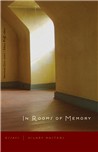
Off the Shelf: In Rooms of Memory by Hilary Masters

Masters Read from "Going to Cuba" in the forthcoming book, In Rooms of Memory: Essays by Hilary Masters:

" “Where is the Isle of Pines?” It is August of 1951, and the basement dive of Louis’s on Sheridan Square is a frosty enclave within the steamed province of Greenwich Village. Rosemary Clooney is singing “C’mon to My House,” and the woman who has just sat down at my table has jumped up to dance to the quasi-Arabic melody, swaying in her summer dress to the blast of the jukebox. No one takes any notice of her; she moves within a cell of her own, a figurine turning within a bell jar.

Continue reading “Off the Shelf: In Rooms of Memory by Hilary Masters”

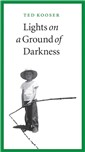
Off the Shelf: Lights on a Ground of Darkness by Ted Kooser

KooserLights Read from Ted Kooser's forthcoming book, Lights on a Ground of Darkness:

"Summer, 1949. Above the Mississippi, the noon sun bleaches the blue from a cloudless midsummer sky. So high in their flight that they might be no more than tiny motes afloat on the surface of the eye, a few cliff swallows dive and roll. At the base of the shadowy bluffs a highway weaves through the valley, its surface shimmering like a field of wheat; to the south, a semi loaded with squealing hogs shifts down for the slow crawl up out of the bottoms and into the bright, flat cornfields of eastern Iowa. The bitter odor of exhaust clings like spider webs to the long grass lining the shoulders of the road. Toward the top of the grade the sound of the engine levels out into a brash and steady saxophone note that rattles back through the cut, and then, with a fading whine, the truck is gone, leaving the hot road shining empty down the length of the valley.

Continue reading “Off the Shelf: Lights on a Ground of Darkness by Ted Kooser”

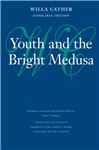
Off the Shelf: Youth and the Bright Medusa by Willa Cather

Youth and the Bright Medusa cover image Read from "Coming, Aphrodite!" in the Willa Cather Scholarly Edition of Youth and the Bright Medusa:

"Don hedger had lived for four years on the top floor of an old house on the south side of Washington Square, and nobody had ever disturbed him. He occupied one big room with no outside exposure excepton the north, where he had built in a many-paned studio window that looked upon a court and upon the roofs and walls of other buildings. His room was very cheerless, since he never got a ray of direct sunlight; the south corners were always in shadow. In one of the corners was a clothes closet, built against the partition, in another a wide divan, serving as a seat by day and a bed by night. In the front corner, the one farther from the window, was a sink, and a table with two gas burners where he sometimes cooked his food. There, too, in the perpetual dusk, was the dog’s bed, and often a bone or two for his comfort.

Continue reading “Off the Shelf: Youth and the Bright Medusa by Willa Cather”

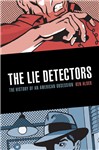
Off the Shelf: The Lie Detectors by Ken Alder

Lie Detectors cover image Read from Chapter 1, "Science Nabs Sorority Sneak", from The Lie Detectors: The History of an American Obsession by Ken Alder:

"The case had all the signs of an inside job. One of the ninety young women in College Hall was a sneak thief. For several months, someone had been filching personal possessions from the rooms of her dorm sisters: silk underthings, registered letters, fancy jewelry, cash. It was the springtime of the Jazz Age in 1921, and young women were returning to the boardinghouse on the campus at Berkeley to find their evening gowns spread out on their beds, as if someone had been sizing them up. A sophomore from Bakersfield had been robbed of $45 she had hidden inside a textbook; a freshman from Lodi lost money and jewelry valued at $100; and Margaret Taylor, a freshman from San Diego, could not find her diamond ring worth $400—though she wondered whether she had simply misplaced it.

Continue reading “Off the Shelf: The Lie Detectors by Ken Alder”

Off the Shelf: Mexicans in Revolution, 1910-1946 by William H. Beezley and Colin M. MacLachlan

Beezley Read from the introduction of Mexicans in Revolution, 1910-1946: An Introduction by William H. Beezley and Colin M. MacLachlan:

"For Mexicans in general, but especially those in the capital city, the late summer of 1910 brought the inauguration of new buildings, monuments, and institutions (including an insane asylum) to commemorate independence. The grand national celebration was held on September 16, with parades and speeches that drew official and unofficial visitors from Europe, the United States, Latin America, and Asia, particularly Japan. The centennial parades highlighted the story of Mexico’s past, through the stages of ancient Aztec glories, colonial civilizing efforts, and the Porfirian creation of a cosmopolitan nation. Through it all, the elderly president remained remote; the patriarchal patriot had seemingly become detached from daily activities, serving only as the national symbol. As the Díaz regime basked in the afterglow of the centennial celebrations, on November 20 insurrectionary battles erupted in distant Chihuahua and the revolution sputtered to life.

Continue reading “Off the Shelf: Mexicans in Revolution, 1910-1946 by William H. Beezley and Colin M. MacLachlan”

Off the Shelf: The Age of the Ship of the Line by Jonathan R. Dull

Read from the Preface of The Age of the Ship of the Line: The British and French Navies, 1650-1815 by Jonathan R. Dull: "Between 1689 and 1815 the British (or initially the English allied with the Scots) fought seven wars against France. Their navies played an important, sometimes critical, role. The power of the rival navies was based chiefly on their ships of the line, great wooden warships carrying two or three tiers of iron or brass cannon. The age of the ship of the line is largely the story of the navies of Britain and France, the two powers … Continue reading Off the Shelf: The Age of the Ship of the Line by Jonathan R. Dull