From the desk of Jared Carter: Braking for Poetry

Jared_CarterJared Carter has received the Walt Whitman Award of the Academy of American Poets, the Poets’ Prize, a fellowship from the John Simon Guggenheim Memorial Foundation, and two literary fellowships from the National Endowment for the Arts. His newest book, Darkened Rooms of Summer, is a collection of poems that conjures the landscape of the Midwest and the lives of everyday Midwesterners.

I have no prior experience with National Poetry Month, but I did do a bit of promotion for poetry back in the 1980s. In those days I had an old tan-colored Volvo station wagon that I drove around the Midwest, occasionally giving poetry readings to just about anyone who would listen.

This in itself is not remarkable. But on the Volvo’s rear bumper I had affixed a sticker I had found in some flea market that read, in bold capital letters, I BRAKE FOR DELMORE SCHWARTZ. The 1980s was an age of catchy bumper stickers but still, I was convinced that I had one of the most mysterious and at the same time one of the most appropriate bumper stickers an aspiring poet could ever wish for.

Looking back on those days, I realize that my only other attempt to promote poetry in general may have been the choice of location for my various book launches, all of which, curiously enough, took place during the month of April.

In April of 1981 my first book was launched at a cocktail party in Greenwich Village, hosted by my agent. The book was published by Macmillan and my agent got me an advance of a hundred dollars, which wasn’t bad in those days. It was a nice party, too. Courtesy of the publisher, all of my East-Coast friends attending were given free copies of the new book, which I was told was an old New York publishing custom. I can assure you that no freebies are passed out at book launches today.

Continue reading “From the desk of Jared Carter: Braking for Poetry”

From the desk of Al Clark: Instant Replay in MLB

ClarkAl Clark was a professional umpire for thirty years, working more than three thousand games, including two All-Star Games, seven playoff series, and two World Series. Called Out But Safe (May 1, 2014) is his autobiography written with former AP sportswriter Dan Schlossberg. Below, Clark writes about the new “instant reply.” 

One of the great powers baseball holds for all its fans—from the little leaguers to the major leaguers—is continuity and consistency. From year to year and even decade to decade, the fans know not many changes will occur. Sure, some changes come in order to enhance fan interest, like holding more playoff games, or holding night games at Wrigley Field, or even league realignments to create regional rivalries, like the change made by the Houston Astros when they joined the American League to create a natural rivalry with the Texas Rangers of Arlington.

But seldom do the Lords of Baseball—the commissioner and the owners—change the rules of the game and parameters as they have done this year. The last time a baseball rule was changed was in the 1970s, when the American League adopted the Designated Hitter (DH) rule. This year “Instant Replay” has been adopted to ensure against certain plays being decided incorrectly by the umpires, and it has altered how a runner trying to score can “attack” home plate when the catcher has possession of the ball or how a catcher can position himself when waiting to receive a throw from another fielder.

Continue reading “From the desk of Al Clark: Instant Replay in MLB”

From the desk of Emily Levine

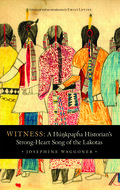
WaggonerEmily Levine is an independent scholar and the editor of Witness: A Húŋkpapȟa Historian’s Strong-Heart Song of the Lakotas.

I am privileged and honored to be the editor of Josephine Waggoner’s monumental life’s work. What historian would say no to editing one of the few new Native manuscripts to come to light in recent decades? What historian would say no to bringing to publication the voluminous work of a Hunkpapa historian long unrecognized? What historian would say no to taking on this work when asked to do so by members of the woman’s family? Looking back, I am chagrined to say, this one. While I was pleased with my work on Waggoner’s collaboration with Susan Bettelyoun, published as With My Own Eyes: A Lakota Woman Tells Her People’s History (University of Nebraska Press, 1998), I was not ready to undertake another long-term project and had work of my own that I was interested in pursuing. I think I actually said no twice before I gave in and agreed to compile and edit this new manuscript material.

Would I have agreed if I’d known it would be a thirteen-year-long labor of love, consuming time and resources I often didn’t have? That it would take over my life and become a single-minded pursuit? I believe there is truth in what members of Josephine’s family have told me: that I was the one meant to do this work and that I cared enough to do it justice. Perhaps it helped that I am not an academic, that I could work without deadlines, that no promotion or tenure considerations were involved, and that I did not suffer the scrutiny of colleagues. My loyalty lay only with Josephine Waggoner, her family, and the Lakota people.

Continue reading “From the desk of Emily Levine”

From the desk of Ravi K. Perry: Black History Month

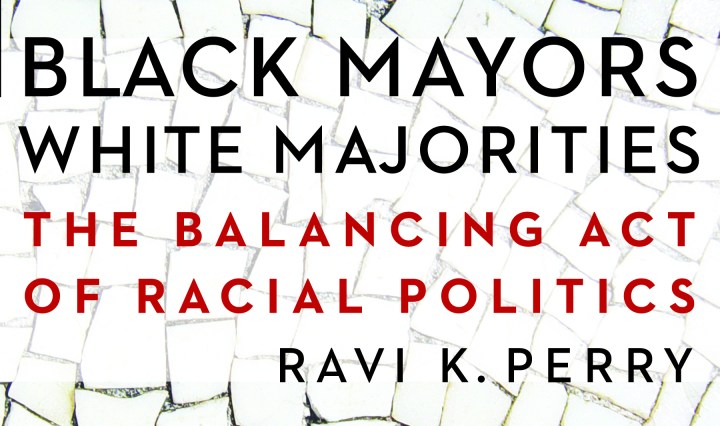
Ravi K. Perry (PhD, Brown University, 2009) is an assistant professor of political science and Stennis Scholar for Municipal Governance at Mississippi State University. He is the editor of 21st Century Urban Race Politics: Representing Minorities as Universal Interests (Emerald Group, forthcoming). Building Community in … Continue reading From the desk of Ravi K. Perry: Black History Month

From the desk of Jeremy Evans: The New Kids of the 2014 Winter Olympics

Jeremy Evans is the author of In Search of Powder, a book on ski and snowboard culture. He lives in South Lake Tahoe, California. While the first headlines for the 2014 Winter Olympics were focused on security issues—and rightfully so—less has been made about the 12 events making their debut in Sochi, Russia. That’s unfortunate since U.S. athletes are serious gold-medal contenders in the events Olympics organizers added to help capture a younger demographic: ski halfpipe, ski slopestyle, and snowboard slopestyle. In ski halfpipe, David Wise and Maddie Bowman are gold medal favorites in the men’s and women’s competitions, respectively. Wise, … Continue reading From the desk of Jeremy Evans: The New Kids of the 2014 Winter Olympics

From the desk of Mimi Schwartz: What My Readers Have Taught Me

A short version of this essay first appeared in “Take Note” section of The Writer, January 2014. Mimi Schwartz is the author of 6 books, most recently the second edition of Writing True, the Art and Craft of Creative Nonfiction (co-authored with Sondra Perl). She is currently at work on a new essay collection, When History Gets Personalwhich will include this essay. Her essays have been widely anthologized and seven of them have been Notables in Best American Essays.

I write to figure life out—and consider a memoir or essay finished when I can say, “That’s it! I got it right on the page.”  But my assumption is premature, I’ve discovered, because after publication I find out new things—from my readers. What they tell me about what I wrote keeps enlarging what “getting it right on the page” means.

Take the woman who asked me to sign a book at my first reading from Thoughts from a Queen-Sized Bed (American Lives Series, University of Nebraska Press)about life in a long marriage. The woman was my age and said in a lilting voice: “I so identified with your arguments about how much to leave the window open in February—two inches or less!” I assumed she was a New Jersey wife like me until, with more lilt, she said: “Make it out to Sister Irene.” She was a nun from Ireland. Then a young man with a ring in his nose told me enthusiastically that he was a morning person like me and his partner was a night person just like Stu, my husband. I should make the inscription to Mike and Patrick.

I expected my book to appeal to the long married, newly married, and those about to take the plunge. But the common ground of relationships was much larger than I thought. People who shared a life or knew people that did (like their parents) recognized their own experiences in mine whether they slept in a single, queen, or king-sized bed.

When my next book came out, Good Neighbors, Bad Times: Echoes of My Father’s German Village (Bison Books, University of Nebraska Press), my readers surprised me again. This time who they are, where they came from, what family stories and religion they grew up with, dramatically altered the way they responded to my discoveries in a little Black Forest village of Catholics and Jews “who all got along before Hitler.” I’d first heard about this village from my father, as I was growing up in Queens, New York. I wasn’t interested until forty years later when I saw a Torah that had been rescued on Kristallnacht, not by Jews but by their Catholic neighbors. Who were they? Why did they do it? By then, my father had died so I couldn’t ask him, and so began a twelve-year quest, on three continents, in dozens of living rooms, to find out about these once good neighbors. How did they remember and live with the past? What’s true or not about memory? Was this community special?

Continue reading “From the desk of Mimi Schwartz: What My Readers Have Taught Me”

From the desk of Jason C. Anthony: Akademik Shokalskiy, Antarctic Rescue

Jason C. Anthony is the author of Hoosh: Roast Penguin, Scurvy Day, and Other Stories of Antarctic Cuisine, an exploration of Antarctic history and contemporary Antarctic life through the medium of food.  Why has the story of the ice-trapped Akademik Shokalskiy turned … Continue reading From the desk of Jason C. Anthony: Akademik Shokalskiy, Antarctic Rescue