Off the Shelf: The Least Cricket of Evening by Robert Vivian

VivianLeastRead the beginning of "Ghost Hallway" from The Least Cricket of Evening by Robert Vivian:

"I live in a ghost hallway. They come and go whenever they want, like the transparent, blow-away wings of bees. Their spirits hover inside this house on Mechanic Street like a twilight hue filling a wine glass. I live more or less inside their moods, which they carry behind them in traces of light that flood the panes one window at a time and in the creaky flutes of rusty hinges. The ghosts don’t say “boo” and they don’t swing chains. They’re good ghosts as far as I can tell, calm as a cup of tea, considerate and watchful and able to pay attention to the least thing for hours.

Continue reading “Off the Shelf: The Least Cricket of Evening by Robert Vivian”

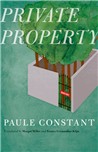
Off the Shelf: Private Property by Paule Constant

ConstantRead the beginning of Chapter 1 from Private Property by Paule Constant, translated by Margot Miller and France Grenaudier-Klijn:
 
"The senior girl was helping Tiffany adjust her celluloid collar. A quick glance at the cuffs, the pleats of the skirt. It seemed alright. They had to hurry now, to catch up with the others. They were running. The refectory was that way, and over here, the bathrooms. Now they were tearing down the stairs. The infirmary, the laundry, the chapel, the parlor. At the back the classrooms, and at the far end, the gymnasium. Back that way, the kitchens. Here the playground.

Continue reading “Off the Shelf: Private Property by Paule Constant”

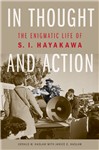
Off the Shelf: In Thought and Action: The Enigmatic Life of S. I. Hayakawa

HaslamRead the Prologue from In Thought and Action: The Enigmatic Life of S. I. Hayakawa by Gerald W. Haslam with Janice E. Haslam:

"It remains one of the most gripping images from the 1960s: bantamweight Dr. S. I. Hayakawa—plaid tam-o’-shanter ensconced on his head—scrambling onto a sound truck parked in front of the San Francisco State College campus, hoping to use it to address the assembled crowd, but ripping out speaker wires instead, and halting an illegal demonstration—or denying First Amendment rights, depending upon your perspective. Either way, he shut down the sound system. Inside the truck that day, student activist Ernie Brill was “stunned, flabbergasted.”

Continue reading “Off the Shelf: In Thought and Action: The Enigmatic Life of S. I. Hayakawa”

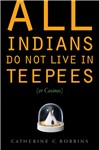
Off the Shelf: All Indians Do Not Live in Teepees (or Casinos) by Catherine C. Robbins

Robbins Read the beginning of the Introduction, "Flying Together" from All Indians Do Not Live in Teepees (or Casinos) by Catherine C. Robbins:

"In 2006 the twelve bands of the Kumeyaay-Diegueño Nation raised a new national flag—their own—at Cabrillo National Monument on San Diego’s Point Loma. For the first time, their flag took its place alongside the banners of the nations that had invaded and gained control of their land: Portugal, Spain, Mexico, and the United States. Those had flown regularly for years over historic Point Loma during an annual ceremony marking the European American arrival that had begun five centuries before. Now a Native American nation that has called the area home for millennia hoisted its own standard. The Kumeyaay-Diegueño flag flew firmly in a stiff breeze that day, a signal of the love and sacredness that American Indians attach to an occupied and besieged homeland. It also demonstrated the return of Kumeyaays to a place where historians estimate they had first set foot between eleven thousand and thirty thousand years ago. With energy and dedication plus the inspiration of one of their respected elders, Jane Dumas, they had circled back to a place they had never really left.1*

Continue reading “Off the Shelf: All Indians Do Not Live in Teepees (or Casinos) by Catherine C. Robbins”

Off the Shelf: Finding Oil by Brian Frehner

Frehner Read the beginning of the Introduction from Finding Oil: The Nature of Petroleum Geology, 1859-1920 by Brian Frehner:

"Shortly after walking over the dry west Texas plains, Jett Rink knelt on the ground while squeezing handfuls of oil-soaked dirt through his fingers and gazed in amazement at the black crude slowly bubbling to the surface. Later, Rink stood atop a cable tool drilling rig when a loud noise caught his attention. The black crude that had merely bubbled to the surface began to emit an awesome roar as it erupted from the hole Rink punctured in the earth. He stepped back to behold the spectacle he had created, as oil spewed from the earth and rained down on him. He held both hands in the air as if to thank Mother Earth for her beneficence, and jumped up and down to celebrate his good fortune.

Continue reading “Off the Shelf: Finding Oil by Brian Frehner”

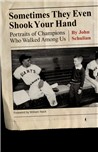
Off the Shelf: Sometimes They Even Shook Your Hand by John Schulian

Schulian Read the beginning of the Introduction from Sometimes They Even Shook Your Hand: Portraits of Champions Who Walked Among Us by John Schulian:

"In an age when it seems that no royal perk is enough for the athletes who have been crowned our heroes, the helicopter that whisks Kobe Bryant to the Lakers’ home games strikes me as more practical than self-indulgent. After all, the drive from his manse can take as long as two hours, even in a Lamborghini. What better reason to fly over the traffic jams that snarl the sprawling mess of Los Angeles, where his name and likeness are indelible in every subdivision and strip mall? L.A. is his kingdom, and a kingdom must be a hard thing to ignore when it is yours, but still I hope Kobe looks beyond it once in a while. I hope he looks until he sees the past.

Continue reading “Off the Shelf: Sometimes They Even Shook Your Hand by John Schulian”

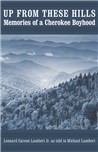
Off the Shelf: Up from These Hills: Memories of a Cherokee Boyhood

Lambert Read the beginning of "Forethoughts" from Up from These Hills: Memories of a Cherokee Boyhood by Leonard Carson Lambert Jr. As told to Michael Lambert:

"When I was young my father, Leonard Carson Lambert Jr., told us “poor stories” about his experiences growing up as an Indian on and near the reservation of the Eastern Band of Cherokee Indians in the mountains of western North Carolina. He told these stories to contrast the conditions in which he was raised with our comparatively comfortable upbringing. I caught glimpses of the world of his youth during our annual visits to my grandparents who lived on the reservation. I still remember visiting their house in Birdtown in the early 1960s. It was an old small house nestled on a hillside just above the main road. I remember dodging chickens as I walked along a narrow path that went over a stream to the outhouse. I also remember the cove where my grandfather built the family home in the 1930s. It was still standing in the late 1990s, and every so often we would trek over the Oconuluftee River and follow the road up the mountainside to see it. Despite the fact that over the years additions had been made to the original house, it remained a modest structure until it was taken down in the late 1990s, essentially the same as the one my father knew when he was a boy. The home was nestled at the foot of a small cove that gently rose behind the house up the mountainside. You could still see the garden beds that once nourished my father’s family. I could easily imagine my father and his siblings playing on the mountainside while my grandfather tended to cattle in the barn and my grandmother washed clothes in a washbasin in the back of the house.

Continue reading “Off the Shelf: Up from These Hills: Memories of a Cherokee Boyhood”

Off the Shelf: Brassies, Mashies, and Bootleg Scotch by Bill Kilpatrick

Kilpatrick Read the beginning of "The Founding Father, Part I" from Brassies, Mashies, and Bootleg Scotch: Growing Up on America's First Heroic Golf Course by Bill Kilpatrick:

"I called him dad, Daddy when I was younger, and more often than not as the years went by I called him Pop. He called me Willie. I referred to him as my father, my dad, and the Old Man. His name was William, known as Bill, and he remains indelible in my consciousness.

Continue reading “Off the Shelf: Brassies, Mashies, and Bootleg Scotch by Bill Kilpatrick”

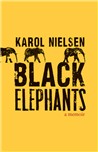
Off the Shelf: Black Elephants by Karol Nielsen

Nielsen Read the beginning of chapter 1, "The New Zealand Sheep Farmer and the Recruit" from Black Elephants: A Memoir by Karol Nielsen:

"The minivan bumped along hills that hugged Lake Titicaca. Haze made the water look silver. I sat behind Dirk, a German traveler with a ponytail. It hung to the middle of his back, streaked bronze from the South American sun. He wore dusty jeans and a tank top that skimmed his torso. Dirk was one of those hard-core travelers, the kind I’d met along the way, who took regular trips through Latin America, Africa, and the Far East. They seemed so worldly, and despite the army tanks, tear gas, and guns I’d seen during my year as a writer for an English-language newspaper in Argentina, I still felt sheltered. I was only beginning to understand the underbelly of the world, something the serious travelers seemed to have understood from birth.

Continue reading “Off the Shelf: Black Elephants by Karol Nielsen”

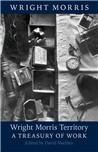
Off the Shelf: Wright Morris Territory edited by David Madden with Alicia Christensen

Morris Read the beginning of "A Man of Caliber" from Wright Morris Territory: A Treasury of Work edited by David Madden with Alicia Christensen:

This story, originally published in the Kenyon Review in 1949, is an early version of the novel The Works of Love.

"On summer nights, the window open, he could lie there and hear the hum of the wires, or the click when the semaphore changed from red to green. Then he would roll on his side, put up his head, and watch the Flyer go through. The streaming coaches made a band of yellow light on the plains. It would be a little while before the night was quiet again.

Continue reading “Off the Shelf: Wright Morris Territory edited by David Madden with Alicia Christensen”