People Make Publishing: Thanks to J. R. R. Tolkien

Rob Buchanan is the sales coordinator in the marketing department. 

I owe a huge debt of gratitude to J. R. R. Tolkien. The first adult books I ever read were The Hobbit and The Lord of the Rings trilogy. I know The Hobbit is technically a children’s book, but since it led me to The Lord of the Rings books, and goes well with them, I am including it here. These are the books that began a lifelong love of fantasy books. After reading those books I spent countless hours at the local library, hunting for new books to read. I can’t remember a lot of the books I read at that time, since it has been twenty-five to thirty years since I read them, but some left a lasting impression.

Our library had a number of metal spinning racks and I distinctly remember finding almost all of the Horseclans books by Robert Adams in them. These aren’t traditional fantasy books because they are set in a world many years after an apocalypse. I don’t recall there being any magic, but there was an occasional bit of high technology thrown in. I can’t remember which of the eighteen volumes the library didn’t have, but I still remember the frustration I felt at not being able to read the entire series. I recall the books taking place over a long period of time, following a group of immortals and the people they were guiding. This allowed the author to have a large cast of characters, since of course the immortals outlived everyone as the years passed. Every once in a while I think about going back and getting the series so I can read them again and see if they are as good as I remember. They are old enough that they aren’t in the library any longer, but a quick search of Amazon shows that they are all available, in one form or another.

Continue reading “People Make Publishing: Thanks to J. R. R. Tolkien”
The Marketeers Club: The Zeal of Reading a YA Book

“Sometimes, you read a book and it fills you with this weird evangelical zeal, and you become convinced that the shattered world will never be put back together unless and until all living humans read the book.” ―John Green, author of The Fault in Our Stars

I work in book publishing and I love to read books. This should come as no surprise. Most people who know this about me probably think that I’ve been a book worm my whole life; why else would I seek a position in the book publishing world? That, however, couldn’t be further from the truth.

When I was younger I hated reading. You couldn’t pay me enough money to sit down with a book and read just for fun. I would only read if I had to for school. I was much too busy watching Sabrina the Teenage Witch, Rugrats, Boy Meets World and all the other great shows of the 1990s. Who had time for reading?

Then, in September 1998 something miraculous happened. J.K. Rowling wrote the story of a young boy named Harry Potter. All of a sudden reading had a whole new meaning. It didn’t have to be work; I could read for fun! The Harry Potter series transported me into an imaginary world. In this world, I learned to love and care about the characters. I read these stories and instantly wanted to know more. I locked myself in my room for hours just reading away, exploring the grounds at Hogwarts, and I wasn’t alone. The Harry Potter series is one of the best-selling series in history, with more than 450 million copies sold.

Continue reading “The Marketeers Club: The Zeal of Reading a YA Book”

Doc Martyn’s Soul: The “What If?” of Marketing Multiple University Presses

University presses are silos joined in many ways by bridges of varying strength. We’re connected through what we do, who we publish, the genres in which we publish, our missions, and our sense of the importance of scholarly publishing. But we’re also disparate, competing, in a sense, against each other, hoping to sell our books to the same people that are interested in another university press’ titles. We market to the same groups, often using similar techniques. This competition forces us into a silo whereby we have to withhold information or data because there is a belief that we will lose our edge if we share such commodities. But what if university presses took a different approach?

What if, instead of keeping marketing information and data separate we actually opened our silo doors and let those crucial marketing leads and contacts leak out? Maybe we could use these leads and contacts, send them outside of the silo to see what they might find and return to us; a set of marketing carrier pigeons, if you will. Can we, in essence, market multiple university presses at once through a combined system of shared marketing efforts? The simple answer is yes. There are few reasons that cannot be skewered with logic and reason and considered argument. The simple reality is that there seems little inclination at this point to do so.

At the recent AAUP meeting in New Orleans collaboration ran the show. It was all everyone talked about. But as a few panelists noted there is little actual, real collaboration. Danny Bellet, publicity manager at Penn State University Press (PSUP), pointed to efforts they have undertaken on their own to use books from other university presses as their “also of interest” titles. PSUP believes it makes sense to highlight these competing titles because of the power of cross pollination but also because if a customer does like one of those books from the other press there is a better chance they’ll like the one from Penn State as well. Simple. And yet this is a relatively isolated incidence. MIT, Nebraska, Florida, and Purdue came together recently to create the “Up In Space” campaign and this has demonstrated some value but it is static and so rather limited in what it can do.

Continue reading “Doc Martyn’s Soul: The “What If?” of Marketing Multiple University Presses”

The Marketeers Club: Reading is fundamental—but struggling to become a priority

Tish Fobben is the direct response manager at the University of Nebraska Press. 

A recent Shelf Awareness newsletter headline caught my eye, “RIF Survey: Reading Important, but Not a Top Summer Priority.” Shelf Awareness reported “a new survey commissioned by Reading is Fundamental and Macy’s found that 17% of parents believe reading is a top summer priority and that children spend nearly three times the hours playing video games or watching TV than reading during summer vacation. . . . While summer reading may not be the top priority, 83% of respondents still considered it extremely/very important to them that their child reads this summer.

I recognize the disconnect between “very important” and a “high priority” in my own life. I just don’t expect to see it in other’s. Books have a lot of competition out there and I have been repeatedly shocked (and insulted, I’m afraid) by how compelling a TV program, computer game, or Nook app is for our five-year-old daughter, in comparison to, say, a conversation with me.  

But as a book publisher and the parent of a young child, I have to believe that reading is fundamental. (And I do.) I’ve heard experts recommend that parents model reading during the day (since children are typically in bed before their parents settle down for their own reading). Although most parents of a young child can only fantasize about the luxury of reading during the day—there is nothing as powerful (or contagious) as behavior, good or bad. Since the summer solstice I resolved to “get caught reading” by my daughter. (The days are getting shorter now—there’s no daylight left to waste!) Reading during the day goes against my longtime, frustrating tendency to save the pleasure of reading until my bedtime, at which point I doze off after a few paragraphs—thus making an “extremely important goal” a low priority.

Continue reading “The Marketeers Club: Reading is fundamental—but struggling to become a priority”

Doc Martyn’s Soul: BEA and University Presses

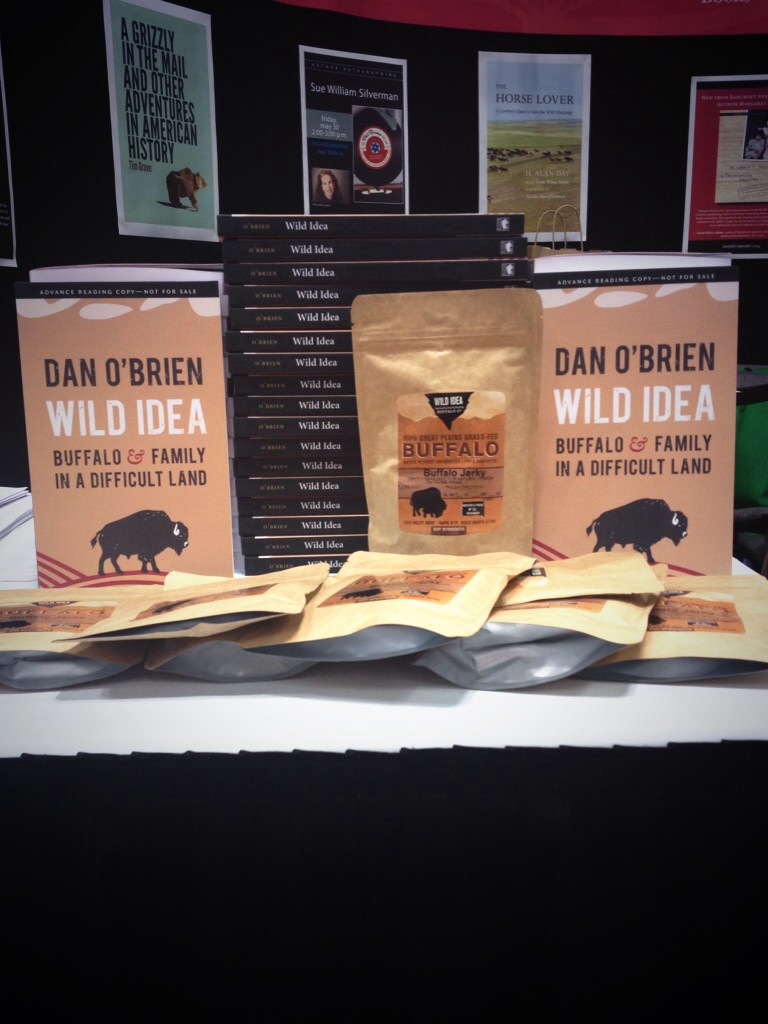
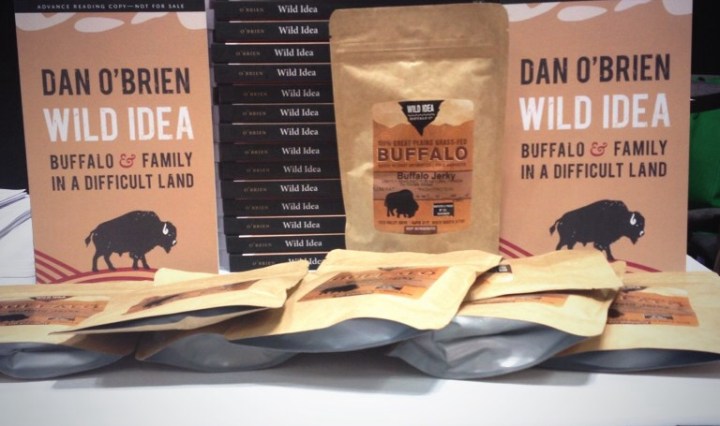
O'brien galleys from BEA 2014It already seems a long time ago, but the annual book industry melee that is BookExpo America recently came and went. BEA drew its usual crowd of industry insiders, booksellers, librarians, media, and many others, plus about eight thousand members of the paying public. Publishers took booth space in varying degrees of pomposity, striving to outdo each other’s displays so that those few key people at the show (the buyers and the media) took notice of everyone’s latest attempts to reach the top of the best seller charts. In the build up to the show, during its course, and now, a week or so later, I’ve been pondering how BEA and university presses interact–or perhaps, should interact. Having completed my eighth BEA, I should be a part of the jaded, cynical crowd that complains about the hassle of reaching the Javits Center each day (and leaving at the end of the day, which is quite truly a much worse task), the expense of being in New York for a week, the lack of book buyers placing orders any more, the downtrodden, woebegone publishing industry, and so on. But I don’t feel that way. Instead, I am invigorated each year by the sight of people worming their way through overcrowded walkways between publishers of all sizes and ilk. It is a fascinating mix of people and books, and I love it.

UNP has exhibited at BEA for many years, one of the few university presses that might claim diehard status in this regard. Gone are the oft-discussed glory years when university presses hogged whole sections in the Javits Center, when “University Press Row” was actually a row and not just a block. There were seventeen university presses exhibiting this year. UNP and the University Press of New England were the only two UPs who took a double booth, but fifteen others ranged in size from the University of Hawaii Press to Yale and Harvard. All UPs in attendance were waving their university press flags high and proud. But why? What purpose does exhibiting at BEA serve? The popular publishing cynicism that I noted earlier is not simply, truth be told, not only cynical, it is, surely, based on the quite real statistical measures that publishers can apply to exhibiting: book buyers don’t attend in the numbers they used to and they certainly don’t place on-the-floor orders in the quantity they used to. Of course, part of the lack of orders and buyers can be attributed to the decline in independent bookstores, but even those few stores don’t send their staff to BEA in the numbers they used to. So why do we still bother?

Continue reading “Doc Martyn’s Soul: BEA and University Presses”

The Marketeers Club: Do Not Eat Seeds

Erica Corwin is UNP’s Electronic Marketing Coordinator. She likes to spend her free time memorizing 74 pages of roller derby rules. In her extra free time, she gardens. I’m a bargain shopper, so when I ran across this beautiful hanging basket grow kit for $2.99, I couldn’t resist! I’m also a skeptic. I will be very surprised if my basket grows to be as beautiful as this picture, but for that price I was willing to take a chance! The steps were easy: Step 1. Unpack the kit. Step 2. Place the growing medium in a bowl and add eight … Continue reading The Marketeers Club: Do Not Eat Seeds

The Marketeers Club: Jewish American Heritage Month

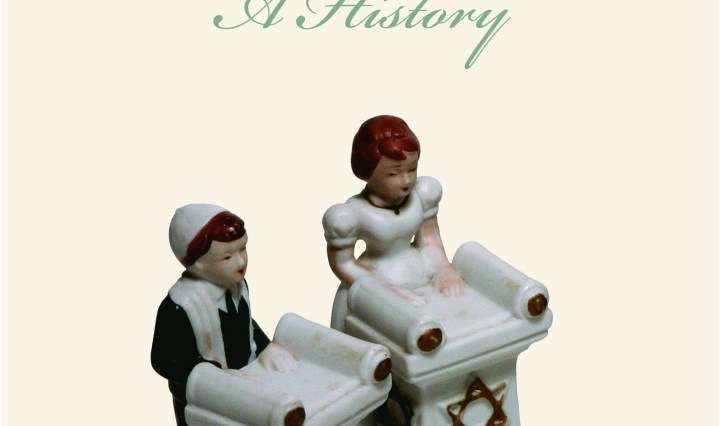
Emily Giller is UNP’s Exhibits Coordinator/Media Planner and has a secret talent for drawing and painting.  On April 20, 2006, former president George W. Bush proclaimed that May would be Jewish American Heritage Month. This proclamation gave recognition to the history of … Continue reading The Marketeers Club: Jewish American Heritage Month

The Marketeers Club: Exhibiting at the Nebraska Book Festival

Tish Fobben is UNP’s direct response manager and likes running long distances for the heck of it.

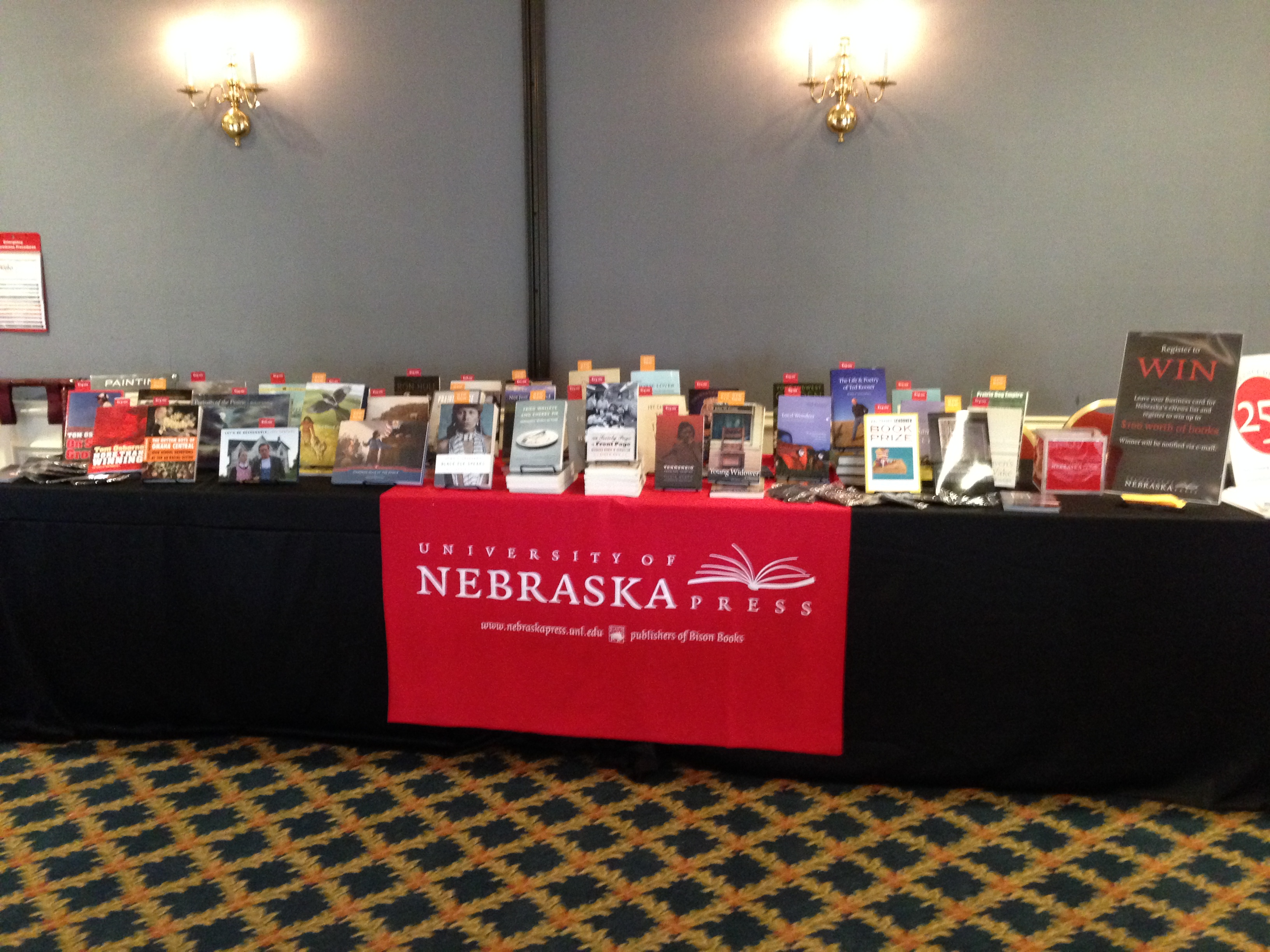
NE Book Fest 2014One of Nebraska’s many rites of spring is the Nebraska Book Festival, which is free and open to the public. Sponsored by the Nebraska Center for the Book, Humanities Nebraska, Nebraska Library Commission, Omaha Public Library, UNO’s College of Arts and Science, and Nebraska Cultural Endowment, this year the festival was held on April 24th and 25th.

After our marketing department spent Thursday and Friday moving offices, my colleague Emily Giller and I trekked to the sunny Thompson Alumni Center at University of Nebraska at Omaha on Friday night to set up UNP’s book exhibit. Though the exhibit hall did not officially open until Saturday morning, we hosted a few friendly visitors, who previewed the books before heading to the festival’s opening presentation by Don Welch, a native of Nebraska and winner of the Pablo Neruda Prize for Poetry.

On Saturday morning my colleague Rob Buchanan joined me and we did our best to entice browsers with our promotional micro-fiber cloths (for cleaning glass surfaces) and a raffle to win $100 worth of free books. On this gorgeous yet ferociously windy Saturday I found myself grateful to be indoors, protected from the pollen and surrounded by good books and good books people. The workshops started at 9 a.m. with Karen Shoemaker leading a session called “Stories into Literature” and Tosca Lee heading up one called “Creating Unforgettable Characters in Fiction.” The traffic in the exhibits hall got off to a slow start, but the people who came were very engaged with all the vendors, which included Backwaters Press, Barefoot Books, Jeff Barnes and Paul Hedron, Bookworm, Brighthorse Books, Cableone (Barbara Schmitz), Fine Lines Publishing (David Martin), Nancy Isom, Morris Publishing, the Nebraska Writers Guild, University of Nebraska Press, and Wayne State Press.

Throughout the afternoon visitors were able to attend readings from a host of authors, including Lucy Adkins, David S. Atkinson, Becky Breed, Paul Dickey, Marcia Calhoun Forecki, A. E. Fairfield, Nancy Isom, Lisa Kovanda, Kent Krause, Tosca Lee, Kelly Madigan, John Price, Jim Reisdorff, Marge Saiser, Mary K. Stillwell, Brian Thomas, Benjamin Vogt, Darrell Wendt, and Eileen Wirth.

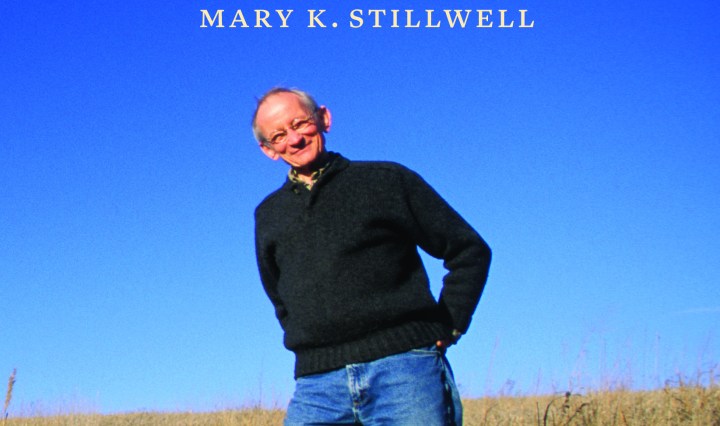
Three of the presenters were UNP authors: John Price (Not Just Any Land: A Personal and Literary Journey into the American Grasslands); Mary K. Stillwell (The Life and Poetry of Ted Kooser); and Eileen Wirth (From Society Page to Front Page: Nebraska Women in Journalism). I personally enjoyed hearing Price read from his new book, Daddy Long Legs: The Natural Education of a Father (Trumpeter, 2013), in which he recounts rescuing a praying mantis outside a restaurant at his young child’s request. His wonderfully wry memoir was precipitated by a “heart event” at age thirty-nine that caused him to reevaluate the trajectory of his life.

Continue reading “The Marketeers Club: Exhibiting at the Nebraska Book Festival”

Doc Martyn’s Soul: Publishing for the Good of Humanities

The humanities have come under fire recently, the discipline finding itself in a “war” zone according to Dr. Stephen Behrendt in his recent lecture, “What Good Are the Humanities, Anyway,” the first in the Chancellor’s Distinguished Lecture Series. Behrent’s use of the oft-overused war metaphor wasn’t simple laziness or rhetoric, it was instead, a smart, thoughtful way to direct the attention on the humanities away from the negative of battle and towards the positive of imagination, creativity, and enlightenment. Behrendt’s timely lecture set about indicating that there is hope for the humanities yet. From the perspective of publishing the humanities … Continue reading Doc Martyn’s Soul: Publishing for the Good of Humanities