William C. Kashatus is a historian, educator, and the author of more than twenty books, including Blue-Eyed Soul Brother, Lefty and Tim, and Jackie and Campy: The Untold Story of Their Rocky Relationship and the Breaking of Baseball’s Color Line. His most recent book Spitballer: Stan Coveleski and the 1920 Cleveland Indians (Nebraska 2026) was published in May.
Coveleski won three games in a single World Series using the now-illegal pitch he altered with saliva to fool opposing hitters. The 1920 season was Coveleski’s best in the Majors; that year, he posted an impressive 24-14 record and led the American League with 133 strikeouts. “Covey,” as he was affectionately known, was even better in the World Series against the Brooklyn Dodgers, when he hurled three game victories, posting a sparkling 0.67 ERA.
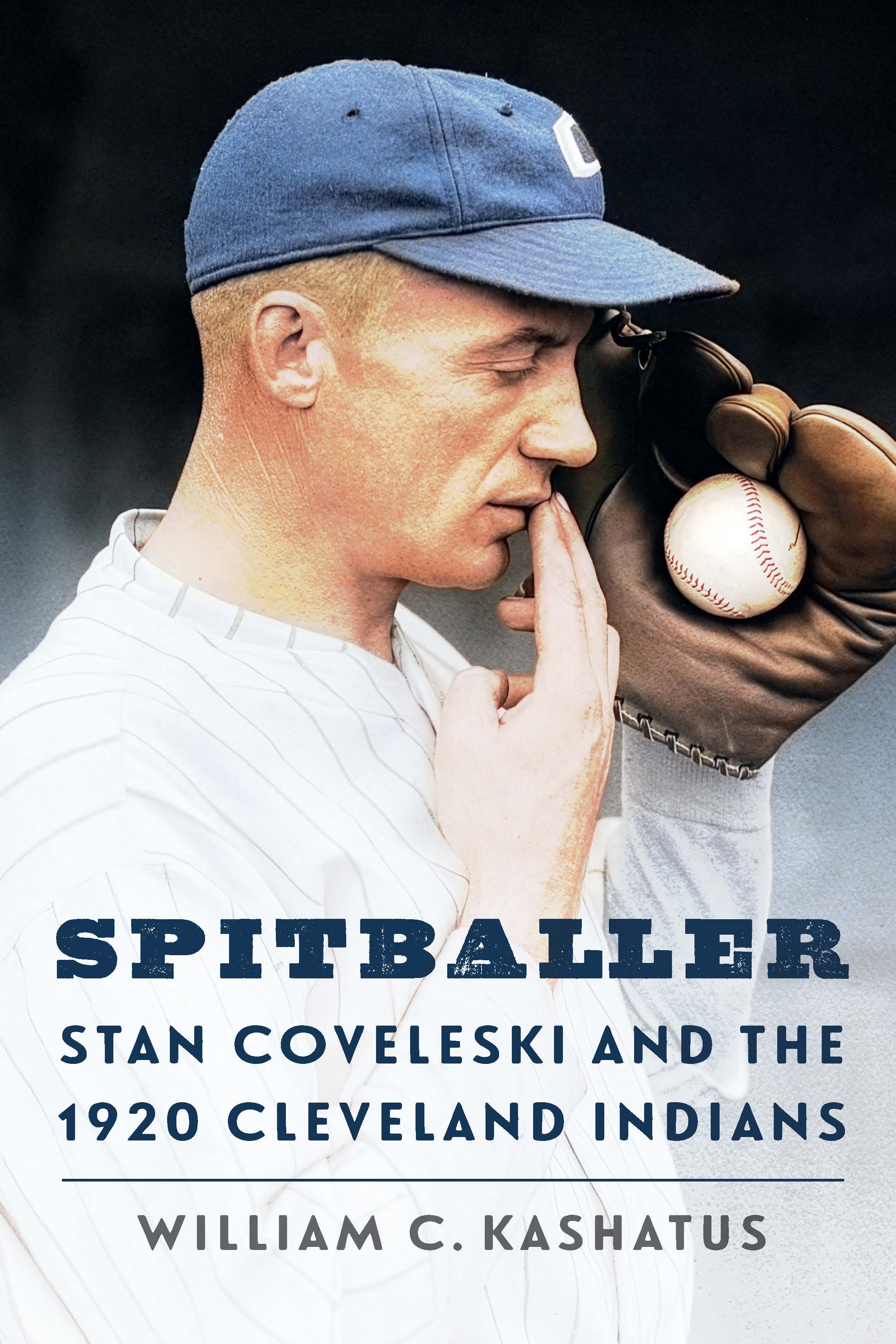
Spitballer is the biography of one of baseball’s greatest pitchers. Stan Coveleski was a quiet, modest man, the youngest and most successful of five ball-playing Polish American brothers who worked in the coal mines near their hometown of Shamokin, Pennsylvania. Hoping to escape the mines’ low wages and dangerous working conditions, Coveleski turned to professional baseball. He learned the spitball pitch during a three-year stint in the Minor Leagues after making his Major League debut with the Philadelphia Athletics in 1912.
Introduction
On the afternoon of Tuesday, October 12, 1920, the Cleveland Indians found themselves on the verge of clinching the World Series in front of the hometown faithful. Leading four games to two in the best-of-nine series, the Indians hoped to eliminate the National League pennant–winning Brooklyn Dodgers in Game Seven to give Cleveland its very first world championship.
It was a warm, sunny autumn day. Before the game, the blocks surrounding League Park were the scene of controlled pandemonium. The clanging bells of street trolleys, ooo-gahs of car horns, and shrill, piercing sounds of the traffic cops’ whistles cut the air. Fans lined up along Linwood Avenue to purchase whatever tickets remained at $5.50 apiece while the scalpers were making as much as $40 off those who were more desperate to see the game. Still others who couldn’t get in tried to find any spot they could in a tree or on a building with a clear view of the playing field.
Hoping to witness baseball history, a record crowd of 27,525 loyalists poured through the turnstiles to the joy of Indians owner James Dunn, who added temporary stands in center and right field in front of the bleachers so he could realize an even greater profit.
Indians manager Tris Speaker decided to start his No. 2 pitcher, Stanley Coveleski, for Game Seven to try and wrap up the series against Brooklyn ace Burleigh Grimes. “Covey,” as he was known to friends and teammates, was not a power pitcher. Just 5 feet 11 inches and 166 pounds, he was hardly intimidating. The key to Coveleski’s success was his remarkable control and a spitball with a devastating break when it crossed home plate. One of just seventeen pitchers allowed to continue throwing that banned pitch under a grandfather clause instituted by Major League Baseball’s Rules Committee, Stan had already tossed a complete-game five-hitter to lead the Indians past the Dodgers, 3–1, in Game One and followed up with a near carbon-copy performance in Game Four, winning 5–1.
Although Jim Bagby was Cleveland’s ace, having won thirty-one games that season, he had already lost Game Two, 3–0, against Grimes and had pitched a complete game two days earlier, winning it with a score of 8–1. Coveleski, on the other hand, had won twenty-four games that season, but he was undefeated in the Fall Classic and would be pitching on two full days of rest. Once again he would deliver.
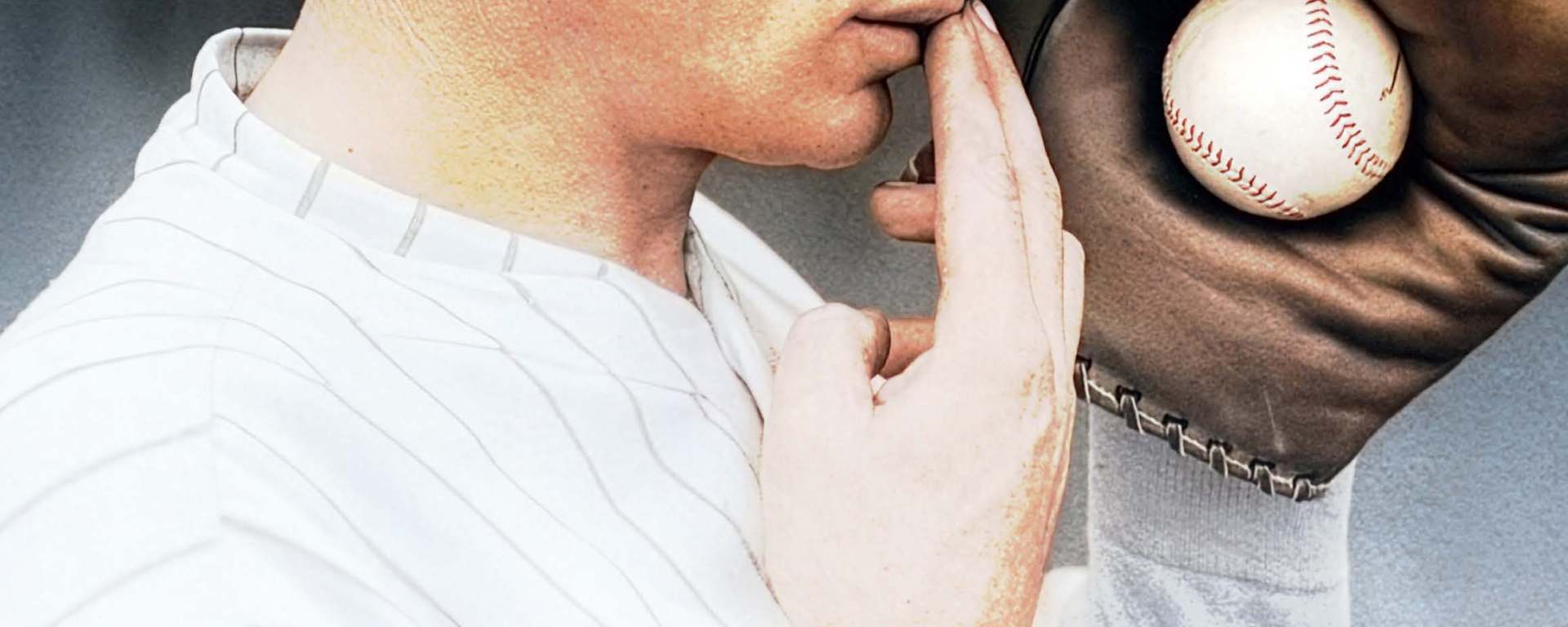
Covey stymied the Dodgers’ offense with his spitball, even when he didn’t throw it. Brushing the index and middle fingers of his right hand across his lips to decoy the fastball, the shrewd hurler kept Brooklyn’s hitters baffled throughout the game. Guessing spitball, they swung at Covey’s heater late or took the pitch for a called strike. The right-hander allowed just three base hits through the first four innings. Ironically, a Brooklyn error gave him all the run support he needed in the bottom of the fourth. With two out, Larry Gardner on third, and Doc Johnston on first, Indians manager Tris Speaker called for a double steal. Johnston broke for second and purposely stopped short of the bag, thus forcing a wild pick-off throw by Dodgers pitcher Burleigh Grimes. As the ball sailed into center field, Gardner scampered home with Cleveland’s first run.
The Indians added to their lead in the fifth inning when Charlie Jamieson singled, stole second, and scored on Speaker’s triple to right field. Their third and final run of the game came in the seventh when Steve O’Neill led off with a double. Coveleski tried to bunt him to third, but the slow-footed catcher was called out on a rundown. Jamieson followed with another double, scoring Covey, and the Indians led, 3–0.
As the bluish haze of the autumn afternoon merged with twilight shadows, Coveleski continued to hold the Dodgers scoreless, keeping their hitters guessing. Alternating his fastball with the spitter, Covey forced Brooklyn’s batsmen to swing at his first offering, nearly always a strike. He threw just 90 pitches in the contest compared to Dodgers starter Grimes and reliever Al Mamaux, who together threw 135 pitches.
When the game ended at 4:00 p.m., Coveleski had thrown a complete-game shutout and the Cleveland Indians had clinched their first-ever World Series championship with a 3–0 victory. As the fans swarmed onto the field to celebrate, owner Jim Dunn, who had spent most of the game in his front-row seat hobnobbing with politicians and celebrities, basked in all the glory—and profits. Stanley Coveleski wanted none of the attention, though. He simply walked alone to the clubhouse. Covey, nicknamed the “Silent Pole” by the sportswriters, was a humble man who said very little. Having been born and raised in the hard coal region of northeastern Pennsylvania, Coveleski was simply grateful to escape the mines where he had worked as a wage slave. Baseball was now his livelihood, and he gave it his all whenever he stepped onto the mound.
Although he had just tied a Major League record by winning three complete games in World Series competition and registered a remarkable 0.67 earned run average, he downplayed his performance. “My arm was dead,” he admitted. “It didn’t appear to me as if my spitter had the usual snap to it.” Instead, he credited his catcher, Steve O’Neill, another product of Pennsylvania’s anthracite coal region, with his success. “It is great to pitch to a fellow like O’Neill,” he said. “Seldom do I shake my head at his sign.”
However, the success of the Cleveland pitcher was acknowledged by Zack Wheat, Brooklyn’s star left fielder. “Coveleski is some pitcher,” he said. “Of the three games he pitched in the series, he worked best in the final contest. Grimes worked well, too, but couldn’t win against the pitching that iron-armed Pole put up.


I sure love baseball!