Michael W. Childers is an associate professor of history at Colorado State University. He is the author of Colorado Powder Keg: Ski Resorts and the Environmental Movement, winner of the International Ski History Association 2013 Ullr Award. His new book Mountains Are Calling: Tourists and the Unmaking of Yosemite National Park (Nebraska, 2026) is available for pre-order now.
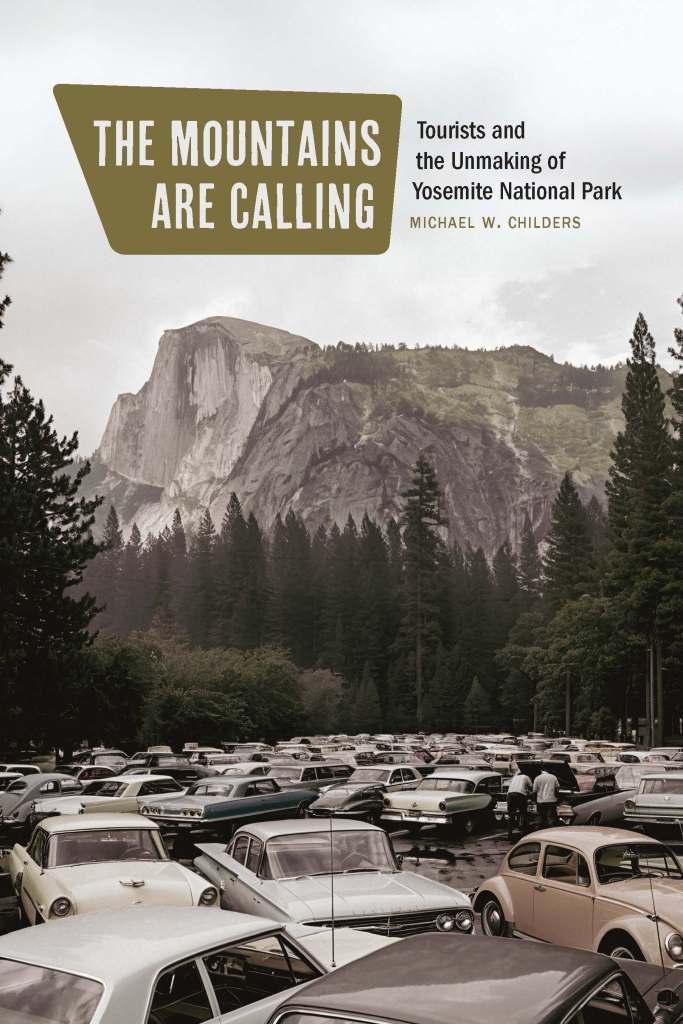
Yosemite National Park has already experienced record-breaking crowds this year, and it is just the start of the summer season. Visitors waited over an hour to enter Yosemite National Park during the Memorial Day weekend. After entering, they found little to no parking, prompting many to park illegally alongside narrow roads miles away from attractions and trailheads. Scenic overlooks and restaurants were overrun with visitors.
All of this was entirely predictable.
Following Secretary of the Interior Doug Burgam’s order that all parks were to remain “open and accessible” to the public, Yosemite Superintendent Ray McPadden announced in February that the park would abandon its reservation system this summer. McPadden cited an internal analysis that found available parking and stable visitation numbers on most weekdays for the past few years.
Critics immediately condemned McPadden’s decision, arguing that it would lead to severe overcrowding and degrade Yosemite’s natural environment. And, in truth, ending the reservation system was more about boosting the region’s tourist economy than protecting Yosemite’s natural and cultural resources.
But as I read the coverage of the Memorial Day crowds inundating Yosemite, the debate over the demise of the park’s reservation system faded to the background. Instead, media coverage largely focused on visitors’ frustrations over the hours it took to enter the park, the lack of parking, and the crowded conditions they finally encountered once inside. This is far from the first time stories about visitor frustration over crowding at Yosemite have dominated headlines.
These were many of the same frustrations I encountered in the archives while researching Yosemite’s history. I quickly discovered that Yosemite’s story is not just about its beauty, or its management, but about the millions who have visited since the first group of tourists to the valley in 1855.
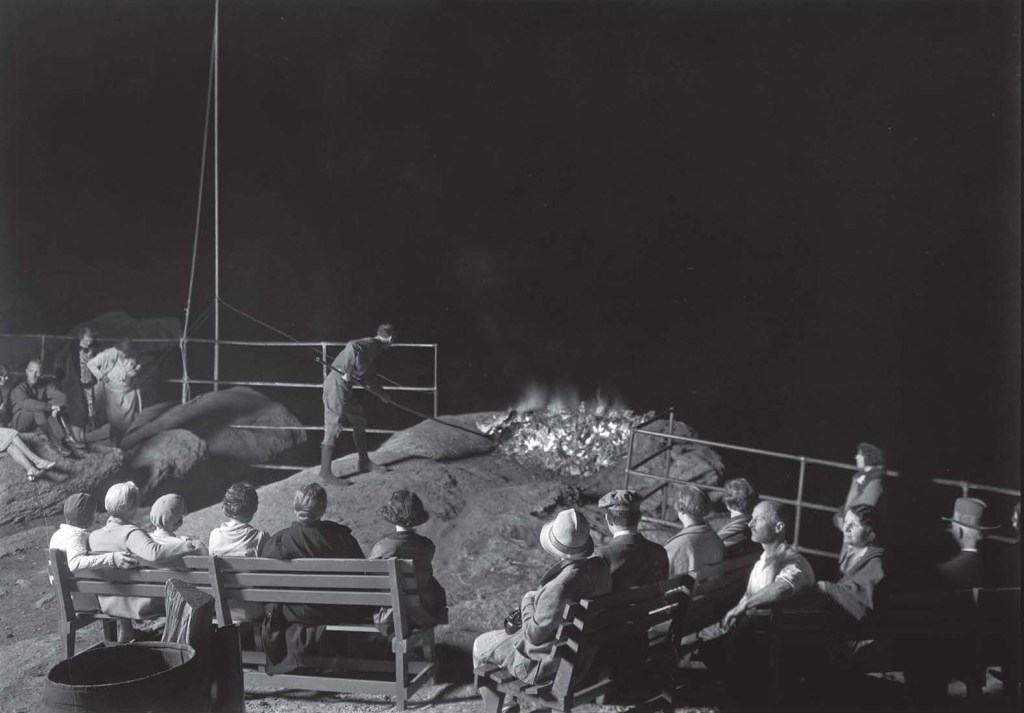
Yosemite’s story is also the story of Galen Clark, who seeking to escape tuberculosis, found a grove of giant sequoias he would dedicate the rest of his life protecting and sharing with visitors from around the world. It is the story of grieving parents taking their son to the Yosemite Valley in 1943 for one last family visit before he left for war. It is the story of hundreds waiting in anticipation of dusk for the cascade of embers from Glacier Point’s Firefall. And it is the story of climbers scaling the granite walls of the Yosemite Valley.
These stories make Yosemite. But they also lead to its overcrowding.
Following climate change, the growing number of visitors poses the single greatest environmental threat to Yosemite. Millions of feet have eroded and compacted the soil, while trampled vegetation has hardened the surface and reduced water’s ability to percolate into the ground. The sounds of cars, buses, and crowds often drown out birdsong. Light pollution has disrupted nocturnal wildlife, and air pollution both obscures the Sierra Nevada sky and settles into the valley below. Human-wildlife interactions have caused the deaths of tens of thousands of black bears and altered wildlife behavior across the park. Meanwhile, development has intensified the destruction wrought by floods, winter storms, and wildfires.
How did we get here? To answer that, we need to look at Yosemite’s past, not simply as an embattled wilderness invaded by hordes of visitors, but as a place whose story is inseparable from the people who passed through it.
Concerns over crowding emerged almost immediately after President Lincoln ceded Yosemite Valley and the Mariposa Grove to California in 1864 for “public use, resort, and recreation.” Those complaints contributed to the creation of a national park in 1890, which absorbed the valley and grove thirteen years later. The automobile then opened Yosemite to a flood of tourists, straining the aging park infrastructure and spurring calls for a new village to replace the deteriorating hotels.
Visitation overwhelmed Yosemite after World War II, leading to calls for the federal government to improve campgrounds, maintain trails, and build modern visitor centers. The park service attempted to meet the public’s demands with its decade-long Mission 66, but more development only brought more visitors. By the 1970s, the term “loving the park to death” became a common refrain when describing Yosemite.
Despite growing complaints, visitors kept coming. By the 1990s visitor numbers grew to 3 million, and then 4 million, cresting in 2016 at 5 million. First put into place in 2020 in response to COVID-19, the reservation system initially reduced visitor numbers to 2.2 million, a number not seen since the early 1970s.
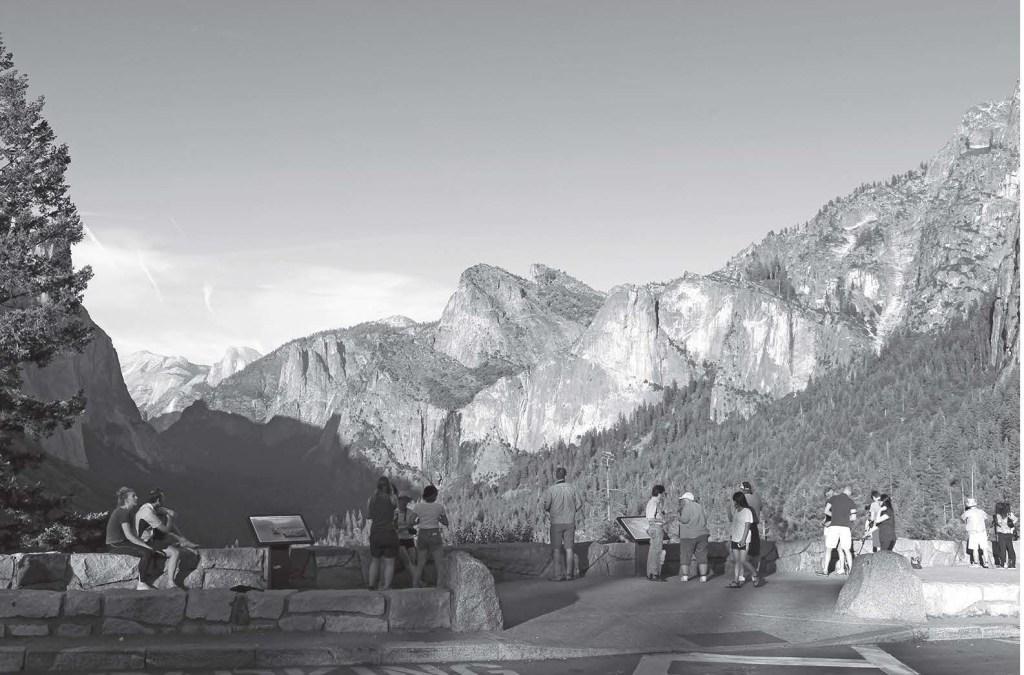
By placing these experiences of Yosemite into the foreground, we can gain insight into how this remarkable place came to be, the struggles over its meaning, and how we might forge a better future for this incomparable place. It will require not only adequate funding for the park, but also sufficient personnel to protect its natural and cultural wonders while providing for visitors’ experiences of them. It will also require limiting the number of people in the park. The reservation system works in both conserving Yosemite’s nature and our experience of it. Finally, we need to reconsider our role in Yosemite. Perhaps, as demonstrated by the reservation system, we need to limit our visitation. Not only to conserve Yosemite’s natural wonders but to preserve our shared experiences of those wonders.

