
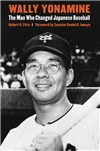
 Read from chapter 1, “Just a Country Boy from Olowalu, Maui” of Wally Yonamine: The Man Who Changed Japanese Baseball by Robert K. Fitts:
"Today, Olowalu on Maui’s west coast is part of paradise. Tourists fly from around the world to relax on its pristine beaches, snorkel in its dazzling coral reefs, and be pampered in luxury resorts. But it wasn’t always paradise. In the 1920s and ’30s, when sugar cane plantations dominated the area, life was hard. Thousands of immigrants toiled from dawn to dusk in the cane fields for poverty-level wages. The work was dangerous, and many dreams were shattered by wayward rail cars and grinding mill machinery.
Life in Olowalu, however, prepared Wally Yonamine for the challenges of integrating both Japanese baseball and American professional football. Growing up poor on a Maui sugar plantation taught Wally how to overcome adversity, face difficult conditions, and gave him the drive to succeed. His early success in athletics prepared him for the public spotlight, while his family taught him modesty, enabling him to maintain his focus and not get sidetracked by the many diversions facing professional athletes.
Wally’s father, Matsusai Yonamine, was born in Okinawa on July 31, 1890, and grew up in a small house with an attached pig sty—a common feature in rural Okinawan homes—in the coastal village of Nakagusuku near the spectacular ruins of Nakagusuku Castle. Soon after his seventeenth birthday, Matsusai’s older brother married and following Okinawan custom lived with his wife at his parents’ home. Custom dictated that younger brothers had to move out once they reached adulthood. Matsusai could have built his own home nearby, but he dreamed of a better life than rural Okinawa could provide. For the past few years, recruiters had been canvassing the island for laborers to work in the far-off archipelago of Hawaii. More than six thousand had already made the journey. Letters home complained of hard work and tough conditions, but they also contained much-needed cash. Matsusai didn’t mind hard work—he was used to it. Deciding to start a new life, he left for Hawaii. After an arduous three-week passage spent mostly in cramped below-deck quarters, he arrived in Honolulu in late 1907."
To read a longer excerpt or to purchase Wally Yonamine, visit:http://www.nebraskapress.unl.edu/product/Wally-Yonamine,673417.aspx
 UNP blog