
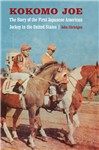
 Read an excerpt from the title chapter of Kokomo Joe: The Story of the First Japanese American Jockey in the United States by John Christgau:
"The radio news was that Santa Anita Race Track had opened. Tucked up against the wall of the San Gabriel Mountains, the track seemed an inviting playground, utterly free of irritating stiff rules of conduct. Those magazines he read pictured rich gamblers wearing bowties standing alongside bathing beauties and movie actors, all of them flashing exactly the same broad smiles that had become his trademark. It was obvious that a good smile was the passkey to American success.
Carrying his small suitcase again, Joe hitchhiked across Los Angeles to Santa Anita racetrack. He made his way through a sea of pansies planted around the track to a gate at the backstretch, where a guard in a baggy suit and a police hat stopped him.
“Excuse please,” he managed to stammer through his smile, but he wanted a job “guiding the horse.” A group of stable hands watching broke out laughing. The guard wanted to know his name.
“Joe.”
“Joe what?”
“Joe Kobuki.”
“You a Jap?”
“No, I am an American,” he said.
One of the stable hands began a scornful, singsong chant. Kokomo Joe, Kokomo Joe, Kokomo Joe! The others all laughed again. Joe tried to explain that he had heard on the radio that seventeen jockeys had been banned from the track. So who would they get to “guide the horse”? What he meant was that he wanted to be a jockey. He was small and strong and fearless. But the only work he could find was as a “hot walker,” walking horses to cool them down after their races.
Owners and trainers let him sleep in one of the empty stalls. He was up at dawn, awakened by the smell of fresh coffee and fried bacon coming from the cook shack. Then he spent the rest of the morning mucking out stalls, watering horses, and cleaning tack. He began to smell like manure and straw. They told him that it was work he had to learn to do if he wanted to be a jockey, but after a month of standing with the railbirds and clockers watching other stable boys take horses through workouts in the morning light, he grew impatient and asked to be allowed to exercise horses. He was small but strong he insisted."
 UNP blog