
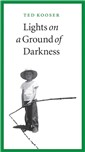
Here's an excerpt from a featured gift book idea, Lights on a Ground of Darkness: An Evocation of a Place and Time by Ted Kooser. If you'd like to purchase Lights on a Ground of Darkness, check out our holiday sale for a special discount code.
"Summer, 1949. Above the Mississippi, the noon sun bleaches the blue from a cloudless midsummer sky. So high in their flight that they might be no more than tiny motes afloat on the surface of the eye, a few cliff swallows dive and roll. At the base of the shadowy bluffs a highway weaves through the valley, its surface shimmering like a field of wheat; to the south, a semi loaded with squealing hogs shifts down for the slow crawl up out of the bottoms and into the bright, flat cornfields of eastern Iowa. The bitter odor of exhaust clings like spider webs to the long grass lining the shoulders of the road. Toward the top of the grade the sound of the engine levels out into a brash and steady saxophone note that rattles back through the cut, and then, with a fading whine, the truck is gone, leaving the hot road shining empty down the length of the valley.
The little town of Guttenberg, Iowa, is taking a midday nap under the trees on the bank of the river. Its wide streets are quiet, its window shades drawn down against the heat. Old elms sprinkle the deserted sidewalks with lacy, drifting patterns. There’s a light breeze off the water, carrying the smell of fish and the soft, regular sound of waves lapping the sides of tied-up boats. In one back yard an old woman in a blue bathrobe and a wide-brimmed straw hat walks a plank pathway through her garden, inspecting the leaves of her beans with the tip of a cane.
Front Street, which in any other small town might be called Main Street, divides a shady riverbank park from a row of old store buildings. The Mississippi here is wide and smooth, pooled by a government lock and dam. Beyond the dark green channel islands, the bluffs of Wisconsin rise pale and vaporous. Far out, between two of the islands, a tug slowly pushes a long line of rusty coal barges north toward Minnesota. A few old men sit on shaded benches in the park, swapping stories and watching the river birds loop and skim over the water.
The buildings that face the river all date from the mid-1800 s. Nearly all of them are two stories in height, built of cut limestone or of brick, with elaborate stone cornices. The original storefronts, with their high windows and recessed entryways, have been “modernized,” but the original facades still peer over the tops of the glaring spreads of glass and the slick cummerbunds of new signs. You have to sit in the park and squint hard to see the town as it once was, a busy river port of the days of the big stern-wheelers, the fancy trim of its buildings mirroring the cut wooden gingerbread on the steamboats.
The businesses that line Front Street are those that one expects to find in any small town. There’s a hardware store, its windows full of red power mowers, green fertilizer spreaders, and blue bicycles. There’s the BonTon Dress Shop, unabashedly showing last year’s fashions on dazed and flaking mannequins. There’s the Blackbird Variety, with a leaky pop case out front. There’s a bakery and a Thom McAn shoestore. There are a couple of buildings that once were stores but have since been converted into private residences, with curtains drawn across the display windows and potted plants on the stoops. At the north end of the row of buildings sits the post office, plain as a peach crate. At its side, the draft from a window fan shakes a dead spirea bush. The American flag runs down its hot steel pole like candle wax."
 UNP blog