
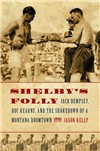
 Read the beginning of Chapter 1, "High Noon in Shelby", from Shelby's Folly: Jack Dempsey, Doc Kearns, and the Shakedown of a Montana Boomtown by Jason Kelly:
"Dust kicked up around Shelby, Montana, at dawn on July 4, 1923, as thousands of people started venturing into the streets. From cots in overcrowded hotel lobbies, sleeping cars on railroad sidings, and campsites along the Marias River, boxing fans awakened to a holiday festival before the heavyweight championship fight between Jack Dempsey and Tommy Gibbons. Still more arrived by train and car, clogging the town that had hoped for many more free-spending tourists despite having no place to put them.
A livery stable had transformed itself into a makeshift lunch counter and hotel. Guests who could not secure a cot were forced to sleep on hay. Lines snaked for blocks outside proper restaurants. Souvenir vendors hawked trinkets. Green eye shades were popular items under the strong midsummer sun. Scalpers advertised their tickets, available at a fraction of face value, which was as high as $50. To one outsider reporting for the New York Times, the scene did not resemble a sporting capital so much as a “county seat during fair week.” Bustling, but unimpressive.
All the essential services visitors lacked only emphasized the town’s diminutive proportions. Oil, the source of the misplaced economic confidence that led to this heavyweight championship escapade, would not do Shelby any good today.
Local entrepreneurs did have the principle of supply and demand in their favor — at least while supplies lasted. “Food prices, which have been slowly climbing for the past several days, today cast modesty to the prairie winds and stood unashamed on the high cost of the living peak,” the Associated Press reported. “Sandwiches even sold all the way from 25 to 50 cents. Steaks required large bankrolls and fresh eggs — well, there weren’t any.”
Thousands of tickets remained at the box office. Big crowds gathered at the gates, not to queue up for purchase, but to negotiate and agitate for lower prices. The promotion of the fight had been a financial disaster. Rather than establishing Shelby as “the Tulsa of the West,” the ambition of the biggest dreamers, it cost the town a healthy percentage of its oil, ranching, and banking fortunes."
 UNP blog