
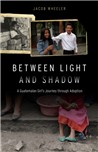
 Read the beginning of the Prologue from Between Light and Shadow: A Guatemalan Girl's Journey through Adoption by Jacob Wheeler:
"This is a story about the journey of a girl to the United States from the desperate, poor streets of her home village in Guatemala. It’s about the birth mother who gave her up for adoption because she was pressured and promised money by the lawyers who make Guatemalan adoption so lucrative and so controversial. It is a story about one American family and its journey through international adoption: the guilt, the joy, the premonitions, and the conflicts that unfolded when the characters traveled to Central America and wealth met poverty head-on. It’s also a story about a very poor nation divided by race and class and a bloody history that continues today—and how its people deal with the humiliating perception that the world wants Guatemala more for its children than anything else it has to offer.
Finally, this is a story about digging up one’s past and returning to the place where the journey began. It’s about a girl’s reunion with her birth mother many years later: love and heartbreak, betrayal and redemption, murder and witchcraft, confronting abandonment, and what it means to be wealthy while surrounded by the poor.
This story examines the claim that Guatemalan adoption is a supply-and-demand industry where the arbiters are constantly profiting from the vulnerability of the country’s downtrodden and hungry mothers. But it also casts Guatemalan adoption as the impetus for a wonderful journey from rags to riches that, until recently, gave thousands of children every year lives and opportunities they would never have had if they were not relinquished early in their lives. Although political battles play out in Washington dc and Guatemala City over whether to keep this particular international adoption window open, this story does not intend to take sides or tell the reader whether Guatemalan adoption is right or wrong, just or unjust, legal or illegal. This conversation is far too complicated to be judged in absolutes. And whether Guatemalan adoption reopens and returns to the peak level it reached in 2007 or not, abuses in foreign adoption are nowhere near resolute, giving this case study relevance for years to come.
Adoption from Haiti flooded the news after an Idaho church group unwisely and illegally attempted to smuggle Haitian children into the Dominican Republic following the disastrous earthquake in early 2010. And the U.S. media focused on adoption from Russia after an adoptive mother moronically sent her child on a one-way flight back to Moscow. Guatemalan adoption may someday return to the front page, too.
This story should not be interpreted as the typical journey through Guatemalan adoption. It is merely a glimpse into the life of one girl, Ellie Walters in Michigan, whose window between her Guatemalan past and her American present happens to be more open than most. Ellie is a bicultural kid, a minority because of her skin color, though she spent her formative years with a privileged white family. In the global age, she is a rare example of an intermediary between rich and poor, between present and past."
 UNP blog