
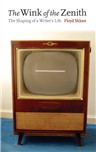
 Read the beginning of "Going, Going, Gone" from The Wink of the Zenith: The Shaping of a Writer's Life by Floyd Skloot:
"I was standing in the bedroom of our Brooklyn apartment with my ear pressed to the radio. It was dark outside, a spring evening in the mid-1950s, and through the open window I could hear people talking in the courtyard four stories below. I was eight or nine years old, and my brother Philip, a teenager, was sitting at his desk bent over homework. That explains why the radio’s volume was turned so low. Philip couldn’t hear it over the courtyard chatter or else he’d have told me to turn it down.
I’d succeeded in losing myself to the world of baseball, and could hardly stand still as I leaned farther into the radio. If you could see me shuffling in place, cheek-to-cheek with a console the same size that I am, arms gripping its sides, you might think we were dancing.
My father had taken me to many games at Ebbets Field, a few at the Polo Grounds, even one at Yankee Stadium. I’d collected baseball cards since I was six, played punchball and stickball and baseball for hours in the spring and summer, invented games to play by myself with baseball cards on the apartment floor, read baseball magazines and books, studied batting statistics. So I knew what I was listening to. I also knew what I was waiting for.
If it was a Yankees game on the radio, I was waiting for Mel Allen to call out “Going, going, gone” when a home run was hit. If it was a Giants game, I was hoping Russ Hodges would scream “Bye bye baby.” And if it was a Dodgers game, which is most likely, I wanted Vin Scully’s curt “Gone!” I was homer-happy. But it was the announcer’s call, not the hit itself, that captivated me.
When it came, when the batter’s sudden triumph was described in language so potent with loss, I was never able to keep silent. Going, going, gone. To realize such success required bidding adieu to what made it possible, Bye bye baby, and the delight in the announcer’s voice counterpointed with his actual words packed an emotional wallop I found overwhelming. The ball was Gone! for good and so was my last vestige of composure.
Philip would get up, cross the room, turn the radio off, and stalk back to his desk. He may even have socked me on the shoulder. But I’d have had what I wanted: a moment when arrival and departure were poised, when the offense’s joyful achievement was mingled with the defense’s sad failure in phrases and tones that acknowledged the whole knotted experience."
To read a longer excerpt or to purchase The Wink of the Zenith, visit http://www.nebraskapress.unl.edu/product/978-0-8032-3845-9-The-Wink-of-the-Zenith,674016.aspx?skuid=13489.
 UNP blog