The following interview with author Xhenet Aliu was originally published in Illyria on Oct. 18, 2013. The interview was conducted by Uk Lushi, a writer
and translator who lives in New York City.
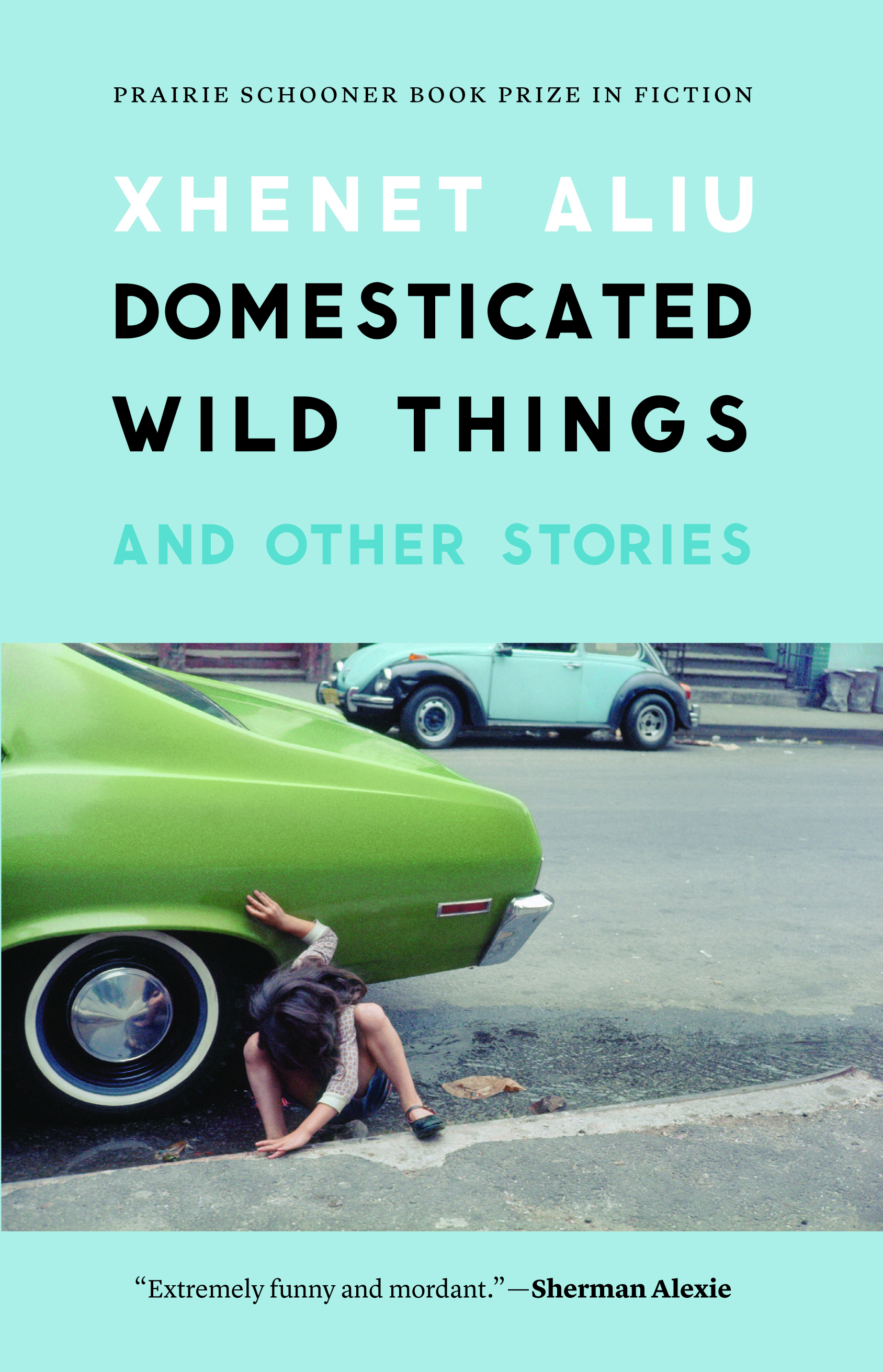
Several writer friends on Facebook asked me if I had heard of Xhenet Aliu. “She’s Albanian-American like you,” they said, “and an up-and-coming writer.” Her name sounded Albanian, but as far as her being an up-and-coming writer I had no idea since I’d never read her work. Long story short: after one of my Facebook peeps informed me that she’d won the 2012 Prairie Schooner Book Prize in Fiction, I said to myself, “Well, if you’re not good, you’re not going to win such a prize.” So, I ordered the book and enjoyed reading it thoroughly. As a result I purchased another copy for a member of my family and sent a Facebook friendship request to Xhenet. I learned that she’s in fact only 50 percent Albanian, but is indeed 100 percent an up-and-coming writer. Via Facebook messages we had the conversation below and after you read it I recommend you to buy and read her brilliant debut book “Domesticated Wild Things and Other Stories,” published by Nebraska University Press in September of 2013.
Who and where are you from?
I’m Xhenet Aliu, 30-something years old, native of Waterbury, Connecticut. My father, an ethnic Albanian, emigrated to the U.S. from Strugë as a young man and my mother was born in the U.S. and is of Lithuanian descent. I was raised in the Waterbury area, and though I haven’t lived there for over a decade, I still set most of my fiction there.
How and why did you become a writer?
The most critical part of being a writer, which is being a reader, is something I’ve always done. My brother Kyjtim used to read me picture books when I was a little girl, and I skipped over learning the alphabet and went straight into reading words. By the time I was in high school I was reading things that were probably too advanced for me, like Nabokov, Yeats, Kafka, etc. I didn’t begin writing until college and immediately knew that I wanted to do it forever; but I didn’t consider myself a “writer” until many years later. It was impossible for me to use the same word for Kafka and for myself, and I sometimes still struggle with that. Even after publishing a book, I feel like I haven’t entirely earned the label.
Other writers that I greatly admire are Flannery O’Connor, William Faulkner, Roddy Doyle, Amy Hempel, and dozens–if not hundreds– of others, who brought me around to more contemporary fiction and have greatly influenced how I think about voice, timing, conflict and precision of language. And of course I should not forget to acknowledge another of my favorite writers– Ismail Kadare, who, with a few turns of phrase, can reduce entire histories to mere words, and, reciprocally, can expand a few words into entire histories. So, the writers I like most don’t just look for beauty in the obviously beautiful– they’re unafraid of grit and humor, where truth and beauty have often gone undercover.
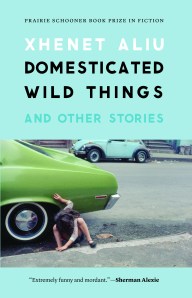 Writers such as Sherman Alexie and Kwame Dawes find your stories funny yet serious. Your book “Domesticated Wild Things” is full with biting humor, sharp wit, double-edged beauty of characters, and subtlety of language. It’s not easy to pair up humor and seriousness: is it real life experiences or artistic imagination that inspired you to create your stories?
I would say that real life and imagination play an equal role in my stories. Even if I were to write science fiction, my own actual life experience would inform my perception of what life would be like in a world that’s, say, suddenly been taken over by Martians. I’ve never witnessed a spaceship land in Central Park, but I can speculate how we would respond to it based on my past experiences watching humans respond to other shocking, terrifying, dreadful experiences. That said, I currently prefer to write realistic fiction because I’d rather just directly address the shocking, terrifying, dreadful experiences we’re more likely to encounter in our actual lives. It feels less coy to me, but that’s simply my preference. Even though the world in my stories resembles something “real,” though, I feel no allegiance to any kind of fact that doesn’t serve the truth of the story. Perhaps I read a story in the newspaper that inspires me to write a fictional account of the participants involved; if I find that the characters would serve my purposes better if they were of the opposite sex, or if the setting was a slum in another part of the world, then so be it. Studies have shown that imagined experience works as well to exercise our empathy as actual experience, so I feel justified going back and forth between the two.
As for the humor, the truth is I wouldn’t know how to engage with the world without it. Life is absurd as often as it’s beautiful and sad, so I would feel like I created something incomplete if I left it out of my fiction.
Continue reading “Xhenet Aliu: An up-and-coming writer”




 UNP blog