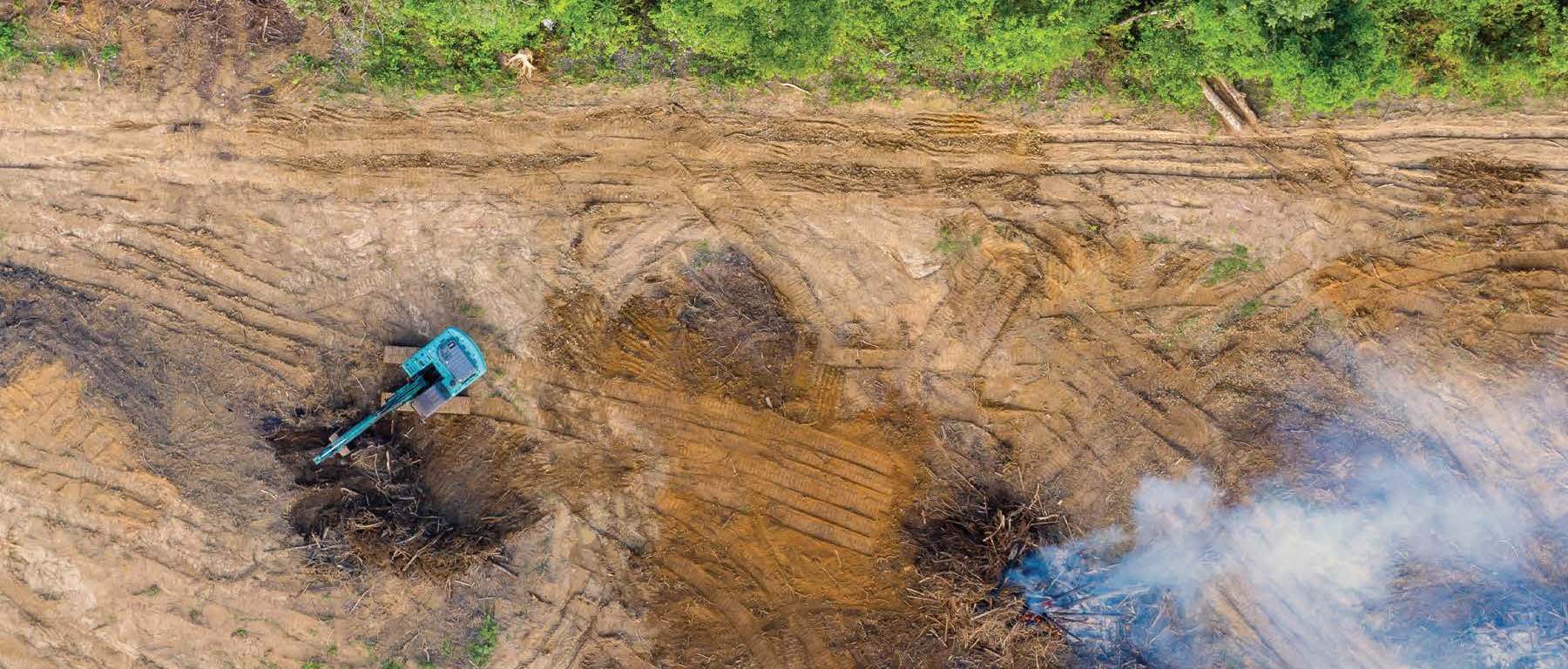
LaShandra Sullivan is an associate professor of anthropology at Reed College. Her new book Unsettling Agribusiness: Indigenous Protests and Land Conflict in Brazil was published in June.
In the last half century Brazil’s rural economy has developed profitable soy and sugarcane plantations, causing mass displacement of rural inhabitants, deforestation, casualization of labor, and reorganization of politics. In Unsettling Agribusiness LaShandra Sullivan analyzes the transformations in rural life wrought by the internationalization of agribusiness and contests over land rights by Indigenous social movements.

1. Ethnoracial Politics of Agribusiness in Dourados
When I first arrived in Dourados in 2007, I occasionally saw a bumper sticker that read, “O MS É Nosso” (Mato Grosso do Sul is ours). The stickers were part of a statewide campaign by a syndicate of plantation owners (ruralistas). The ours in the slogan purports to unify the state’s Brazilian, non-Indian inhabitants against the Indians who call for state recognition and demarcation of terras indígenas (Indigenous land). The syndicate conducted its campaign against the backdrop of two contrasting processes. First, around the time of my fieldwork, Brazil’s federal agency overseeing Indian affairs commissioned studies to demarcate historical-cultural Indigenous lands in the state; second, expanding agro-industrial production had put upward pressure on land values and increased competition over land use.
The land in the southern cone of Mato Grosso do Sul is among the more expensive agricultural land in Brazil. While an agribusiness boom since the early 2000s sent land prices soaring, an influx of investment capital translated into ever-higher yields of export products like soy and sugarcane-based ethanol. The agribusiness boom of previous decades added to a long history of reorganization of the region’s countryside in the last century, which featured the displacement of rural inhabitants to cities, as well as their incorporation as manual, casualized labor in agroindustrial installations. This incorporation was especially momentous for Indigenous people who constituted the majority of cane cutters in the state. The ensuing shifts in land occupations, land-use practices, and social movements for land rights must be understood in the context of the global land grab.
This chapter offers an analysis of the land grab in Brazil to focus on the political stakes of conceiving ethnic identity as constructed. In turn, this opens a perspective on the ethnoracial politics driving the land conflict. The land grab taking place at the time of my research hobbled land-reform movements, particularly Indigenous social movements. And with a high rate of violence against Indians, Mato Grosso do Sul was notable in this regard.
As described in the introduction, participants in Guaraní land protests put in place roadside camps that border plantations, and sometimes cross property lines, in their attempt to gain state recognition of their land claims. Their tactics provoked confrontations and often-violent clashes with third-party security forces. These attacks, murders, assaults, and kidnappings took place primarily at protest camps. During my multiple stints of fieldwork from 2007 to 2018, I felt the resulting tensions in the camps-tekohas (aldeias or villages, as the activists called them), listened to grotesque stories of protest settlements burned by third-party security forces, photographed gunshot wounds, and experienced myself the paranoia induced by the suspected surveillance carried out by those same security forces.
The Indian–Non-Indian Distinction
Although Dourados is the second-largest city in the state with almost 225,000 inhabitants, it is a rather slow-paced municipality. Horse-drawn carts sometimes traverse roads in between cars, city buses, and a plethora of mopeds and motorcycles. Dourados flourished from the agribusiness boom, growing rapidly in the first decades of the twenty-first century. The soil in the region, with its distinctive orange and red hues, covers the town in dust (called terra vermelha, or red earth) and also makes this one of the more productive agricultural regions in Brazil, especially for sugarcane for ethanol fuel production. Not only do non-Indigenous land-reform organizations, such as Movimento dos Trabalhadores sem Terra (Landless Workers Movement), get little public sympathy, but also public opinion overwhelmingly opposes recognition of Indigenous land claims. The lines of conflict over land are both ethnoracial and national. Outside of designated reservations, a non-Indian, yet universal, Brazilian citizen- subject gets mapped onto a supposedly integrated national territory. Although this is sometimes taken for granted by vying stakeholders, at other times it becomes the explicit context for legal, juridical, and physical confrontations. Identities— ethnic, racial, and national— operate as markers for differing understandings of land-use practices, both narratives of the past and visions of the future. In this context, land-use practices are indexed both by ethnicity and by codes of productivity and thus have consequences for a perceived national trajectory of progress.
 UNP blog