
Rob Goldman is the author of three baseball books, Once They Were Angels, Nolan Ryan: The Making of a Pitcher, and the novel Hauling Time. His book The Sisterhood: The 99ers and the Rise of U.S. Women’s Soccer was published in November 2021.
M&M’S FIFA World Championships
Tianhe Stadium, Guangzhou, China, November 30th, 1991
Before leaving the locker room to take on Norway for the tournament’s final match, national team coach Anson Dorrance gathered his charges in the locker room. His motivational chats, generally delivered with power and eloquence, had a different tone tonight. Before the biggest game of the team’s existence, Dorrance decided to read his players a poem.
“One of your mothers wrote this,” Dorrance quipped as he yanked a crumpled letter from his jacket pocket. The room quieted and Dorrance started to read.
“Years ago, when you were born
Women’s sports were an oxymoron
But as you grew you stained our senses, girls’ soccer? Sure, fine, it’s okay to play
But isn’t two hours enough to practice each day?”
Someone sniffled, and another cried. Dorrance plowed on.
“You had to be the best, play with boys play up to the test.“
Dorrance knew his players were not playing that night for the money or the glory because there wasn’t any. Women’s soccer had yet to catch on. The mother who wrote this poem was also aware of that.
“I didn’t really have to come this far
No matter I know what you are
To see it inside you, to see it so clear
You’re a woman of course, and a champion my dear”
-Mom
Thirty years later the poem still resonates. April Henrich, the U.S. captain in 1991, says it’s “A brilliant cataclysm of inspiration.”
“Shannon Higgins’ mother wrote a wonderful poem about how proud she was as a mother to come to the World Cup and watch her daughter,” recalls Heinrichs. “But Anson said, ‘I’m going to read this poem to the team but I’m not going to tell the team whose mother.’
“Now that’s genius. An average knucklehead male coach of men wouldn’t get that. Someone who doesn’t know how to coach women would say something like, ‘Hey Shannon, why don’t you read your mom’s letter?’ and it wouldn’t resonate the same way.”
The U.S. Women went on to defeat Norway, 2-0, on a pair of clutch goals by Michelle Akers, and they have been winning ever since.
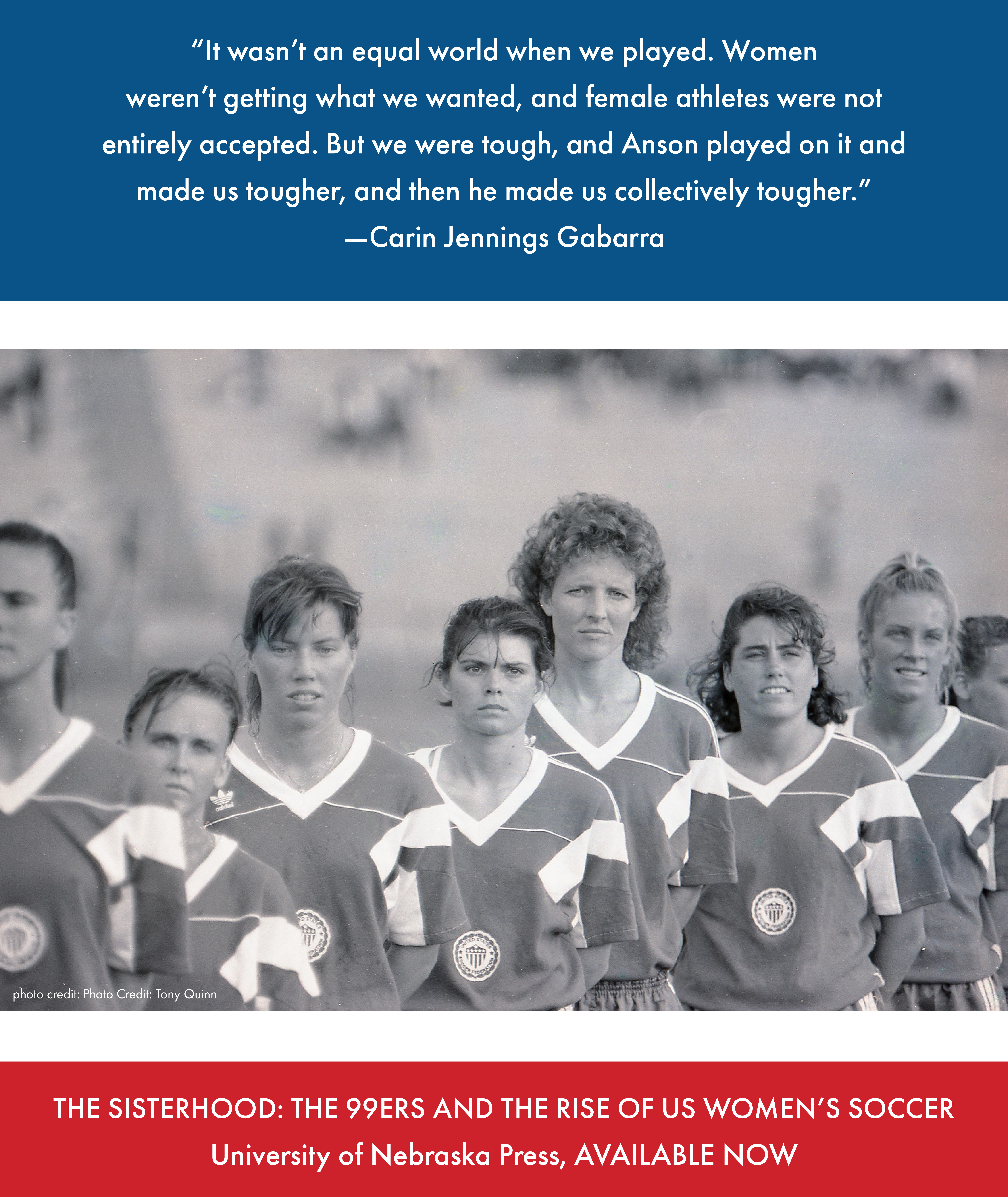
National team players and coaches may have changed over the years, but the winning culture instilled by Dorrance and his successor, Tony DiCicco, in the late 1980s and early 1990s, has not. Attendance may have grown, the women gotten stronger, the play on the pitch faster, and the pay a little better. But at its core, the USWNT is still an Anson Dorrance/Tony DiCicco entity.
The US Women’s Soccer Team is arguably the winningest women’s team in sports history. Molded after Dorrance’s aggressive, take-no-prisoners approach, and refined by DiCicco’s high standards and revolutionary tactics, the national team is truly an American creation. Fortunately, the winning mindset established by Dorrance and the USWNT in the mid-1980s, didn’t end with the 99ers. The national team is still the most feared women’s soccer team on the planet.
How this phenomenon came about is rooted in its founders and an ongoing sisterhood of talented, driven players the team’s culture has produced. Visionaries like Dorrance and DiCicco, successfully captured the indomitable American, “can-do” spirit and instilled it in their players. They took a “we will win at all costs,” attitude based on American exceptionalism and combined it with unprecedented, cutting-edge training, conditioning, recruiting, and teamwork. The results have been astonishing. In the eight Women’s World Cups played to date, the U.S. women have won four, were runners-up in one, and third-place finishers in three.
The current U.S. brain trust and players under coach Vladko Andonovski, have bought into this winning formula. They have refined and tweaked it, but the Dorrance/DiCcco, playbook is deep-seated. If that spirit remains, the U.S. women should continue to dominate their sport and win World Cups.
Every team competing at this year’s World Cup knows to stand on the winning podium in August, they must go through the U.S. The national team will certainly be challenged by Germany, Spain, England, and whatever dark horse emerges from the pack. But the U.S. possesses one additional ingredient none of the other teams have.
It’s one thing to take on Alex Morgan or Sophie Smith, keep pace with Kelly O’Hara or butt heads with a force like Julie Ernst, but opponents must also contend with the national team’s winning legacy. The four World Cup stars stitched to each U.S, player’s jersey, staring their adversaries in the face, is no small thing. This twelfth player speaks volumes. The stars on the U.S. crest boast We don’t lose much and if we do, we don’t lose easily.
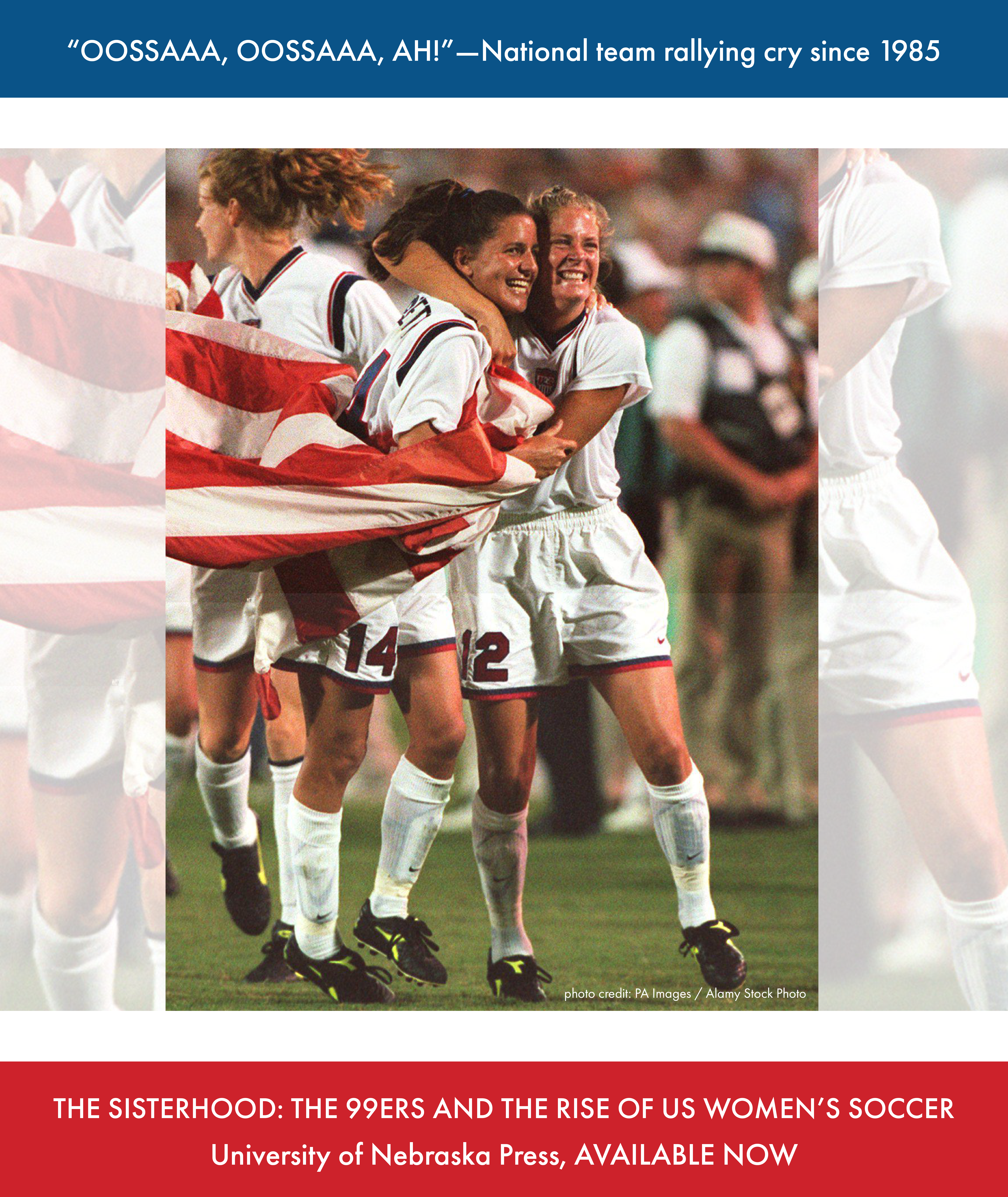
For the naysayers who haven’t bought into women’s soccer and the World Cup, stay tuned–you are about to get schooled. You are about to discover that women athletes want to win as badly as men, some even more. The World Cub is about to show how beautiful this game really is. That competitive toughness, teamwork, legacy, and grit, combined with superior coaching and conditioning, matters.
Back in the day, after rallying the troops with a pregame speech or pep talk, Anson Dorrance always ended by asking his players “Are you with me?”
His plea still resonates. Are you with me? You better believe we are.
 UNP blog