
Mike Bezemek is a writer and photographer for publications like Outside, National Parks Magazine, Blue Ridge Outdoors, and others. Several of his books combine true stories with trip guides, including Discovering the Outlaw Trail: Routes, Hideouts, and Stories from the Wild West and Paddling the John Wesley Powell Route. Learn more on his website or check out his recent article for Smithsonian Magazine about seven ways to explore space without leaving Earth. His book Space Age Adventures was published in June.
It felt like driving across another planet. I was off-roading through a stark region of cinder cones and craters. Overlapping 4×4 tracks and occasional pine trees were the most familiar terrestrial features. Welcome to a warm June evening several years ago in the Cinder Hills OHV Area in Northern Arizona. After spending the previous seventeen days rowing whitewater through the Grand Canyon, including a final night floating under the stars, I was searching for a last-minute campsite amid the strangest of worlds.
One area looked like it had been hit by both a volcanic eruption and a meteor strike. Turns out, the Cinder Hills were bombarded in the 1960s. Not by extraterrestrial impactors but by some adventurous specialists from the USGS and NASA. They were recreating a portion of the Sea of Tranquility, where Apollo 11 would land in 1969.
From a young age, I was fascinated by space exploration. I read magazines like Air & Space and science fiction books by authors like Douglas Adams and Arthur C. Clarke. I watched science fiction movies and shows, like 2001: A Space Odyssey or From the Earth to the Moon. My preference was typically toward space adventure, like Star Wars, especially when mixed with scientific exploration, like Star Trek. However, during the 1990s and 2000s, the plodding pace of real-life human space flight dampened my enthusiasm. After I became a wilderness and whitewater rafting guide in college, my interests shifted to having my own adventures here on Earth.
But stumbling across the Cinder Hills, and later researching the exciting backstory behind this astronaut training site, stoked my interest in rediscovering the Space Age. I thought back on some of the space sites that I’d already visited, including the Smithsonian National Air & Space Museum as a kid. During road trips, I’d hiked around places like Upheaval Dome in Canyonlands National Park, which has renewed support among geologists as an impact feature. During grad school, I regularly visited the space displays at the St. Louis Science Center. I’d taken a bus tour of the rocket engine test stands at Stennis Space Center—before it closed to the public due to renewed testing for the Artemis Program. I began to wonder, how many terrestrial places with Space Age significance could be visited across the United States?
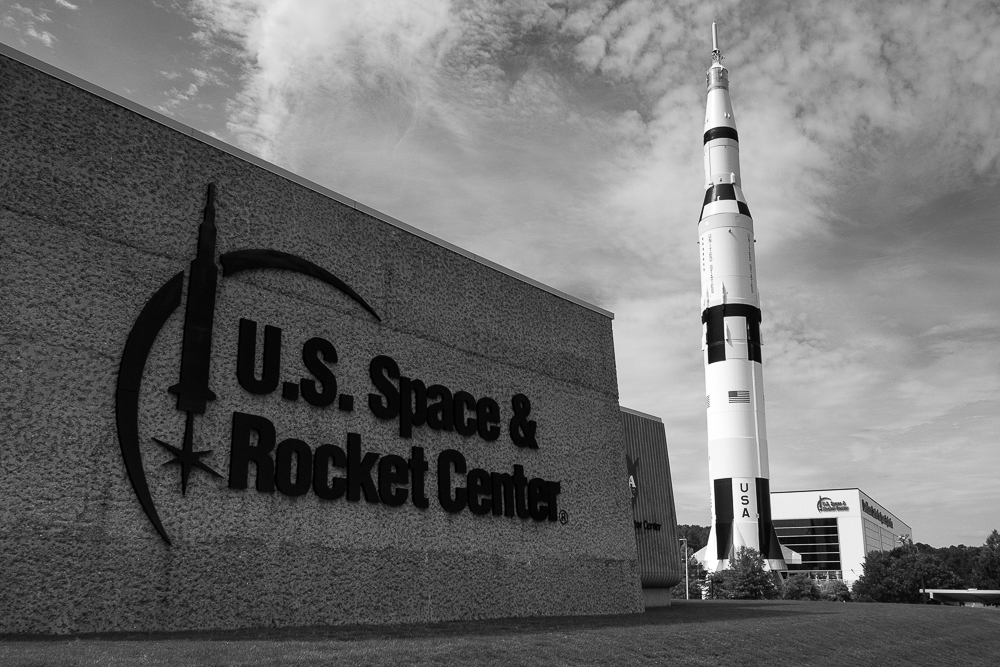
While crisscrossing the country for my work as an adventure-travel writer and photographer, I began to ramp up my visits to space sites. And not just the big-artifact museums, but remote training sites and historical rockets perched beside highways, which happens surprisingly often, turns out. I circled around space-flown capsules. Stuck my face into rocket nozzles—usually checking first to make sure they were turned off. I began to realize that many of these excellent sites had become almost forgotten by the same general public that was starting to tune back into exciting new rocket launches and crewed missions.
As a project of personal curiosity evolved, and a book seemed like a possibility, I began to envision some type of travel guide to the well-over 100 space sites around the country. Then, during my ongoing field visits to these excellent sites, I had another epiphany. Often I would chat with visitors and volunteers only to discover that many of the exciting stories behind the artifacts and exhibits had faded from common knowledge.
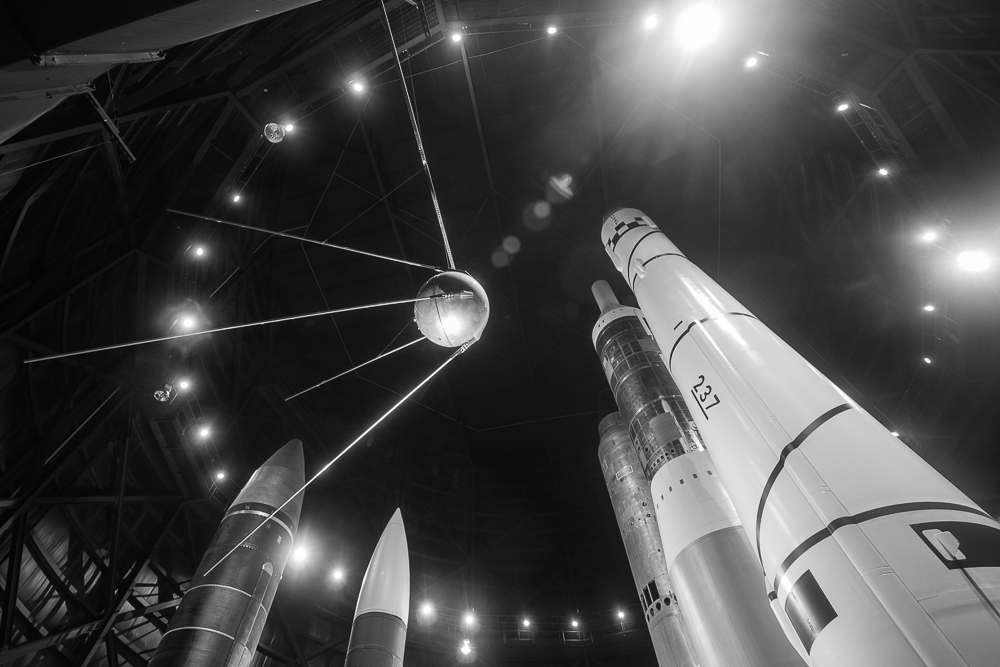
My theory was that, perhaps, the lesser-known space sites accrued a fine layer dust because artifacts can feel fairly lifeless, even boring, when visitors don’t grasp their significance within the larger narrative of the Space Age. At one time, my plan was to round out the book with a series of lesser-known adventure stories from odd or interesting incidents related to space exploration. But I began to realize almost everything that happened—other than the best-known moments like one small step or Houston, we have a problem—had become lesser-known among the general public. Plus, many dramatic details from the 20th Century Space Race were only revealed much later, when many people had stopped paying attention.
Thus, I began to reimagine the narrative portion of the book as a condensed series of true stories spanning the entire Space Age. The emphasis was on the adventurous parts that could bring the historic spacecraft and museum artifacts to life. The result is that my new book, Space Age Adventures: Over 100 Terrestrial Sites and Out of This World Stories, can serve as a single volume companion to help aspiring and lifelong space enthusiasts to rediscover the Space Age.
When people think about space exploration, they tend to look up. But there’s a lot to explore down here on Earth, including air & space museums, rocket launch sites, engineering labs, astronomical observatories and more. By learning the stories and visiting the sites, general enthusiasts can connect more deeply with the enthralling events that continue to unfold above our planet.

We are at the dawn of a second Space Age, when new women and men will travel beyond low Earth orbit, return to the Moon, and hopefully fly onward to Mars and maybe beyond. Just the thought of this bumps my EKG every time. Others seem to feel the same. Even now, as I continue to return to these many space sites and museums, I am hearing similar accounts from staff members. As new rockets launch higher and new vehicles like Orion fly further into space, the Earthly visitors are returning. They are filled with curiosity and excitement, with questions about what came before, what’s happening now, and where humanity may go in the future. My goal with this book is to help readers have their own Space Age adventures here on Earth.
I hope to see you out there. And who knows, maybe up there…someday.
 UNP blog
2 thoughts on “Becoming a Space Age Adventurer: The Story Behind a Book Combining Space Sites with Space Stories”