Steve Friesen is the retired director of the Buffalo Bill Museum and Grave in Golden, Colorado, and contributing editor of True West magazine. He is the author of Lakota Performers in Europe: Their Culture and the Artifacts They Left Behind and Buffalo Bill: Scout, Showman, Visionary. His latest book Galloping Gourmet: Eating and Drinking with Buffalo Bill was published in December.
Galloping Gourmet explores an unfamiliar side of a familiar character in American history, William F. “Buffalo Bill” Cody. In this entertaining narrative Steve Friesen explores the evolving role of eating and drinking in Buffalo Bill’s life (1846–1917). Friesen starts with Buffalo Bill’s culinary roots on the American Plains, eating simple foods such as cornbread, fried “yellow-legged” chicken, and hardtack. Buffalo Bill discovered gourmet dining while leading buffalo-hunting expeditions and scouting. As his fame increased, so did his desire and opportunities for fine dining: his early show business career allowed him to dine at some of the best restaurants in the country.

Introduction
A Culinary Biography
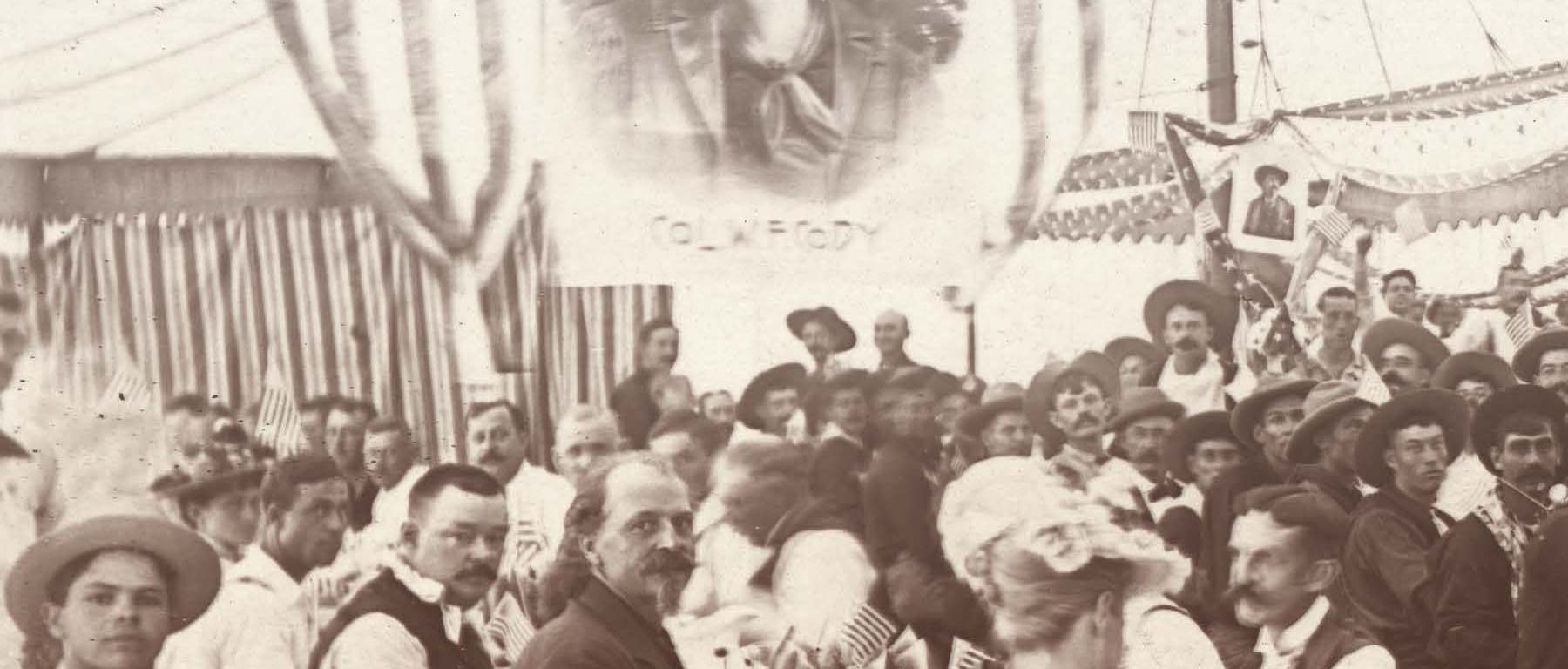
While you are at luncheon in the tent back of Colonel Cody’s you will get your first lesson—and a particularly delightful one. It is that Colonel Cody’s table with the Wild West isn’t Buffalo Bill’s camp fire on the plains or in the mountains, when scouting among hostile Indians. With Colonel Cody, Mr. Salsbury, his partner; Major Burke and other “pale-face” chiefs, you find you are in a jolly company at a lavish feast.
New York Sunday Tribune, 1894
“Galloping Gourmet.” For some of us, these words evoke memories of a television program hosted by Graham Kerr. As a teenager, I spent hours watching that program, entertained and informed by the host’s cooking skills and antics. Kerr influenced my own interest in gourmet eating and cooking, as he did for countless others. But I have come to realize that he was not America’s first “galloping gourmet.” That title belongs to a man who graduated from meals on the Great Plains to dinners at the Waldorf, all while promoting America’s Wild West to the world—William F. “Buffalo Bill” Cody.
Buffalo Bill certainly galloped through the American West as a frontiersman, buffalo hunter, scout, and ultimately showman. He was many other things as well: actor, businessman, writer, art aficionado, hotelier, even town founder. But a gourmet?
Not long after I wrote my first book on Buffalo Bill, I was introduced to Guillermo Arrellano by our mutual friend Patty Calhoun. Through them I learned that Buffalo Bill had opened the first Mexican restaurant east of the Mississippi. After running across several other intriguing tidbits of information about food innovations in Buffalo Bill’s Wild West, I decided to explore further. I found that he often wrote about food and drink in his various autobiographies. And period newspapers abounded with stories about his dining with other celebrities of his day. These were more than tidbits in the historical records; there were literally hundreds of references to his enjoyment of food, drink, and all that surrounds the consumption of each. That consumption assisted Cody’s ascendency to celebrity. Annie Oakley once said, “I have seen him the life of the party at dinner with the late King Edward at Sandrinham [sic] Palace just as much at home as he was in the saddle.” My research uncovered more about eating and drinking with Buffalo Bill than I ever expected, enough to convince me that he was indeed a man as comfortable with dining of every kind as he was on horseback. In short, he was a galloping gourmet.
This book is the result of my investigations. In it I not only explore the role of eating and drinking in Buffalo Bill’s life but put that role within the context of his times, his other experiences and enterprises, and the time he spent with other influencers of his day. One is struck by the variety and abundance of foods in those meals, from formal banquets he attended to the daily diet of performers in his show. He lived at a time when there was a burgeoning of food options. It was the dawn of a bountiful consumption that continued into the twentieth century. A wide range of foods, and large quantities of them, previously available to royalty and aristocracy were now accessible to America’s and Europe’s middle and upper classes.
 UNP blog