In less than 3 weeks UNP will be exhibiting at the Association of Writers and Writing Programs’ (AWP) conference! The AWP Conference & Bookfair is the annual destination for writers, teachers, students, editors, and publishers of contemporary creative writing. Enjoy a sneak peek of the UNP books you can grab there.
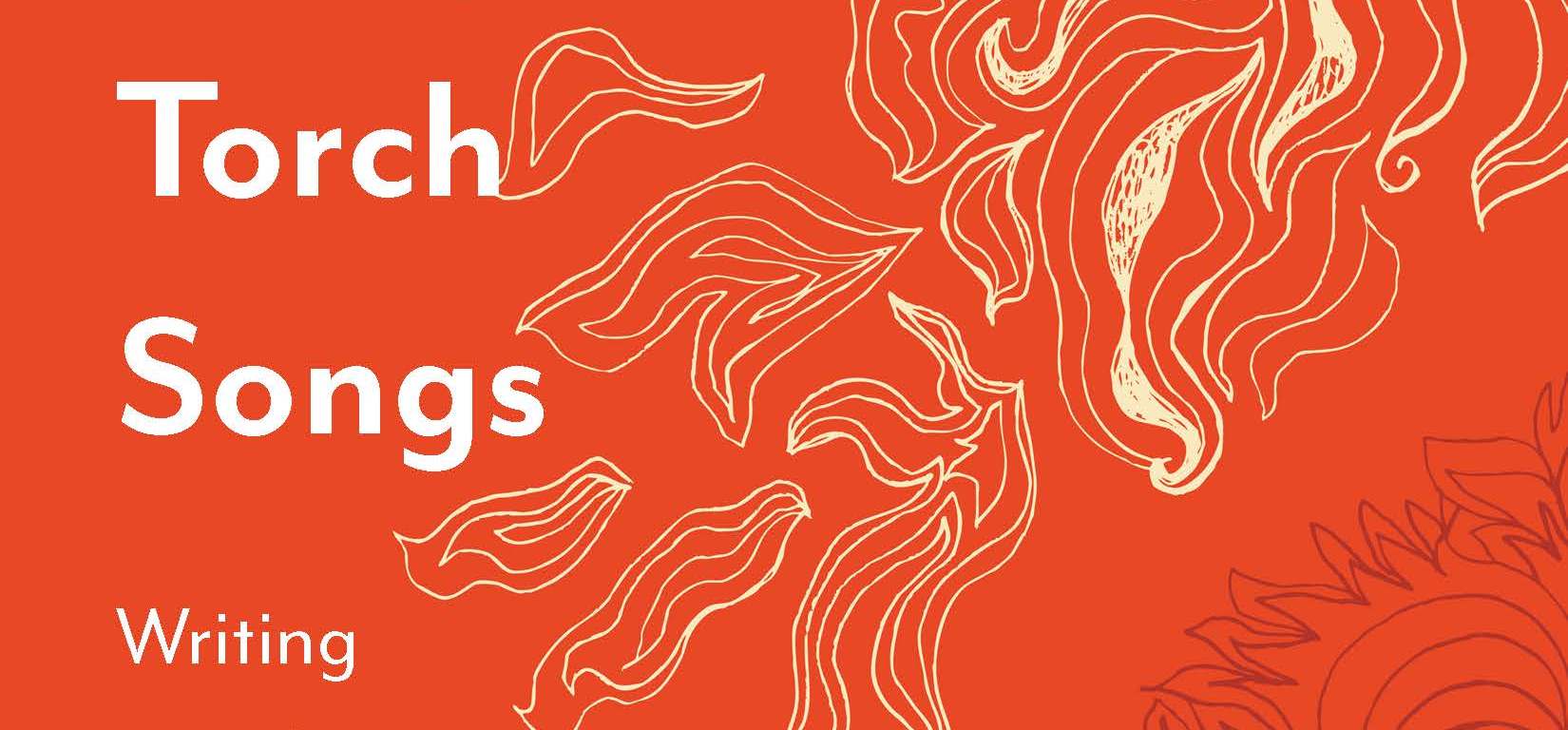
Sue William Silverman’s Acetylene Torch Songs is a guidebook for writers who want their honesty, social engagement, and intimacy to reach beyond the page and transform the lives of readers with searing, indelible, and unquenchable words.
We will be hosting an author signing with Sue William Silverman on February 9th at booth 1334/1336 as part of our programming. Mark your calendars!

The Hammer Overture
In kindergarten, according to my report card, I hammered nails into blocks of wood by the hour. A real hammer? A toy? Real nails? No specifics are offered. The report card, handwritten in blue ink by Mrs. Henderson, on onionskin paper, also itemizes the following: Sue prefers playing alone. She sits for hours by herself focused on one project, completing it before engaging in another. Sue loves music, the rhythm of song. . . . I imagine shaking silver bells, swaying to the tempo. Once, when a boy tries to grab a toy from me, I hold on. I won’t let go. Sue loves story time. No evidence of effort to create her own stories in group or in individual conversation. No attempt to retell stories as yet.
As yet.
No one back then, even watching me closely or deconstructing Mrs. Henderson’s every word, could have envisioned I’d become a writer. However, from this jumbled list of seemingly discordant activities, I now see all the traits, as if foreshadowed, that could have predicted my future. For I was writing back then, albeit nonverbally. Lacking a language to depict my confusing, unprotected, and complex childhood, I hammered my words onto blocks of wood, hoping someone would hear, would understand this mysterious utterance. By playing alone, by sitting solitary for hours, I also heard the silence of a writer at work. By listening, I gathered words spoken by others, words I myself wasn’t ready to speak. I was, in my own mute way, discerning the relationship between words and symbols, between words and events, between words and me. I myself could be, one day would be, revealed as pure language.
I was stubborn. I was obsessive. These qualities, conveyed in kindergarten, comprise part of a writer’s repertoire. As an adult, despite years of failure, despite unsalvageable manuscripts relegated to the trash, I never stopped trying. Working in solitary rooms, I listened to the rhythm of language slowly leading me forward, one word after another.
I encountered another skill in kindergarten that now casts light on my creative nonfiction. Remember show-and-tell, when students brought an object or photograph to school, stood before the class showing it, while also telling what it meant? Maybe I overcame my shyness and participated. Perhaps I displayed the papier-mâché mask of a dragon my father brought me from Thailand. Maybe I told why I loved to wear it, how it made me feel strong. Maybe I confessed a desire for the mask to generate secret, fire-breathing powers.
The words show and tell stayed with me as a writer. In creative nonfiction we show our lives through sensory imagery. We show how events look, sound, smell, taste, feel. Equally important is to tell what these moments mean. Unlike fiction, in which writers are encouraged, “Show, don’t tell,” creative nonfiction is an exploration of self and the world around us; therefore, we tell, reflect, mull, ruminate on our pasts and on our passions, allowing the author-narrator to seek and speak truth. To disclose secrets. To conjecture. I must show you what happened to me. I must also tell you how it affected me as I reflect on meaning and metaphor, find the universality in personal narrative. Here is the story behind the story.
I envision the kindergartener me in a lime-green dress with white-ruffled sleeves sitting on the floor hammering, obsessively concentrating on my solitary endeavor. Look more closely: I am showing and telling with my body, my mind, my soul, waiting for true words to form.
When did I start writing? In kindergarten.
When did I first roll a sheet of paper in a typewriter and pound words upon it? In my twenties.
When did I publish my first story? In my thirties.
I required a long incubation period, maybe longer than others. But creation has no time frame. We write our stories when we’re ready. We write them when we can, when we must. We write in various forms, using a variety of instruments, until we grasp a pen, a pencil, until our fingers strike computer keys. Or until language, too hot to hold in, ignites on the page. We write until
sparks firework into words.
Art is not a mirror held up to reality,
Bertolt Brecht
but a hammer with which to shape it.
Acetylene Torch Songs is a holistic book, an amalgam. It examines how to nourish creativity, to write that which incandesces with meaning. It illuminates the role the body, the soul, obsession, memory, the senses, truth, literary masks, desire, risk, rebellion, courage, and resistance play in creation.
I also offer practical craft advice on elements such as structure, experimentation, form, speculation, imagery, metaphor, the rhythm of voice. I suggest ways to frame a collection of essays into a book. Chapters are accompanied by personal essays I specifically wrote to exemplify the concerns at hand. I wanted to ensure I could follow my own advice. Hopefully, this will prompt your own writing.
 UNP blog