February 15th is Anthropology Day. Established by the American Anthropology Association in 2015, AnthroDay encourages us to celebrate the study of anthropology and engage with the work of anthropologists.
We’ve curated a list of books you can’t miss. From the life of a prolific totem pole carver to an examination of the father of American Anthropology, these reads are sure to get you excited about the study of humanity.
New Voices for Old Words
DAVID J. COSTA
New Voices for Old Words is a collection of previously unpublished Algonquian oral traditions featuring historical narratives, traditional stories, and legends that were gathered during the late nineteenth and early twentieth centuries. The collection presents them here in their original languages with new English-language translations. Accompanying essays explain the importance of the original texts and their relationships to the early researchers who gathered and, in some cases, actively influenced these texts.

Before Boas
HAN F. VERMEULEN
The history of anthropology has been written from multiple viewpoints, often from perspectives of gender, nationality, theory, or politics. Before Boas delves deeper into issues concerning anthropology’s academic origins to present a groundbreaking study that reveals how ethnography and ethnology originated during the eighteenth rather than the nineteenth century, developing parallel to anthropology, or the “natural history of man.”

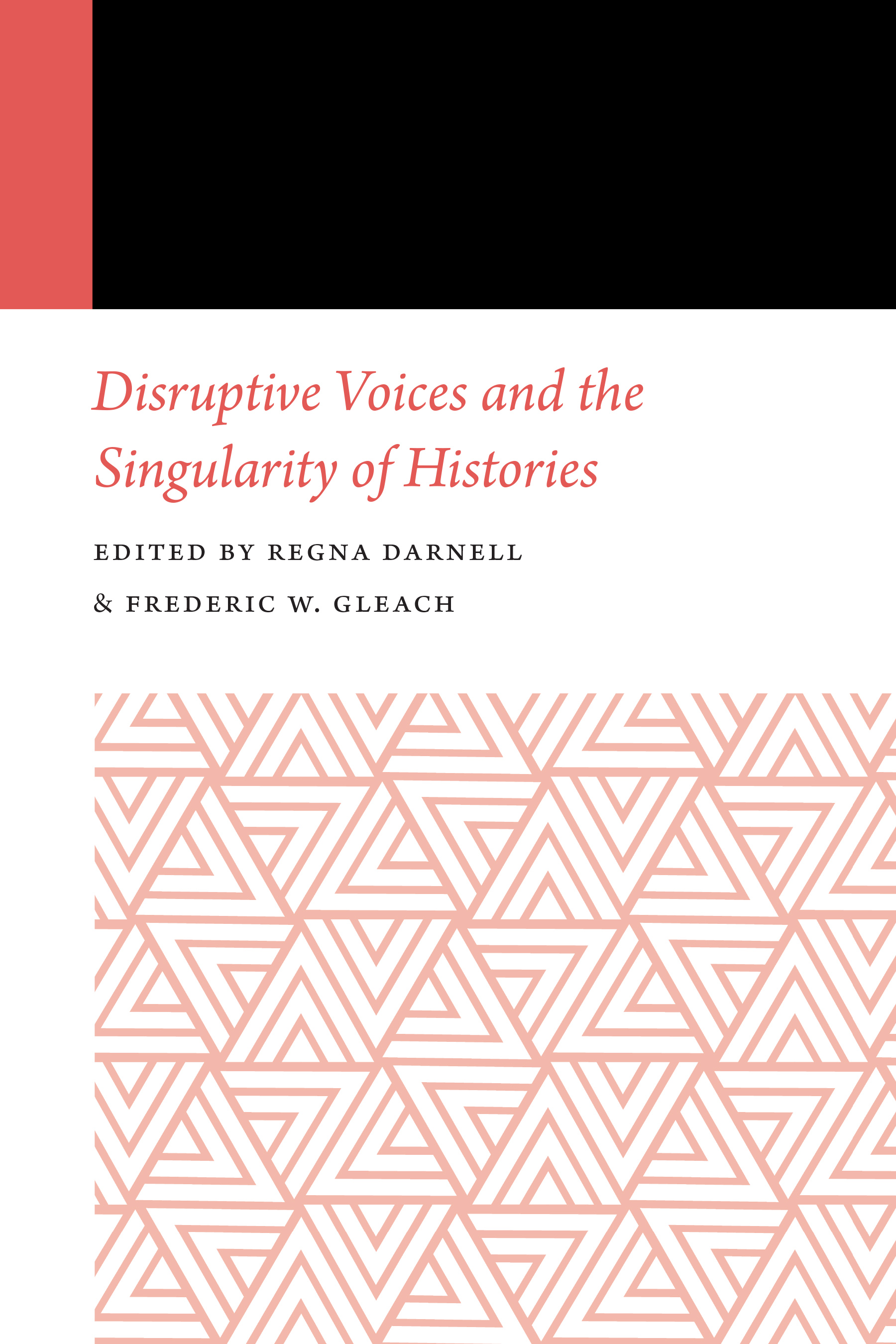
Disruptive Voices and the Singularity of Histories
REGNA DARNELL & FREDERIC W. GLEACH
Disruptive Voices and the Singularity of Histories, explores the interplay of identities and scholarship through the history of anthropology, with a special section examining fieldwork predecessors and indigenous communities in Native North America. Individual contributions explore the complexity of women’s history, indigenous history, national traditions, and oral histories to juxtapose what we understand of the past with its present continuities.
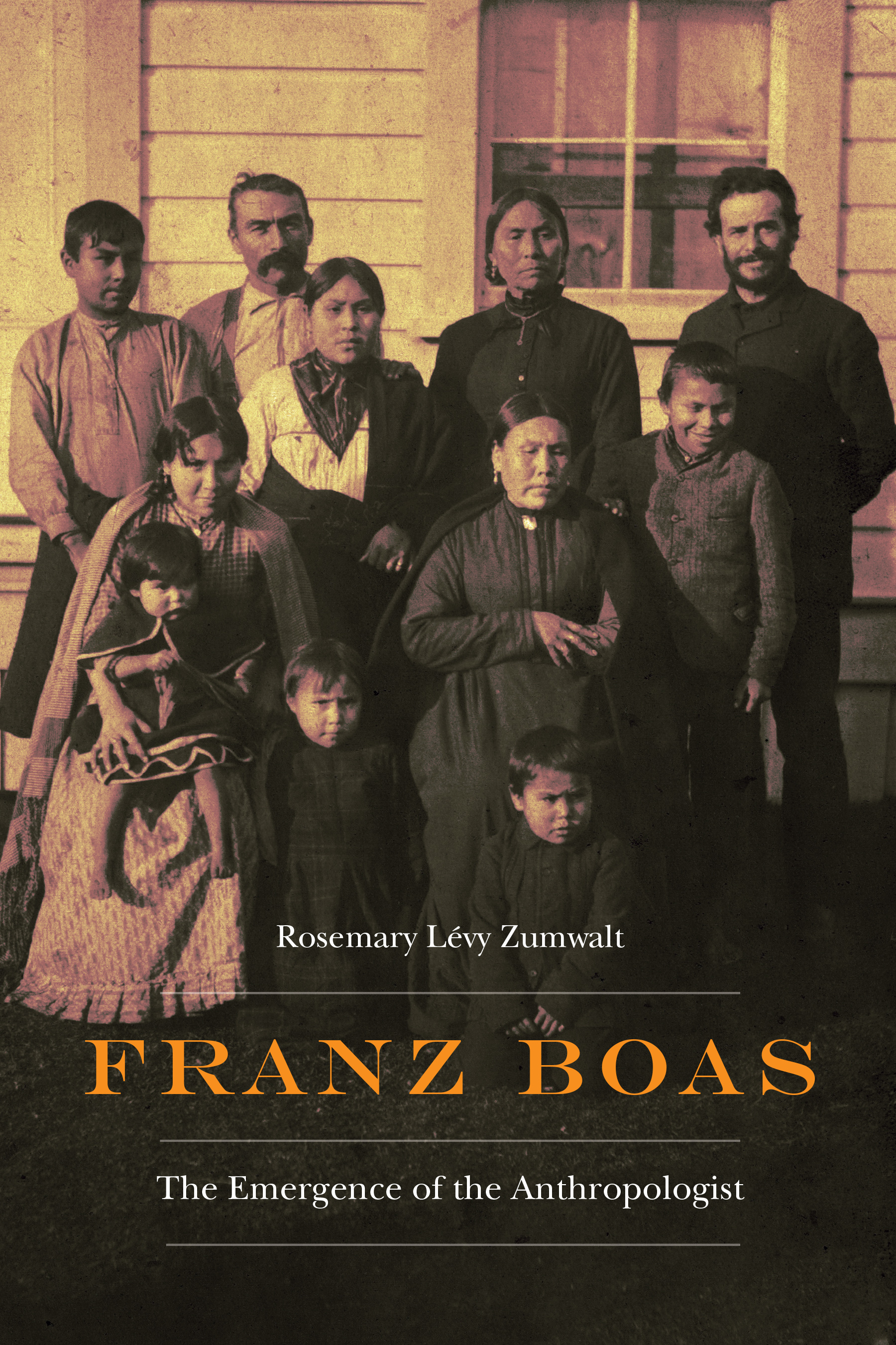
Franz Boas
ROSEMARY LÉVY ZUMWALT
Zumwalt follows the stepping-stones that led Franz Boas to his vision of anthropology as a four-field discipline, a journey demonstrating especially his tenacity to succeed, the passions that animated his life, and the toll that the professional struggle took on him. Zumwalt guides the reader through Boas’s childhood and university education, describes his joy at finding the great love of his life, Marie Krackowizer, traces his 1883 trip to Baffin Land, and recounts his efforts to find employment in the United States.
Hoarding New Guinea
RAINER F. BUSCHMANN
Hoarding New Guinea provides a new cultural history of colonialism that pays close attention to the millions of Indigenous artifacts that serve as witnesses to Europe’s colonial past in ethnographic museums. Buschmann investigates the roughly two hundred thousand artifacts extracted from the colony of German New Guinea from 1870 to 1920. Reversing the typical trajectories that place ethnographic museums at the center of the analysis, he concludes that museum interests in material culture alone cannot account for the large quantities of extracted artifacts.

Historicizing Theories, Identities, and Nations
REGNA DARNELL & FREDERIC W. GLEACH
Historicizing Theories, Identities, and Nations, examines the work and influence of scholars, including Franz Boas, Ruth Benedict, John Dewey, Randolph Bourne, A. Irving Hallowell, and Edward Westermarck, and anthropological practices and theories in Vietnam and Ukraine as well as the United States. Contributions also focus on the influence of Western thought and practice on anthropological traditions, as well as issues of relativism, physical anthropology, language, epistemology, ethnography, and social synergy.

Lakota Texts
REGINA PUSTET
Lakota Texts is a treasure trove of stories told in the original language by modern Lakota women who make their home in Denver, Colorado. Sometimes witty, often moving, and invariably engaging and fascinating, these stories are both autobiographical and cultural. The stories present personal experiences along with lessons the women have learned or were taught about Lakota history, culture, and legends.

Come Now, Let Us Argue It Out
JON BURROW-BRANINE
Come Now, Let Us Argue It Out provides a look into a community that challenges common narratives about what it means to be LGBTQ and Christian in the contemporary United States. Based on his participant-observation fieldwork with a faith-based organization called the Reformation Project, Jon Burrow-Branine provides an ethnography of how some LGBTQ and LGBTQ-supportive Christians negotiate identity and difference and work to create change in evangelicalism.

Rebuilding Shattered Worlds
ANDREA L. SMITH & ANNA EISENSTEIN
This ethnography of remembering shows how former residents of Easton, Pennsylvania engage collective memory-making through their shared place, language, and class position within the larger cityscape. Demonstrating the creative power of linguistic resources, material traces, and absent spaces, Rebuilding Shattered Worlds brings together insights from linguistic anthropology and material studies, foregrounding the role language plays in signaling “pastness.”

A Totem Pole History
PAULINE HILLAIRE
Joseph Hillaire (Lummi, 1894–1967) is recognized as one of the great Coast Salish artists, carvers, and tradition-bearers of the twentieth century. In A Totem Pole History, his daughter Pauline Hillaire, Scälla–Of the Killer Whale, who is herself a well-known cultural historian and conservator, tells the story of her father’s life and the traditional and contemporary Lummi narratives that influenced his work.

For further reading, check out these Nebraska series: Anthropology of Contemporary North America, Critical Studies in the History of Anthropology, Histories of Anthropology Annual, and Studies in the Anthropology of North American Indians.
 UNP blog