
Brandon Morgan is a history instructor and an associate dean in the School of Liberal Arts at Central New Mexico Community College. His book Raid and Reconciliation: Pancho Villa, Modernization, and Violence in the U.S.-Mexico Borderlands (Nebraska, 2024) was published this month.
Raid and Reconciliation’s release this month coincides with my college’s first study abroad program to Mexico City. I had the immense privilege of co-leading our group of ten students as we explored the theme of urban Latin America through the archeology, history, and vibrant cultures of CDMX. And, of course, being in the city caused me to reflect on my research trips there.

Watching the students’ excitement and wonder at viewing archival documents at the Instituto Mora (they all took out their phones for photos, with no flash, of course) sent my mind back to one of my first research trips at the Archivo General de la Nación (AGN) and the Archivo Histórico of the Secretaría de Relaciones Exteriores (SRE) in the summer of 2012.
I knew a little of the history of the AGN; it had originally been a Porfirian penitentiary with a grim reputation. As I made my way from the registration desk to the reading rooms, signs advertising an academic forum on Pancho Villa’s time at Lecumberri (the penitentiary’s name before it was transformed into the AGN in the early 1980s) caught my eye. I knew that Villa had been imprisoned in Mexico City a century earlier during the Revolution, but I hadn’t previously connected the dots.
At the time of my first visit, the AGN’s archival trove was housed in what had been cell blocks constructed on a panopticon model. Reading rooms were situated at the entrance to each cell block, now dubbed “Galerías.” After submitting my request for documents, I sat at the table and looked down the length of the Galería watching the attendants and archivists pull boxes of dusty files from the shelving where prisoners, political and more mundane, had once been interned. I wondered which cell might have been Villa’s.

Not all archives hold this tight connection to the past in their very buildings. In reality, the most important collections for my work on the history of the New Mexico-Chihuahua border were housed in a warehouse on the grounds, next to the former prison. I spent the majority of my time reviewing the Fondo Hacienda Pública in this more mundane site. There, I found the sources that allowed me to examine the formation of the town of Palomas and attempts to construct a transborder railroad, as outlined in Chapter 2: “Silver Spikes and Failed Dreams: The Violence of Capitalist Accumulation.”
It was also in that dank warehouse that I located the story of the Pacheco family, outlined in Chapter 4: “Solidifying the Border and Straddling the Line: Development and Resistance.” The Pachecos came from the area near Janos in northwestern Chihuahua to establish a home near the Palomas colony. Due to the lack of border demarcation in the 1890s, they unwittingly established a homestead on the U.S. side of the line. Although not considered the founders of Columbus, they were the first people to inhabit the space that was later organized into that border town.
That 2012 stay in Mexico City also marked my first visit to Tlatelolco and the Archivo Historico at SRE. In contrast to the AGN, the SRE archive is located in the basement of a tall skyscraper near the 1950s-era Tlatelolco apartment projects. The locale is steeped in historical resonances, however. It’s across the street from the Centro Cultural Universitario Tlatelolco, a museum that contains a permanent exposition of artifacts relating to the student movement that was met with state violence at the Plaza de las Tres Culturas on October 2, 1968. And, north of the museum surrounding the plaza are the ruins of pre-Columbian Tlatelolco and the colonial-era church dubbed Santiago Tlatelolco.
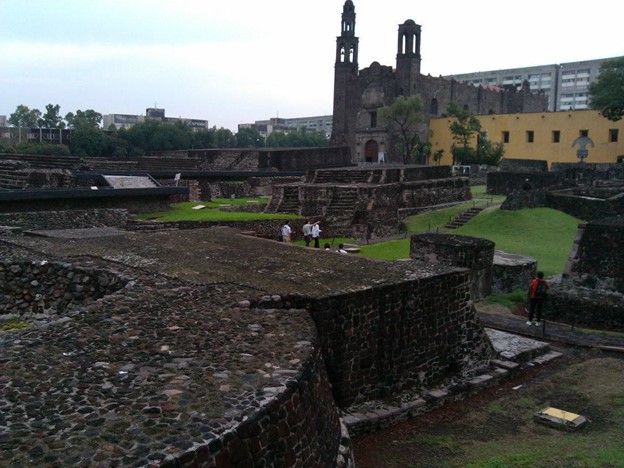
For about a week and a half, I enjoyed a morning walk from the metro stop, through the ruins, to the SRE building where various expedientes dealing with Mexican foreign relations awaited me. It was there that I located the details about Santana Pérez’s 1893 raid on the Palomas Customs House, detailed in Chapter 3: “Los Pronunciados de Tomóchic: Palomas Customs House Raid, 1893,” as well as the less-successful 1896 attack on the same location, examined in Chapter 4.
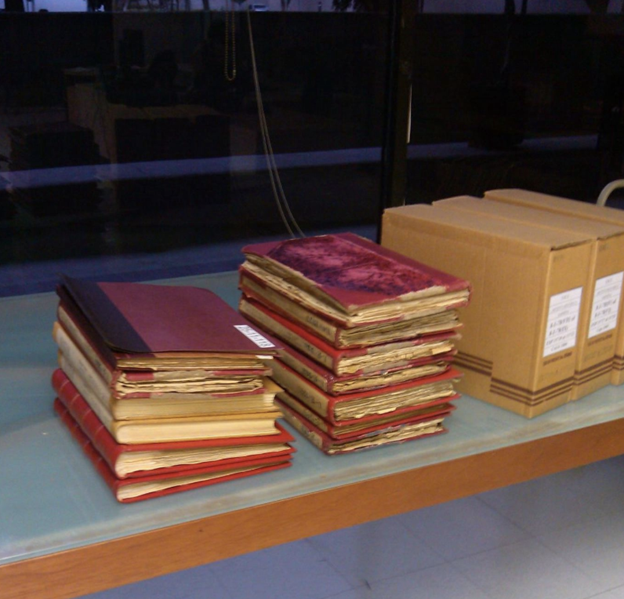
In the expediente holding the personnel papers of the Mexican Consular service, I found a colorful flier that caught my eye and alerted me to the fact that the Carranza government assigned a special consular agent to the town of Columbus in 1917, on the heels of Villa’s raid. The story of Antonio Landín is one that I’m still working to interpret more fully, and I outline his efforts to renew, rejuvenate, and protect the local Mexican population in Chapter 7: “Raid and Reconciliation: (Re)Creating a Multicultural Community.”
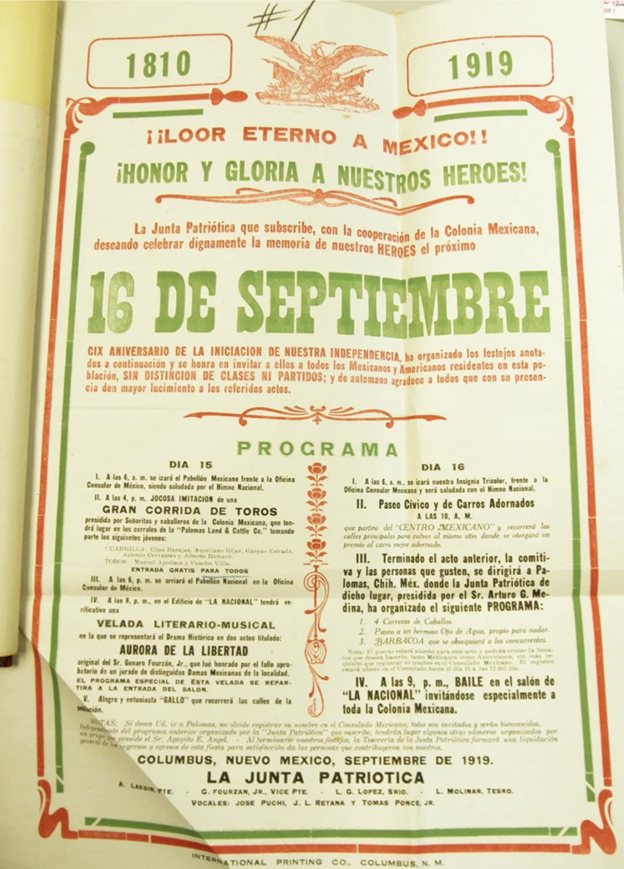
My examination of Landín’s role as a cultural broker and interpreter as a member of the Mexican consular service in Columbus is extended in my contribution to a forthcoming UNP volume, Interpreters in the American West and the World Beyond, edited by Patty Limerick and Andrew Offenburger. I started writing this post in Mexico City, and I’m wrapping it up in my office in Albuquerque. Our students’ final projects on their experiences are due in a few days, and I look forward to hearing more about the insights they gleaned from our time in the Mexican capital. My hope is that students in other university classrooms across the country will pick up Raid and Reconciliation and find a sense of wonder and appreciation for the histories of a borderland that have been long hidden in dusty archives.
 UNP blog