
Alice Beck Kehoe is a professor of anthropology emeritus at Marquette University. She is the author or editor of twenty-one books, including North America before the European Invasions; The Land of Prehistory: A Critical History of American Archaeology; and Girl Archaeologist: Sisterhood in a Sexist Profession (Nebraska, 2022). Her most recent book Truth and Power in American Archaeology was published this month.
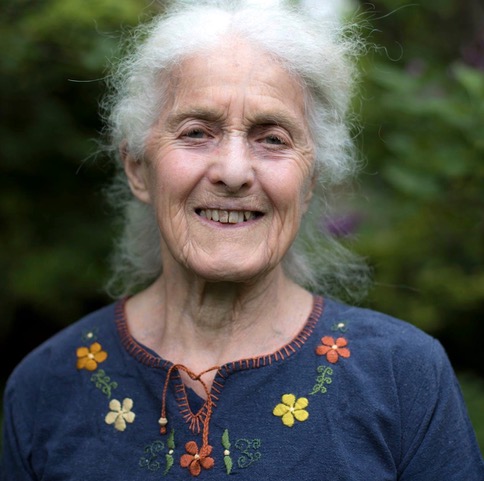

The same year I got my PhD, 1964, the Civil Rights Act was signed into law. So far as women were concerned, it took decades to take effect. My memoir, Girl Archaeologist (Nebraska, 2022) describes how I rolled with the punches of a patriarchal father, worked through “benign neglect” at Harvard, and was never considered for jobs at research universities postgrad—but I persevered. A few months after my memoir came out, receiving praise, my editor Matt Bokovoy proposed a radical next book: publishing papers we had discussed that were rejected by mainstream journals. A daydream come true!
Our working title was “Truth and Power in American Archaeology.” It would be my scientific research, previously kicked down by professors and journal editors riding the bandwagons of glib Théories (as one of my colleagues labels those French philosophers). Immediately, two papers leaped into mind, the one daring to breach the Wall against admitting any contact between First Nations in Anglo-America and those in Latin America, the other describing the blatant racism still ruling White Anglo-Saxon Protestant interpretations of our First Nations. Quickly, other papers slid in. To tie them together, I would write from a postcolonial standpoint; more than that, I know and follow the method of historical sciences, unknown in mainstream American archaeology. What is taught and demanded by the well-supported professors in research universities is pseudoscience, which copies the STEM sciences. This pseudoscience is racist to the core, propagating Manifest Destiny ideology that denigrates our First Nations. The same sentiments are forced upon their children in the residential schools, that their forebears never were civilized.
Remember in kindergarten, at Thanksgiving you enacted the Pilgrims’ first feast, half the class dressed in layers of clothing portraying the good and wise Pilgrims generously giving food to grateful half-naked Indians. Manifest Destiny. Totally wrong: Squanto and his people saved the English from starvation. Still today, school textbooks show Indians in simple clothing, in villages of huts, half-naked men bringing in a dead deer or string of fish. Cahokia, one of the world’s largest cities in medieval times, isn’t mentioned––do you recognize the name? It occupied all of what is now St. Louis plus the eastern side of the river, built monumental mounds larger than Egypt’s pyramids, and farmed huge cornfields. It’s a UNESCO World Heritage Site, yet most Americans have never heard of it. Until recently, not even professional archaeologists recognized it as more than a simple “chiefdom” (a purely academic designation).
Truth, in my book, is in the papers about Cahokia as a powerful state trading into Mexico; about the 1991 horrific denial of two First Nations’ claims to timber around their communities, with the excuse that their forebears were roaming savages; about geographers’ research that all North America’s landscapes show thousands of years of human management. Other papers bring to light how women have been muted when they try to speak as scientists and reveal the unacknowledged men and women who made possible White men’s famed explorations. Tying together the papers challenging mainstream power in American archaeology is an explanation of the science appropriate for remains from the past, “rock, bone, ruins” as philosopher of science Adrian Currie calls it. Our data are literally “givens” remaining from the past, we interpret them by analogy with observed historical and contemporary communities. A competent archaeologist should have experience living with non-Western people to learn other understandings of reality, should read widely in ethnographies and histories, and should pay attention to data context.
There has been a revolution in American archaeology with the passage of NAGPRA, North American Graves Protection and Repatriation Act, in 1992. Archaeologists are now forced to acknowledge that the bones and artifacts excavated in North America from First Nations’ sites belong to them, their descendants, just as settlers’ bones and possessions belong to their descendants. Archaeologists have been riding a high horse, trampling sites’ significance to contemporary communities. Now, young archaeologists are expected to collaborate with the communities they study. Power has shifted from the ivory tower professors playing with Théories. Women cannot be denied research opportunities, even women with children (my fatal flaw in the eyes of men in power). Most significantly, there is no more “prehistory”: precontact data are the deep-time histories of living communities today. My book combats Manifest Destiny propaganda with historical-science data and broadly informed interpretations. It does all of that in a readable style, not academese.
 UNP blog