
Sherrie Flick is a senior lecturer in the MFA and food studies programs at Chatham University and a freelance writer and editor. She received a 2023 Creative Development Award from the Heinz Endowments and a Writing Pittsburgh fellowship from the Creative Nonfiction Foundation. One of the essays in Homing: Instincts of a Rustbelt Feminist (Nebraska, 2024), “All in the Family: Waldo and His Ghosts,” was listed as notable in The Best American Essays 2023. Flick is the author of Thank Your Lucky Stars: Short Stories; Whiskey, Etc.: Short (Short) Stories; and Reconsidering Happiness: A Novel (Nebraska, 2009). She writes, works, and lives in Pittsburgh, Pennsylvania.
At first, it seemed straightforward, like a little kid’s drawing. Here’s a house and a cloud, and a tree. Here’s a line designating the horizon, a place for people to walk around in. For a big chunk of time, I didn’t pay close attention to setting in my work. It was there, yes, but it came in to support my characters because they were my main concern. Then I drafted a place-based novel, Reconsidering Happiness (University of Nebraska Press, 2009). Shifting from short stories to a novel gave me room to breathe and to dig into the craft element of setting in a new way. I wanted to evoke places that were entirely different from each other both geographically and emotionally.
Around that time I received a Pennsylvania Council on the Arts grant. I used the funding to follow the exact same route my character Vivette drives in the book. I’d written the setting from memory, photographs, and research.
Once I turned to the complexity and potential of writing setting, a whole new world opened to me. The idea of observation itself became part of my writing process. I spent years engaging in daily writing exercises focused on looking closely and rendering what I saw onto the page without judgment, which is Chekhov’s take on writing. To paraphrase him, the writer’s job isn’t to solve the problem, but to state the problem correctly—and I realized this essential truth tied directly to rendering place. The importance of setting became especially clear to me as I began to teach a Food Studies class called Writing About Food that examines food literature and the craft of food writing. Like a bolt of lightning, I realized that to write taste a person needs to write place. To write taste—the act of eating itself—a writer has to put the reader in a scene that comes to evoke the taste because describing something as “delicious” doesn’t cut it.
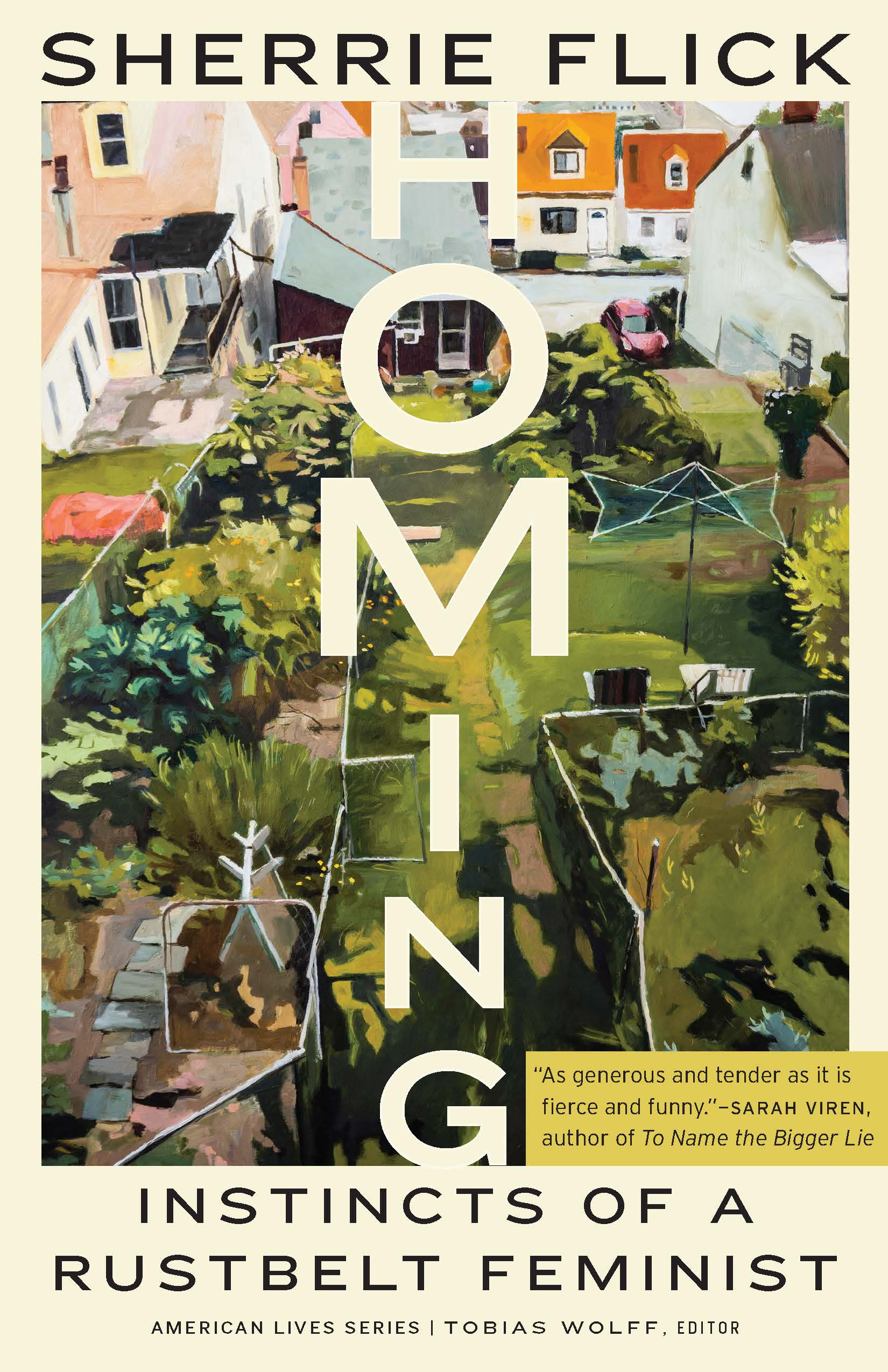
I began writing about food for some magazines and newspapers and this led me in a meandering way to creative nonfiction itself. In 2015 I became a Writing Pittsburgh fellow at The Creative Nonfiction Foundation and through that experience I published some long-form essays that led to my latest collection of essays, Homing: Instincts of a Rustbelt Feminist. These are place-based essays that examine my relationship to where I grew up, left, and returned to: Western Pennsylvania. Through drafting and revising I discovered some interesting strategies to enhance and showcase the writing of setting.
There’s the remembering of a place—a memory—fueled by emotion and a kind of knowing that only comes from hindsight. Then, there’s the observing of place to render it onto the page—an exacting replication based on some combination of seeing it and research. It’s my belief that the best pieces of writing have a combination of both kinds of setting present—whether it be fiction or nonfiction. This blending is as necessary as varied sentence structure or the refinement of paragraphing or chapter lengths. It’s a kind of scaffolding, invisible to the reader because it’s the part of building a piece of prose that takes careful attention by the author so that the reader just floats on through.
I love thinking about the backend work of writing. The part that goes unseen by most readers. I sometimes compare it to the wires, gears, and lights jammed into the underside of a pinball machine. A person turns the little silver key in the machine’s front door and peers in, smells that dusty electrical zip, sees the unlikely organization—the chaos really—that makes the thing work like a champ up top.
In my essay collection I purposefully employed my dual strategy setting writing tactics throughout. I would write a draft of a place from memory. And then I would visit the place in person to see if my memory matched up emotionally and also what little details I’d forgotten that could make the scene pop via revision. It’s sort of like fact-checking yourself—your memories, your observations. They click together to make a more accurate, more complex, big picture of place that’s charged by two different parts of your brain working together to form a 3-D place on a 2-D piece of paper. It’s all smoke and mirrors, after all.
Pittsburgh is the dot on the map in Allegheny County that I drive away from as I head into Beaver County on Route 376. First zipping along dense urban streets, then a series of confusing bypasses, then through the Fort Pitt Tunnel and past Robinson Town Center’s plaza malls and big box stores, and out to the highway along densely wooded slopes and rock ridges that have been carved through to make what I grew up calling “The Big Road.”
In the spring and summer there are purple and yellow pockets of wildflowers here and there. Dead deer, possums, and raccoons line the side of the road. A deep organic smell rises up beyond it all, a combination of earth and rain. With the windows down I hear crickets and locusts wailing in and out of range, and the air smells warm. It’s distinct—the way this smell nestles into me and the air permeates my skin. In the fall, there are bright bursts of leaves along the hillsides in red, burgundy, yellow, and brown. In winter, fat snowflakes layer themselves down to cover patches of black ice.
The second half of the drive passes Pittsburgh International Airport. For years it signals I’m about to hit ground zero when traveling home from out of state, sitting in the passenger seat after one parent or another has fetched me from the airport. I watch the familiar tree-lined rock formations zip past, anticipating gauging the obvious ways I’ve changed since the previous visit home. –from the essay “Faith in Movement” in Homing: Instincts of a Rustbelt Feminist
 UNP blog