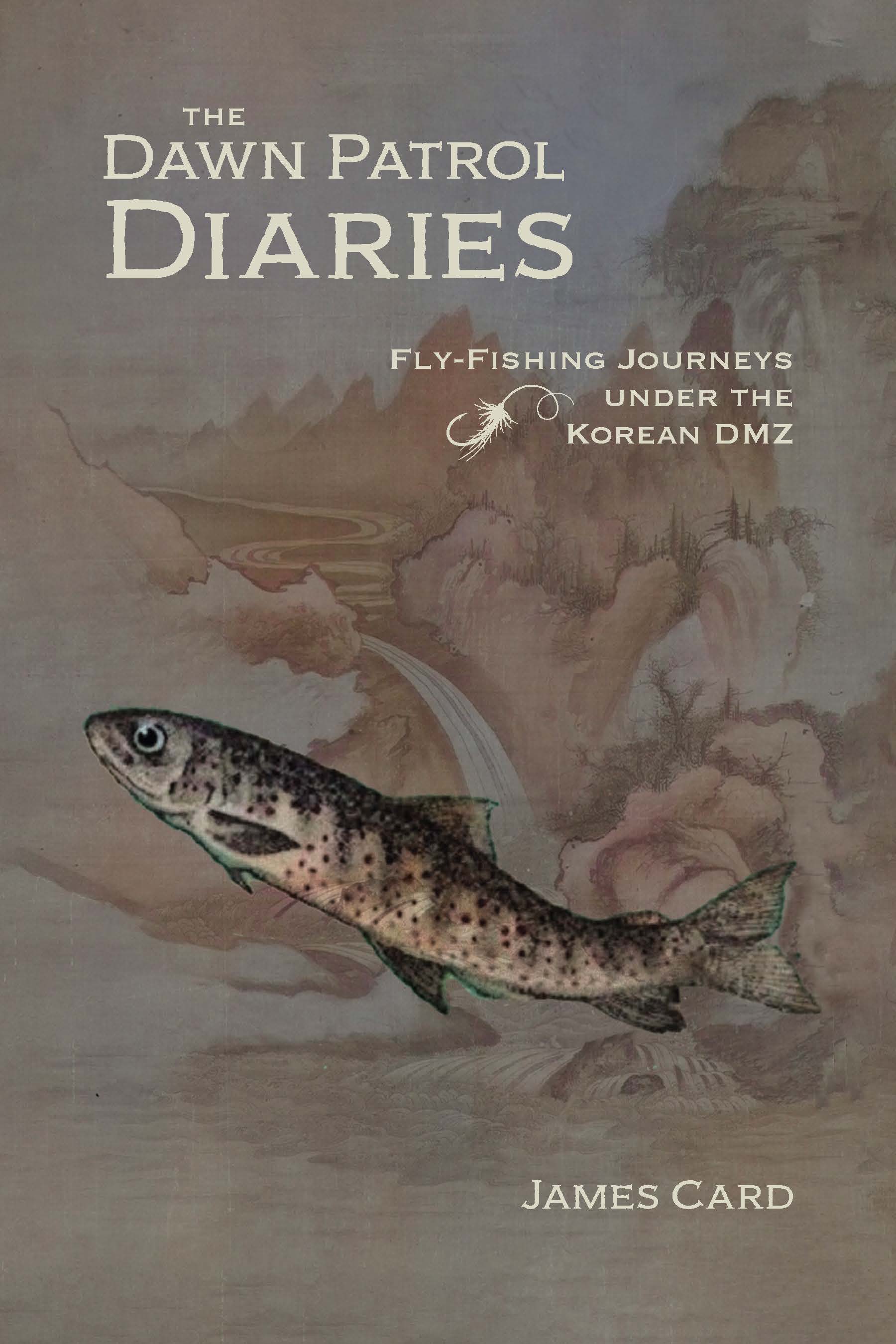
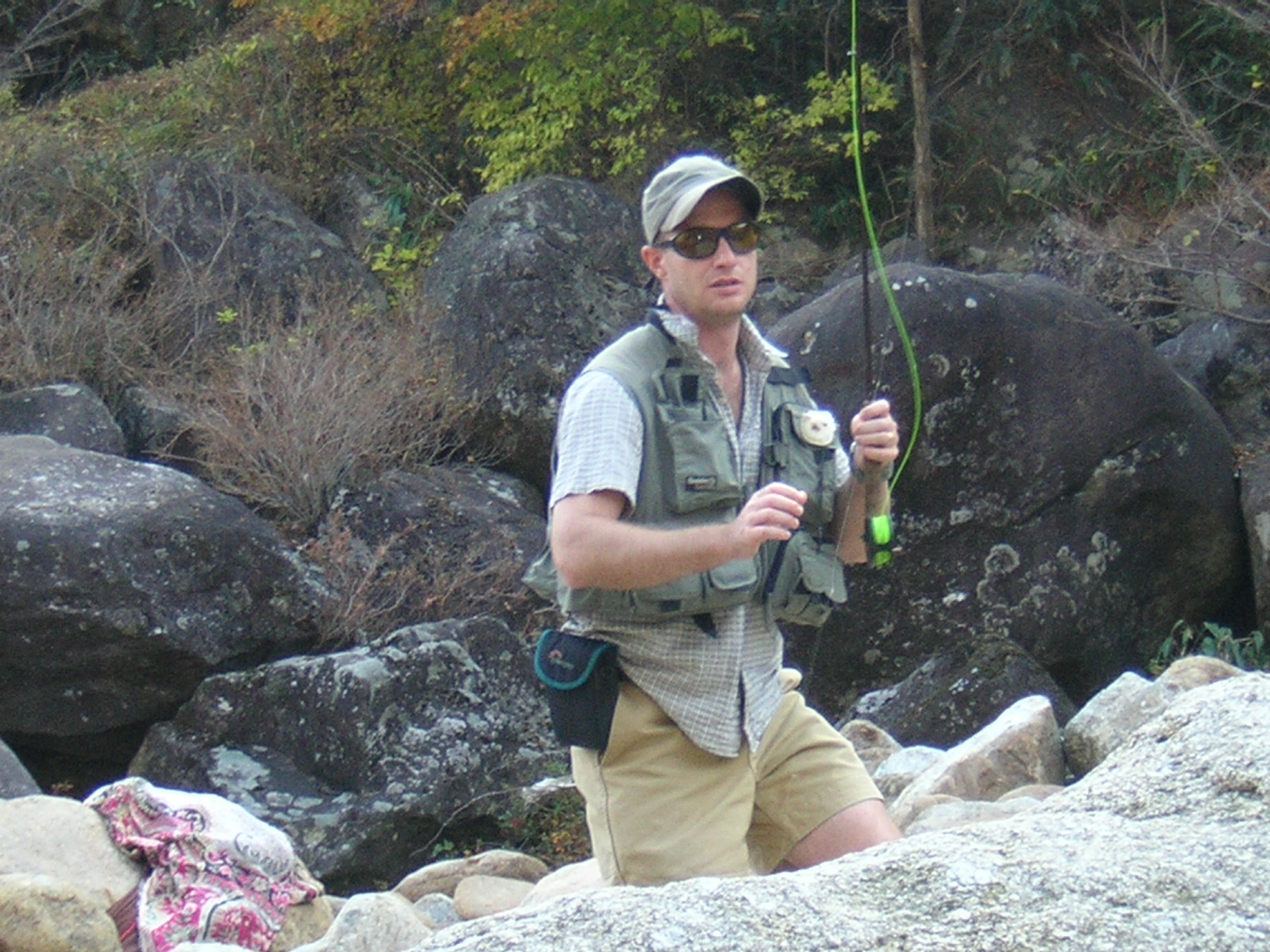
James Card lived in South Korea for twelve years working as a freelance journalist and fly-fishing guide. He has written for the New York Times, the Wall Street Journal, Rolling Stone, The Drake, and other publications. His book The Dawn Patrol Diaries: Fly-Fishing Under the Korean DMZ was published in September.
In The Dawn Patrol Diaries Card writes about fly-fishing as well as South Korean landscape and culture. His travels range from the borders of the DMZ to inland mountain trout streams, from the rugged southern coast to the tidal flats of the western coast. He goes fly-fishing where battles of the Korean War were fought and offers vivid descriptions of the last wildlands in South Korea as well as insightful observations on the perils facing Korean cities, villages, and farms.
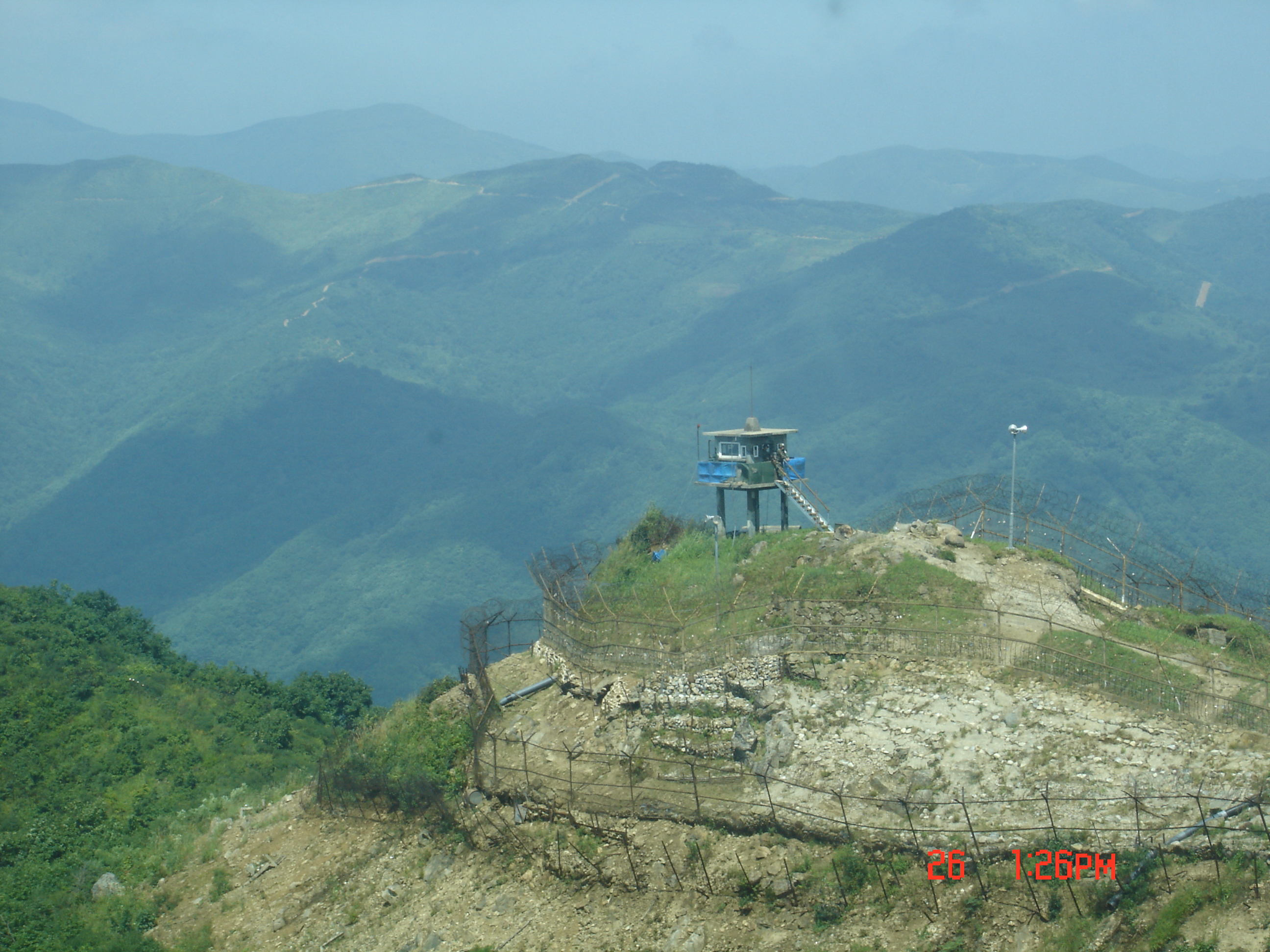
On my jaunts in the South Korean backcountry with a fly rod I came across strange animals, plants and trees; and I also came across long-abandoned foxholes, planks of rusted Marston matting, and markers of battles that were fought before I was born. I took notes on these curiosities.
The Korean War is nicknamed the “Forgotten War”, and few people know that there was a second Korean War that was also forgotten as the world’s attention shifted to Vietnam. In the late 1960s, North Korean commandoes regularly infiltrated the DMZ and the result was skirmishes up and down the length of the DMZ despite the armistice agreement.
This warfare was called a “low-intensity conflict,” meaning no epic or massive battles were fought, instead, just constant on-the-edge terror of random attacks and spontaneous sniper fire that could break out at any time. All of this could easily escalate to Korean War II. The soldiers serving there were patrolling a powder keg that had a long, flickering fuse.
“If we’re killed on a patrol or a guard post, crushed in a jeep accident or shot by a nervous GI on the fence, no one will ever write about us in the Times or erect a monument or read a Gettysburg Address over our graves . . . We’ll never be part of the national memory,” wrote William Hollinger is his novel The Fence Walker.

Decades later, I was fly-fishing with a U.S. Army colonel on a creek an hour’s drive from the DMZ and I pointed out a thin wire that ran through some brush along a trail that led to a deep-woods Buddhist hermitage. I surmised that it was some kind of old telegraph line.
“That’s det cord,” the colonel said.
“Det?”
“As in detonation.”
When I encountered unusual aspects of the landscape, like this forgotten Det cord, I looked to history and historical fiction for clues: “The road to the right led northeast toward the Punchbowl and Heartbreak Ridge; the road to the left took them due north toward Chorwon, Pork Chop Hill, Old Baldy and the 4077th MASH,” wrote H. Richard Hornberger Jr. under the pen name Richard Hooker in his novel MASH, which follows three doctors who are part of the Mobile Army Surgical Hospital during the Korean War.
The Punchbowl mentioned in MASH was of interest to me because it was also referenced in a letter from my great uncle who served in the Korean War. With scraps of information about the warfighting waged in that area, I tried to follow in his footsteps the best that I could. In turn, I discovered many trout streams in the northeast province of Gangwon where many of those battles were fought.
Centered in this province is the city of Hoengsong where US troops were slaughtered in a narrow mountain valley in mid-February 1951. They walked into a major counteroffensive of Communist forces who took the high ground. They were vastly outnumbered and surrounded. For some soldiers, it ended in hand-to-hand combat.
When the Marines of the 7th Regiment arrived, they were horrified at the hundreds of dead soldiers that fell where they fought. The bodies covered the road. Some were taken prisoner and later died in captivity. Others were listed as missing in action and remain missing to this day. The Marines posted a sign there: “Massacre Valley, Scene of Harry S Truman’s Police Action. Nice Going, Harry!”
Taking the high ground in battles is a key tactical advantage and South Korea is a mountainous country so this leads me to study topography. I blue-lined the Gangwon province over and over again, looking for creeks in steep and narrow valleys. Once I identified some blue-line potential, I’d load my car with provisions and gear and disappear for a weekend, usually camping along some of these remote streams. Moving stealthily in river valleys allowed me to encounter all kinds of Korean wildlife, many I had never seen or heard of before, such as the Korean water deer, an antlerless deer with fang-like tusks, and the raccoon dog, a creature that reassembles an American raccoon but is the canine family.
While studying these animals, I often felt a kinship towards early American naturalists such as Meriwether Lewis first describing the cutthroat trout, or like Louis Agassiz trying to figure out new ichthyological classifications. How would I describe this fish I enjoyed catching to a friend back home? “Well, technically it’s in the perch family but it acts like a smallmouth bass . . .”
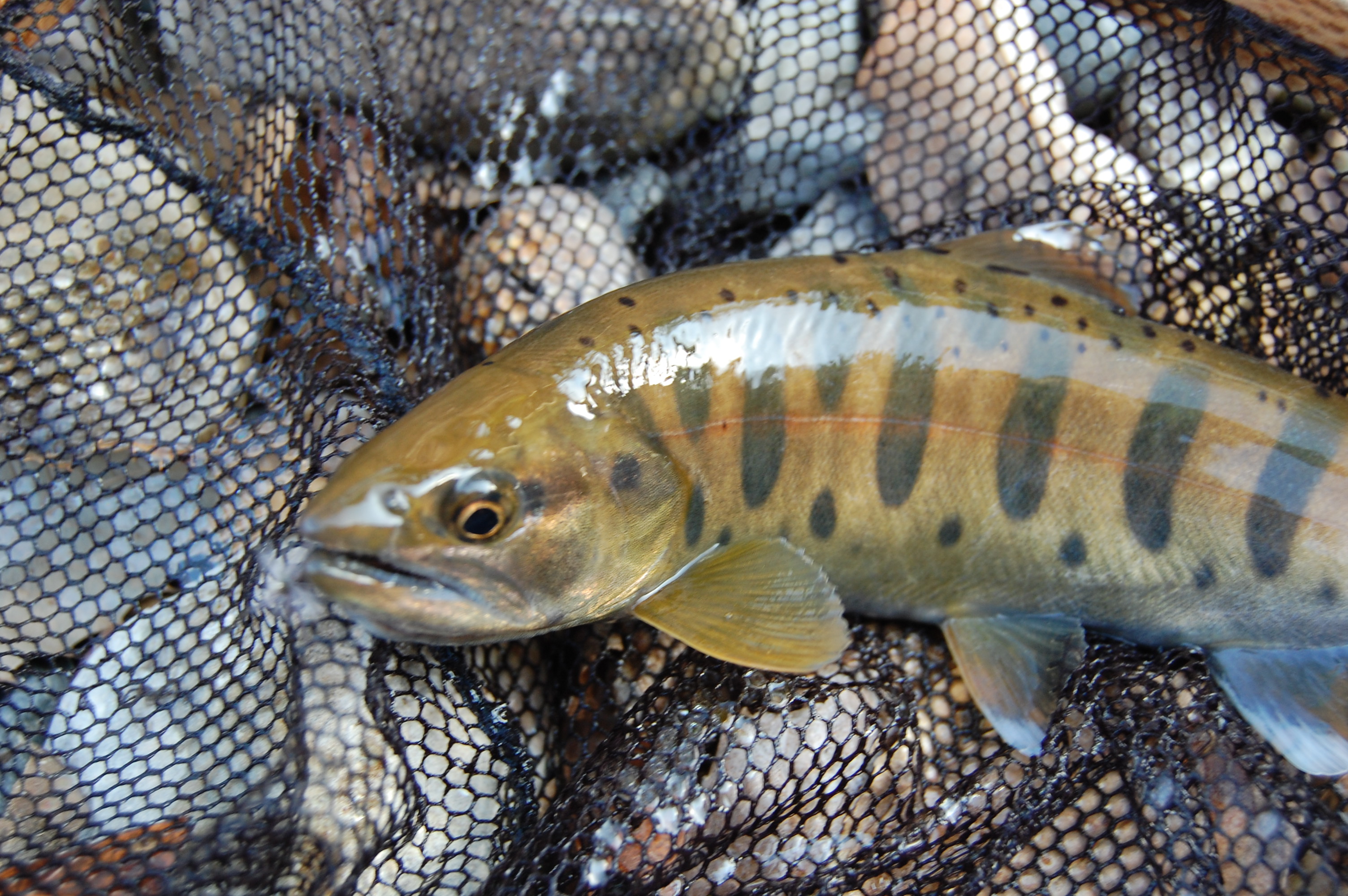
There wasn’t much written about these creatures, so I found descriptions of them in the accounts of early Western explorers and missionaries in Korea: “Wolves, tigers, and the wild hog are nuisances in the north, and the lives of the natives are made miserable by their raids. The eagle, pheasant, stork, and crane are common, and ducks, fish, clams, and crabs, similar to those found in our waters, abound,” wrote U.S. Navy Rear Admiral John D. Ford in his 1898 travel memoir, An American Cruiser in the East.
The key phrase of that quote is “similar to those found in our waters.” This was true for many things, and not only in the aquatic world. The pine, birch, oak, and larch trees are pretty similar and the same goes for many birds, fish, and animals. There are some oddities but more similarities. The trout behaved the same way a trout would behave in any North American creek. The Northwoods of America are not so much different than the Northwoods of Asia.
 UNP blog