
Jerry Grillo is a longtime journalist and author of The Music and Mythocracy of Col. Bruce Hampton: A Basically True Biography. His work has appeared in Georgia Trend, Atlanta Magazine, Paste Magazine, Newsday, and jambands.com, among other publications. His latest book Big Cat: The Life of Baseball Hall of Famer Johnny Mize (Nebraska, 2024) was published in April.
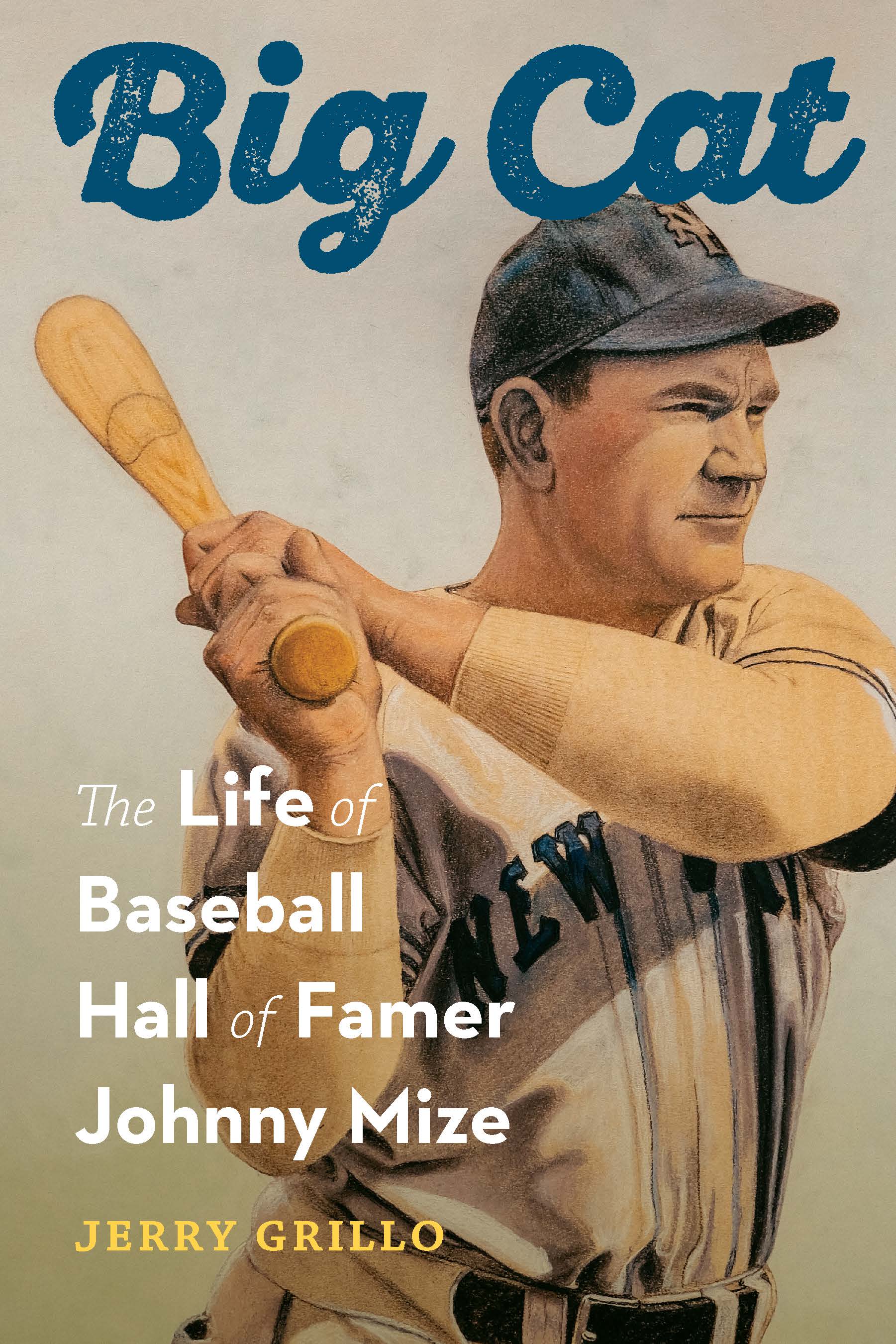
As the baseball season wraps up with the 12th World Series featuring the Yankees and the Dodgers, I’m reminded of Johnny Mize.
Specifically, I’m reminded about how Big Jawn won five World Series as a member of the New York Yankees (1949 through 1953), including three against the Dodgers, who belonged to Brooklyn at the time. And I’m reminded of a question that I get during every interview or podcast about my book.
The question: Why did it take Mize so long to become a Hall of Famer? My answer usually has something to do with those five seasons he spent wearing pinstripes in the Bronx. Those were Johnny’s last five years as a ballplayer. He was old in baseball years, heavy and slow, and mainly a pinch hitter, and those are generally not the qualities Hall of Fame voters look for.
Mize spent six seasons with the St. Louis Cardinals when they were in between dynasties—a good, but not great team. He then spent parts of five seasons with the Giants (broken up by three years in the Navy during World War II). These were mostly spectacular seasons, but the Giants were the epitome of “meh” in those days, despite having a fearsome lineup of home run hitters, led by the Big Cat. Then there were the Yankee years. Mize was no longer a star but was a key cog in Casey Stengel’s machine. But Casey had many cogs, and no one has suggested that Gene Woodling, Hank Bauer, or Johnny Hopp are Hall of Famers. Mize was one of those guys as a Yankee.
So, my short answer is that I think many Hall voters forgot (or ignored) Mize’s first ten seasons of superstardom when he was among the best hitters of all time, but remembered that he played for several teams, none of them for very long (a la DiMaggio, Williams, or Musial), and his last years weren’t exceptional. That, plus changing rules in Hall voting, helped wedge the Big Cat through the cracks.
What often is, or was, forgotten is how Mize came through in the World Series. He was absolute poison to the Dodgers. Johnny batted .400 in those three Series against the Dodgers and was named the outstanding player of the 1952 affair when he hit three homers, and the Yankees won in seven games.
But he’d always enjoyed whatever Brooklyn’s pitchers were serving up. During all those years with the Cardinals and Giants in the National League, he hit .326 and slugged .616 against the Dodgers. Then, after moving over to the American League to join the Yanks, he quickly got to work abusing Brooklyn some more. In the 1949 World Series Mize had two hits in two pinch-hitting appearances, including a game-winner that Stengel called the highlight of his first pennant-winning season in the Bronx. That ninth-inning, Game Three base hit off Ralph Branca in Ebbets Field was also the highlight of Mize’s career.
Mize went on to have some other big Series moments, but he always ranked that single above all the other hits in his career.
But my personal favorite Mize World Series moment might be one in which he played the goat. Don’t get me wrong. I don’t enjoy some sick kind of glee with seeing the subject of my book fail. It’s just that I’ve always loved Carl Erskine so much. Great Dodger right-hander, kind of a little guy with a huge heart, retired after he and his wife had a son (Jimmy) with Down syndrome, and became an advocate for disability rights and for the Special Olympics. Carl was a wonderful human.
In 1953 Erskine struck out Mize–who was notoriously very hard to strike out—to set a World Series record. Johnny had homered of Carl in 1952, and Erskine always remembered the Big Cat as the toughest left-handed hitter, except for Stan Musial, that he ever faced. But Johnny swung at one of Carl’s sinking curveballs in the ninth inning of Game Three, becoming Erskine’s record-setting 14th victim that afternoon.
One of the best parts of writing Big Cat was getting to meet people who knew Mize. Carl Erskine was one of those guys. I called him one February day during the pandemic to see if he wouldn’t mind talking about his career, and about his World Series battles with the great Johnny Mize. He was happy to.
And I loved how he concluded his story of that strikeout, one of the great moments in World Series history: “Johnny Mize was kind of a nemesis for me. So, I’d say it was poetic justice, striking him out to set the record.”
Some extra inning news: Stay tuned for a documentary based in part on Big Cat, from Atlanta filmmaker Hal Jacobs (https://www.hjacobscreative.com/), coming in Spring 2025.
 UNP blog