Lory Bedikian is the author of The Book of Lamenting, winner of the Philip Levine Prize for Poetry. Her poems have been published in multiple journals, including Tin House, the Adroit Journal, the Los Angeles Review, and Gulf Coast. She teaches poetry workshops in Los Angeles. For more information about the author, visit her website. Her latest book Jagadakeer: Apology to the Body (Nebraska, 2024) was published in September.
On Monday, October 28, 2024, my brother was involved in a terrible car wreck. He is in the critical care unit of a hospital, unconscious, and as I write this my nieces, my other brother, and I wait for signs of hope. When offered this opportunity to write a blog post I had plans of eloquent openings and creative starts. I thought this is yet another chance to show some skill and arrange words cleverly and insightfully, but day after day I froze up. While cursing feelings of numbness, I wonder if it even matters that I’m writing at all. My words can’t save him.
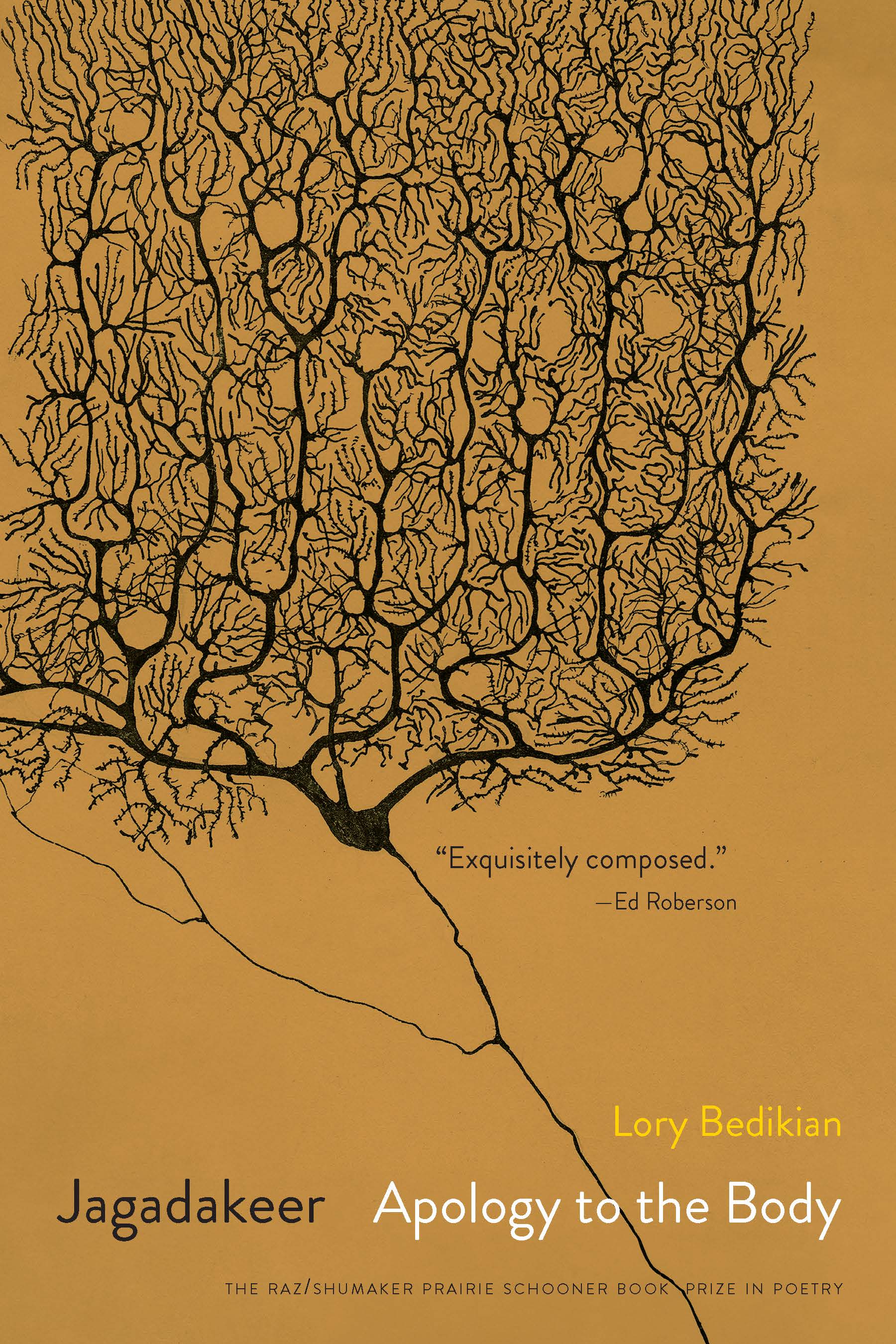
Ironically, these emotions, thoughts, and reactions are similar to what I experienced before putting together and finishing my second book of poetry Jagadakeer: Apology to the Body. On March 5, 2020, my mother passed away. A little over a year before, in July of 2018, my father died as well. Just as my mother died the world was entering the pandemic. With the rest of the world, I entered a time of mourning for the lives we were losing as well as trying to make sense of the sudden secluded lives we were managing.
Jagadakeer, pronounced jaw-gaw-daw-keer, means “fate” or “destiny” in the Armenian language. The concept of fate was at the forefront of my thoughts as I faced the losses of not only my parents but the losses of the world. Within the collection, some of the poems attempt to address this notion while others address mourning my parents amidst a time of global illness and uncertainty.
I had never imagined that my second book would be a series of elegies for my parents. The only topic I planned to explore was that in 1999, I was diagnosed with multiple sclerosis and have been managing the illness ever since. I wanted the second collection to address the physical as well as psychological implications of living with disease in the best way I could: through the crafting of poems. I wanted to do research, delve into the science and biology, and come up with poems that were technical, tenacious, and tender.
However just like the plan of what I would write for this blog changed, so did the plan for my book. I began to take poems I had written for my own experiences, such as “Apology to the Body,” and place them alongside elegies I began to write for my parents, like “Before the Elegy, Speak to Her” or “Theorizing Vahan’s Departure.” When I thought the book was complete I suddenly realized that I wanted to address my illness head-on while taking more risks. Previously titled “Apology to the Body,” I now wanted to add a new dimension to the book’s name, making it current to my life, thus “Jagadakeer: Apology to the Body.”
When first diagnosed with MS my mother sternly instructed me that I was not to share this information with her sister, my aunt. She said sharing such information was shameful. This was while they, my parents, conversed almost daily about my uncle’s kidneys, his dialysis, and his failing health. After the passing of my mother, I realized that I felt a freedom to finally be transparent in my literary career about my health, about being diagnosed, and about how one should not feel ashamed of their health struggle, but embrace their journey. As a poet, this meant crafting poems that embrace an imagination informed by MRIs and unknowns, the body’s failures as well as recoveries.
During the pandemic, I decided that although I felt like an unpaid teacher’s assistant, guiding our children through these unimaginable days of spending our lives, their school days, indoors and in front of computers, I would use the evenings to write as much as I could. I began working on a poetic sequence, a longer piece titled “Jagadakeer: In Remission,” voicing short poems stitched together which now comprises the end of the book. Again, the plan I envisioned changed dramatically, but I used the events, and the misfortunes to feed my work. Today I’m grateful that the words, poems, and goal to finish the book gave me the strength to get through all of it.
Finishing the manuscript, adding poems of mourning, reclaiming my path, accepting my own fate, and finding healing through writing, all of these moments allowed me to realize that poetry was not only my strength but my companion through the worst scenarios of life. My hope in completing the book and having it published was a way of showing myself and others that we can find not only comfort and healing in poetry but also strength, magnanimity, and the courage to move forward.
 UNP blog
One thought on “From the Desk of Lory Bedikian: Jagadakeer”