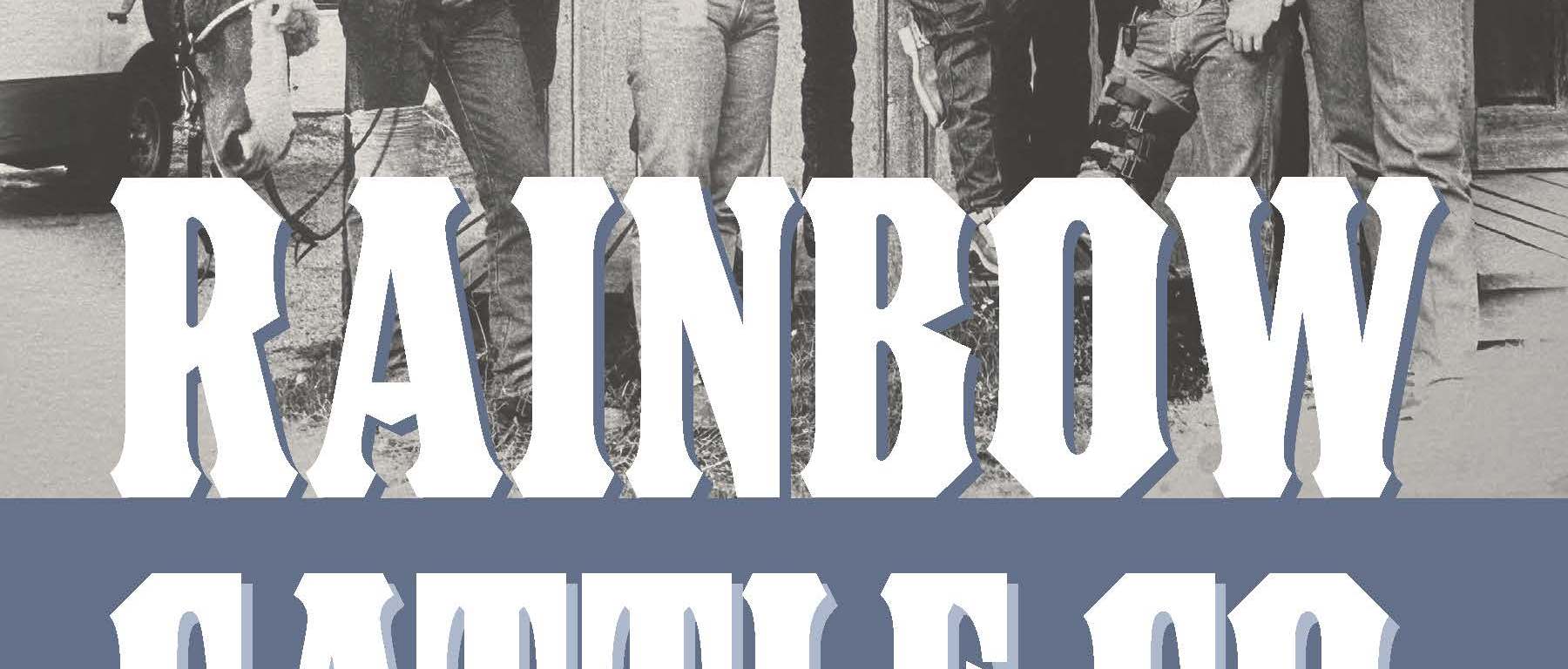
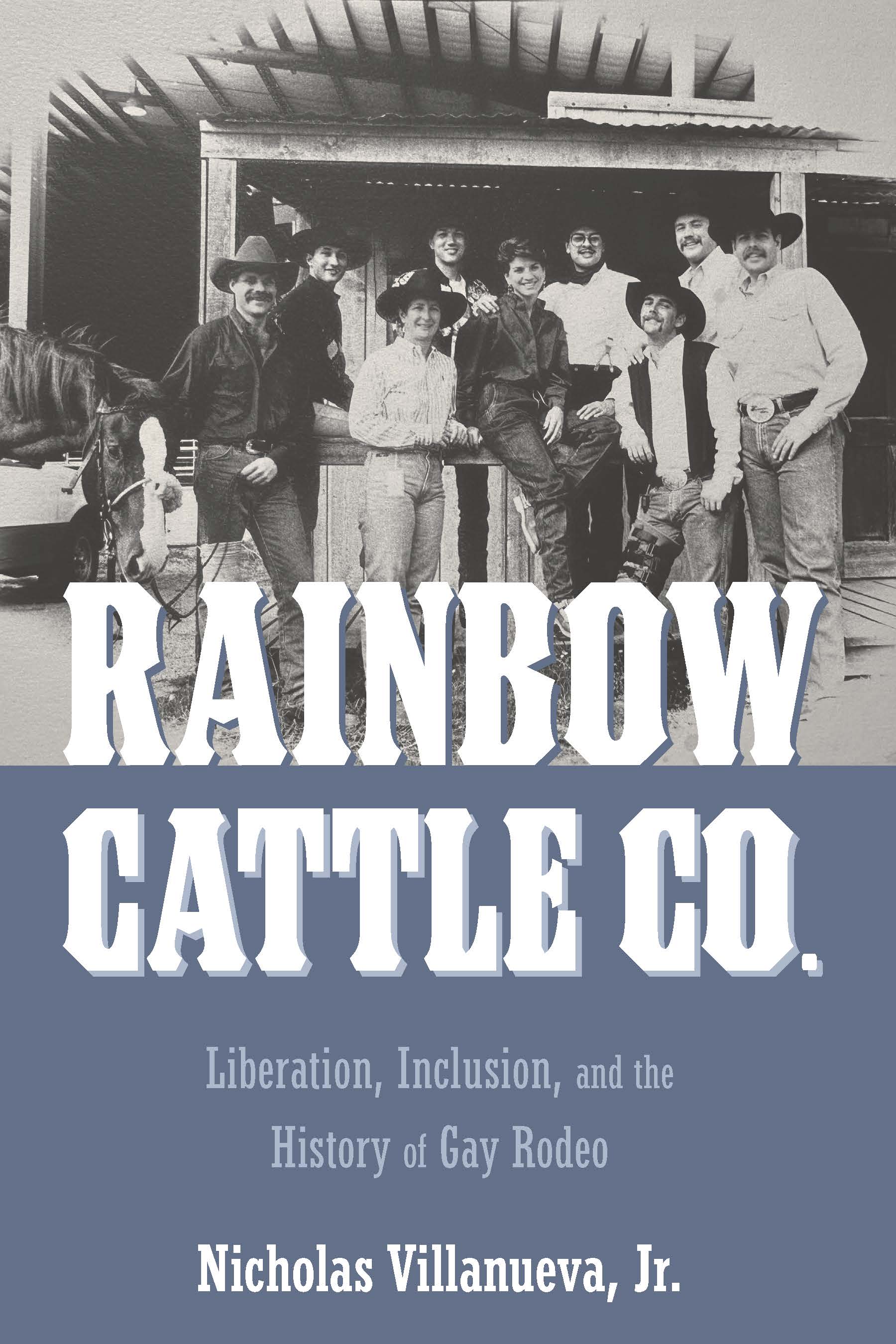
Nicholas Villanueva, Jr., is an associate professor of ethnic studies and the director of Critical Sport Studies at the University of Colorado, Boulder. He is the editor of The Athlete as National Symbol: Critical Essays on Sports in the International Arena and Critical Sports Studies: A Document Reader and the author of The Lynching of Mexicans in the Texas Borderlands, winner of two southwestern book awards. His latest book Rainbow Cattle Co.: Liberation, Inclusion, and the History of Gay Rodeo (Nebraska, 2024) was published last month.
Rainbow Cattle Co. tells the story of gay rodeo as an overlooked and important part of the LGBTQ liberation movement. Nicholas Villanueva, Jr., argues that the history of gay liberation has been oversimplified as a fight for sexual freedom in the major cities of the 1970s. But, as Villanueva reveals, the gay liberation movement thrived in rodeo in the U.S. West and in rural communities throughout America. LGBTQ rodeo athletes liberated themselves from the heteronormative social world of sport and upended stereotypes of sport and queer identity. Organizers, athletes, and spectators fought to protect their rights to openly participate in sports, and their activism was pivotal in the fight against AIDS.
Introduction
When I was six years old, I told my father I wanted to be a cowboy, a fireman, and a Dallas Cowgirl cheerleader.
—Wade Earp
The opening quotation from Wade Earp characterizes his identity as a young boy. Heteronormative rules of gender and sexuality are taught, but these are socially constructed and not natural. For boys and young men in the borderlands, the American West, and rural regions of the country, cowboy culture is taught at a young age, and tenets of masculinity are enforced. A significant part of country culture includes the sport of rodeo. Earp is a descendant of Wyatt Earp, the historical deputy marshal of Tombstone, Arizona, and the subject of several Western films. Wade Earp did not grow up to be a fireman or a Dallas Cowgirl cheerleader; he became one of the best rodeo cowboys in gay rodeo history.
In 1976 Phil Ragsdale hosted a rodeo that was a philanthropic event with the purpose of bridging the gap between the marginalized LGBTQ people of Reno, Nevada, and mainstream society. Over the following ten years, gay rodeo organizations formed in multiple states, and in 1985 delegates from Colorado, Texas, California, and Arizona met in Denver and held the first International Gay Rodeo Association (IGRA) conference. It is necessary to inform scholars of LGBTQ studies who are reading this book that “gay rodeo” is often used in place of “LGBTQ rodeo.” The reason for this is that the organization today—the IGRA—uses “gay rodeo” exclusively and does not use the phrase “LGBTQ rodeo,” although it does not adhere to such usage to deny queer identities. Approaching fifty years of the gay rodeo’s existence and nearly forty years as an official international organization, many of the old-timers who helped create these organizations know who they are and what gay rodeo is. They do not feel the need to adopt the more academic and socially acceptable identifiers. For the readers of this book who are members of the IGRA, “LGBTQ” is often used throughout these chapters to confirm my inclusion of all queer identities today. Gay rodeo is inclusive of everyone in the LGBTQ community, people of color, and various religious beliefs; as Greg Tinsley of the Colorado Gay Rodeo Association said, “We even accept ‘straight’ people, because we don’t care who they marry.”
Following the first successful gay rodeo in 1976, the LGBTQ community throughout the West learned of Reno’s event. Men and women who grew up with rodeo in their lives often hid their LGBTQ identities for some time, avoided being seen with same-sex partners, or falsely claimed to live heteronormative lives. The gay rodeo intrigued gay rodeo athletes who only knew the mainstream rodeo, or “straight circuit,” as many IGRA members refer to it. Since 1976 gay rodeo has become an annual event bringing the LGBTQ rodeo community together, and for some it has introduced a subculture that many did not know existed. By the early 1980s, Reno’s event had hosted more than ten thousand people. Nevada’s libertarian political climate appeared to accept unconventional lifestyles. The people of the state seemed to be accepting of the LGBTQ community to some degree, as the gay liberation movement had brought more men and women out of the closet during the previous decade than ever before. As journalist Eric Marcus wrote: “In contrast to the pre-Stonewall homophile movement, which was driven primarily by people in their thirties and forties, college-aged students were often the ones on the leading edge of gay liberation. . . . And because universities and colleges had so drastically changed during the 1960s, most gay and lesbian students were in no danger of being punished or expelled.” The same was true to some degree in many other subcultures of the United States. The 1970s gay liberationists brought the LGBTQ identity out of the closet, making it impossible to avoid. Newspapers from Walla Walla, Washington, to New York City reported coming-out stories of celebrities and politicians, and gay rodeo soon became a western phenomenon.
In 1985 the IGRA became the official gay rodeo association. Through a vast network of rodeo cowboys, rodeo cowgirls, and fans, rodeo became the sport that represented the ideological fight for gay liberation in the American West. Founding president of the IGRA Wayne Jakino stated that the association’s goals were “to promote and nurture, through fellowship, the sport of rodeo within the gay community; to foster a positive image of gay cowboys and cowgirls within all communities; to provide anyone with education and training in the production of, and participation in, rodeo; and to participate in the preservation of our Western heritage.” These athletes celebrated their rodeo cowboy/cowgirl identities as well as their gender and sexual identities. The IGRA became the gay pride of the American West. By 1995 there were thirty-six chapters representing twenty-seven states, the District of Columbia, and two Canadian provinces. The organization was international in location as well as through the countries of origin of its competitors, and LGBTQ magazines in the United States as well as in Canada, Italy, and Germany covered stories about the sport of gay rodeo.
Mainstream rodeo reinforced a gender ideology that, at times, seemed to limit women from full inclusion. In gay rodeo, men and women compete in all of the same events and defy heteronormative social rules in sport. From the first gay rodeo to today, women have ridden bulls and men have barrel raced. This is not to say that mainstream rodeo excludes women, but gay rodeo is a place that has consistently welcomed women and defied gender ideologies in sport. The empowerment of the IGRA has kept these cowboys and cowgirls true to their rodeo roots. IGRA athletes compete in the same speed and roughstock events featured in mainstream amateur rodeo, but they have transformed rodeo into something uniquely their own with camp events. It is not uncommon to find camp events at amateur mainstream rodeos, but in gay rodeo they are respected as competitive events and are required if athletes want to compete for All-Around Cowboy and Cowgirl titles. A contestant can win a championship buckle at the gay rodeo competing in camp events as well. These are timed events that include team competitions for decorating a steer, dressing a goat in a pair of men’s white briefs, and engaging in a wild drag race, which has become the campiest of all three events. Camp events allow LGBTQ athletes and spectators to enjoy the free expression of rejecting heteronormativity in sport, while being included in athletic competition without having to hide their LGBTQ identities. As Katherine McFarland Bruce argues in Pride Parades: How a Parade Changed the World, the same is the case with gay pride parades: “At pride, being fabulous is a protest. As counter-protesters loudly condemn the open expression of queer sexuality, participants defy them by turning up the volume.”
The camp of gay rodeo indeed turns up the volume of individual expression. The power structure in sport, and specifically rodeo, perpetuates a gender ideology that privileges men over women and reinforces heteronormativity as a requirement for athletes. Gay rodeo has addressed this systemic problem. Readers will learn how the LGBTQ community in the 1980s and 1990s became trailblazers in sport long before the global sporting world discussed topics such as gender identity and rules for participation or watched an openly gay man listen for his name to be called during the NFL draft. Gay rodeo in the 1970s and 1980s preceded these high-profile events and helped foster a more accepting sporting world for future generations of LGBTQ athletes.
 UNP blog