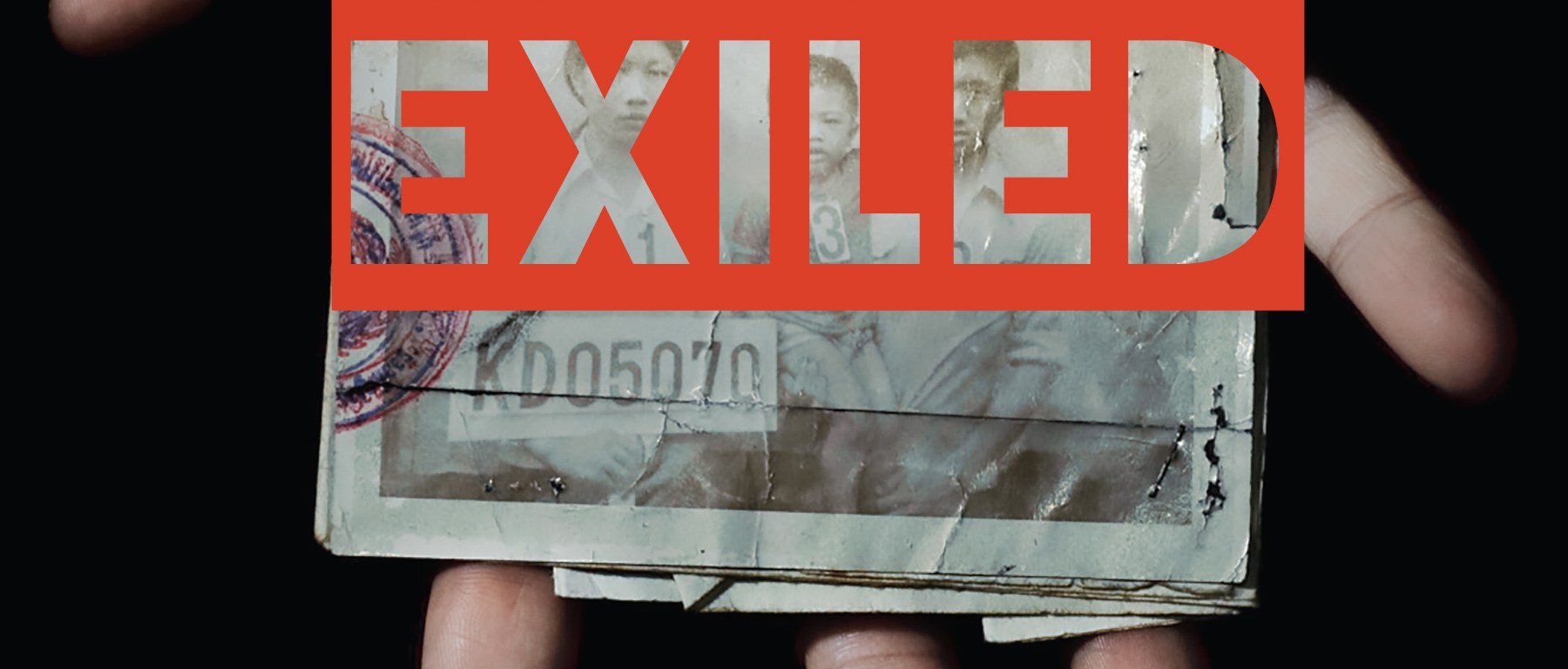
Katya Cengel is a freelance writer based in San Luis Obispo, California, and lectures in the Journalism Department of California Polytechnic State University, San Luis Obispo. Her work has appeared in New York Times Magazine, the Wall Street Journal, and the Washington Post. She is the author of From Chernobyl with Love: Reporting from the Ruins of the Soviet Union (Potomac Books, 2023) and Bluegrass Baseball: A Year in the Minor League Life (Nebraska, 2012). Her book Exiled: From the Killing Fields of Cambodia to California and Back was originally published by Potomac Books in 2018, the updated paperback edition was published in 2023.

They say history has a way of repeating itself. I say it has a way of haunting us. I write these words as Donald Trump is about to begin his second presidency. Last time Trump was sworn in, in January 2017, I was in Cambodia. Today I have just returned from visiting Southeast Asia, where I leave behind a group of exiles, 2,000 individuals who came to the U.S. as refugees only to be deported decades later.
In 2017 the hope that those deportees might be allowed to return to the country they consider home dimmed as Trump focused on tighter immigration policies. In the U.S. those still under threat of deportation hid from immigration raids. I followed along hoping selfishly that the families I had gotten to know while reporting and writing my second book, Exiled: From the Killing Fields of Cambodia to California and Back, would not be among them.
They were not.
Now many of them may face the same threat as Trump takes office again.
That isn’t the history that haunts them though. It is the history of war, famine and genocide that brought them to the U.S. in the first place that continues to traumatize them. This January marks 50 years since Southeast Asians were resettled in the U.S. in large numbers helping to establish our national refugee resettlement program. Half a century later they remain the largest official refugee group in U.S. history.
The mass resettlement started in 1975, following the end of the Vietnam War. In its fight against communism the U.S. was militarily involved in Vietnam, Cambodia, and Laos and thus felt an obligation to help resettle some of its allies as their countries descended into communism. The relocation of this group of Southeast Asians led to the Refugee Resettlement Act of 1980. The act raised the annual ceiling for refugee admissions to 50,000 and allowed the government to admit additional refugees during emergencies. It also led to the establishment of the Office of Refugee Resettlement, the country’s first official resettlement program.
The Southeast Asia Resource Action Center (SEARAC) was among the organizations that advocated for the bill’s passage. The nonprofit’s Executive Director Quyen Dinh notes the resilience that has become part of the community’s legacy after they were forced to flee their homelands due to war.
“Today, we are proud to reflect on these roots and celebrate the many ways our people have shaped this country we now call home,” he says.
And yet not all these refugees who sought shelter are safe here. That is because refugees to the U.S. are not automatically granted citizenship. As non-citizens if they run afoul of the law, for even minor infractions, they can be deported to the very countries their families fled. Due to legislation passed in the 1990s that greatly increased the deportation of non-citizens, thousands of these refugees still face deportation.
The men and women I wrote about in Exiled – David, Touch, Sithy – are among them. Some of their friends have already been deported. Rith managed to build a tourism business in Battambang, Cambodia. He has a wife and two young children. Rith is an exception. Many of the returnees end up in jail or dead. They suffer high rates of mental illness.
As for the individuals I followed, Touch, who has two children and served time for a drug conviction, has disappeared. David and Sithy have found ways to stay safe, for now. Others who survived war, famine, the Khmer Rouge, and bombings by American forces, are at risk.
Half a century after Southeast Asians began arriving in the U.S. in large numbers SEARAC has launched several initiatives to try to protect those facing deportation, including looking at pardons, something David was granted.
“It is critical for America to honor this historic anniversary by taking action to protect the 15,000 Southeast Asian Americans (SEAAs) who live in fear of being torn apart from their families and communities due to final orders of removal,” says Executive Director Quyen Dinh. “No person should be subject to cruel and unjust double punishment, and this includes the 2,000 SEAAs who have been deported after already serving their time in prison.”
In Exiled you can read more about the stories of David, Sithy and others who survived Cambodia’s killing fields only to later face deportation back.
 UNP blog
Thanks for updating this wrenching story.