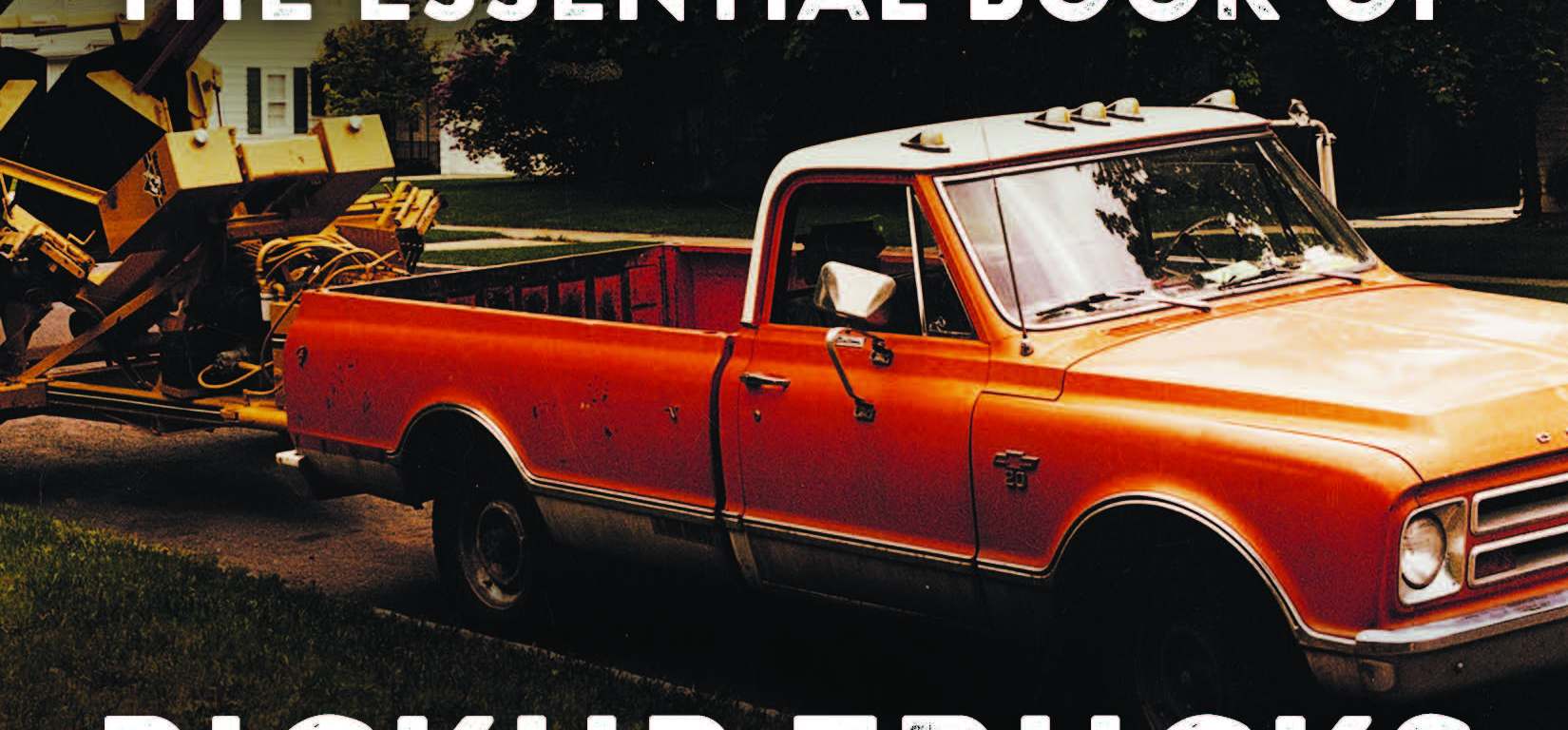
Fred Haefele is a writer, teacher, and retired arborist. He is the author of the award-winning motorcycle memoir Rebuilding the Indian (Bison Books, 2005) and the nonfiction collection Extremophilia. Haefele’s work has appeared in Outside, Wired, the New York Times Magazine, Salon.com, Montana Magazine, and other venues, and he has written documentaries for the PBS American Experience series. His most recent book, The Essential Book of Pickup Trucks (Bison Books, 2025), was published this month.
I wrote my first memoir by accident. As it happened, I’d contracted with Penguin to write what the editor called, a “process book” about my adventures restoring an extinct ‘47 motorcycle from a box of parts. The fact I was fairly ignorant of such things would, of course, be an integral part of the book. As a template, my editor suggested a charming and successful book called, Catapult: Harry and I Build a Siege Weapon. I read it with enthusiasm and was anxious to get started on my project but my life took an unexpected turn when I discovered I was about to become a father at the age of 53, and that the baby’s gestation would coincide precisely with my motorcycle project. I was thrilled but distraught. I didn’t know how to tell my editor about this change, nor how it might affect my project so I decided to say nothing, just go full speed ahead with a so-called “kitchen sink” yarn, wherein everything I experienced as a new father, would-be mechanic, and writer would only serve to expand my narrative. This way of thinking allowed hugely disparate life events to work together in harmonic convergence. I was surprised to find these two endeavors, the bike and the baby, actually did complement each other, much like good sausage does to gumbo. The book of course, remained an unknown till the end. But I was still surprised that my initially straight-forward “process book” would be marketed as a memoir. In all, it took four years to start my new family, build a vintage Indian and write the book about it. I recall feeling that this was a hell of a long time. My next book, I was certain, would go much faster.
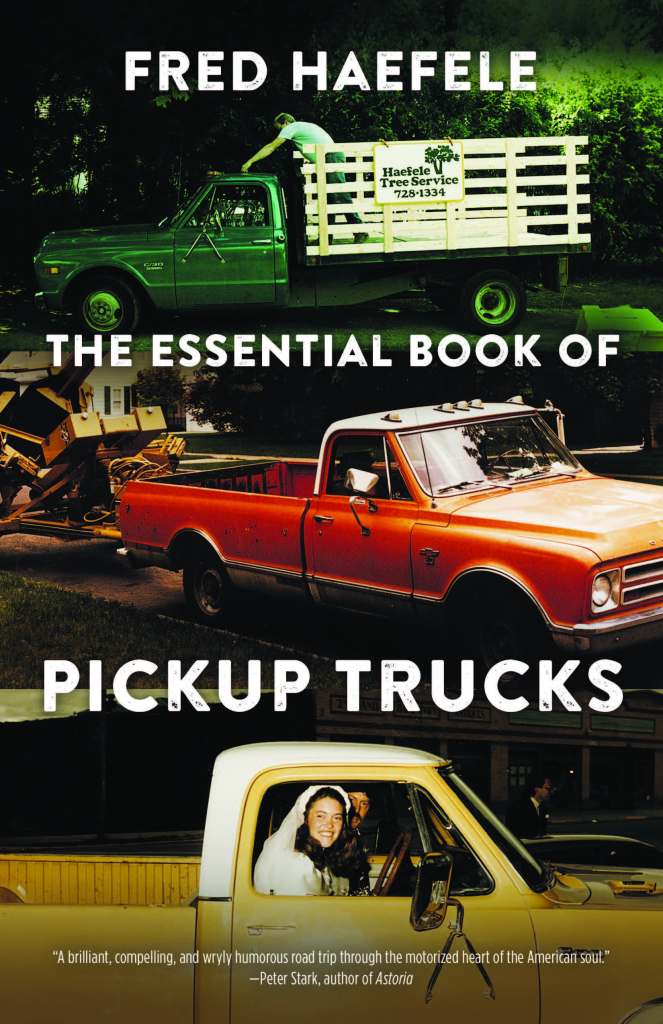
Years later, casting around for book ideas, my wife suggested I write about the many trucks I’ve owned in my fifty-year arborist career.
When I was skeptical, she replied, “But that’s your niche, right?”
“My niche?” I said. “What’s my niche?”
“Why, vehicular memoir,” she said.
“Can’t say I’m familiar with the term.”
“Sure, you are! You and Robert Pirsig, right? You guys, all you gotta do is add wheels to your story and Bingo! It practically writes itself!”
Okay, I thought. I sure like the sound of that, and I’m suddenly in great company. But what shape might such a book take? For example, what might be the proportion of life experience to motorhead lore?
First, I tried a straight ahead first-to-last chronology, assigning each truck its own chapter. But this assumed that each truck would generate enough character to, by itself, propel the narrative. This turned out not to be the case. Some trucks did, some trucks didn’t. I needed a better way to connect these machines to my personal evolution; what was happening at these various turning points, psychologically, historically and physically? Each truck would have to conjure a pivotal phase in my life. A series of static truck profiles was not enough to keep the book cohesive.
After months of pawing the ground, it seemed the way to proceed was a kind of leap of faith; start up all the trucks in my head and just see where they’d take me.
This turned out to be a good choice, but still, over the next ten years, I thought I’d finished the book many times but it always fell short. None of the many agents I queried liked it very much and come to think off it, neither did I. It wasn’t until I cut the book hard, restructured the chapters around my life unfolding instead of this truck or that truck that the book turned from a plodding motorized chronicle into a living thing. With this new, more organic focus, I felt confident taking the kind of chances that I would not have dared before.
 UNP blog
I just finished Rebuilding the Indian for the second time. I first read it when the book was published in 1998. At an author reading, Fred Haefele assured me that “people have told” him reading this book a second time would be even better. He was right.