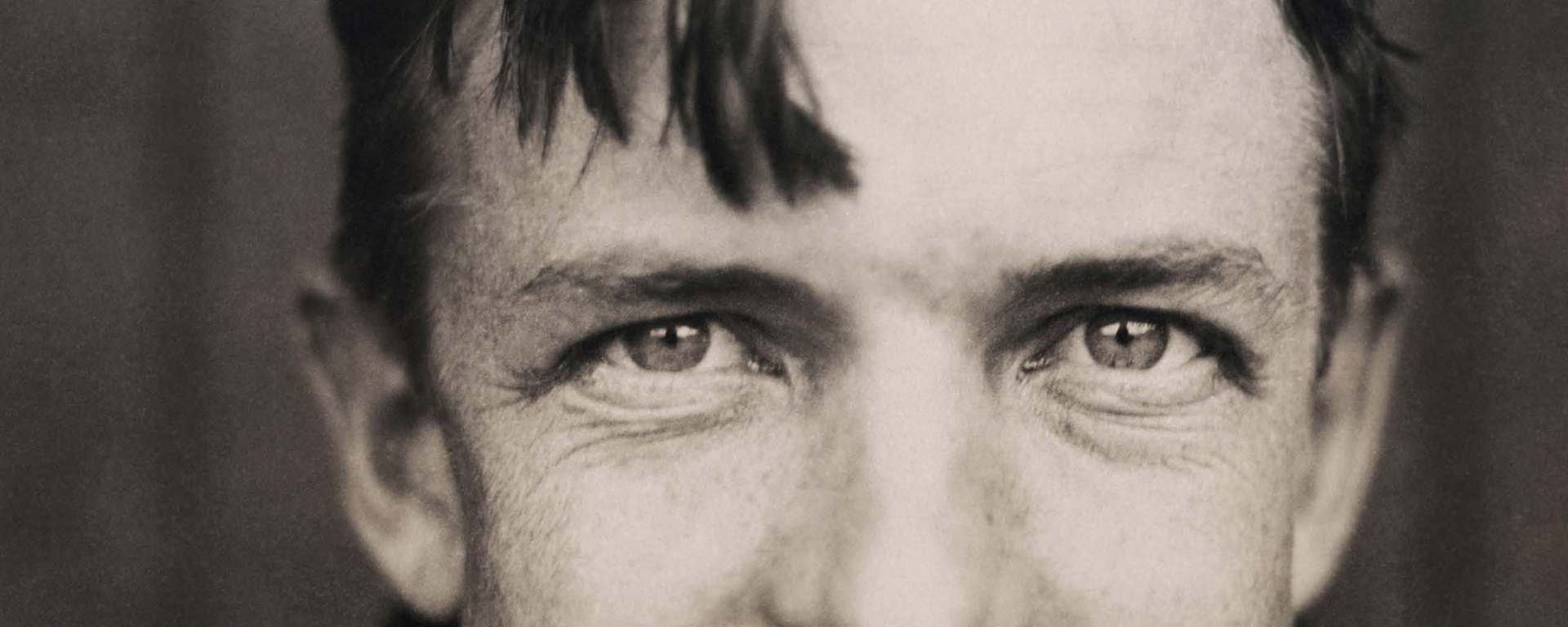
Alan D. Gaff is an independent scholar and the author of many books, including Lou Gehrig: The Lost Memoir, Bayonets in the Wilderness, Blood in the Argonne, and On Many a Bloody Field. He lives in Indiana. Baseball’s First Superstar: The Lost Life Story of Christy Mathewson (Nebraska, 2025) was published in May.
If there was a first face of baseball, it was arguably Christopher “Christy” Mathewson. At the opening of the twentieth century, baseball was considered an undignified game played by ruffians for gamblers’ benefit. Mathewson changed all that. When he signed with the Giants in 1900, his contract stated he wouldn’t pitch on Sundays, and he was known for his honesty, integrity, and good looks.
A superstar long before that term was coined, Mathewson became an icon of sportsmanship. He was posthumously elected to the Baseball Hall of Fame at its first induction ceremony in 1936. In Baseball’s First Superstar Alan D. Gaff brings Mathewson to life through Mathewson’s own writings and those of others, largely lost to history until now.

Prelude
New York’s Polo Grounds were awash in avid spectators who had come to see their Giants baseball team clinch the World Series on October 14, 1905. Many fans had left home by 9 a.m. that morning, carrying carefully-wrapped lunches. Traffic was crazy. The L trains dropped passengers off at 135th Street where thousands had to wait for connections with Harlem trains to finish their journey. Fistfights between impatient riders broke out on the platforms. Many people gave up waiting and either took cabs or hitched rides with strangers in automobiles.
At the Polo Grounds, paid attendance was 24,187, but thousands more actually saw the game. It was a perfect day for baseball, so those who could not get tickets became creative in finding ways to view the action. Men balanced on fences that filled gaps between the stands and clubhouse. Others sat atop the grandstand roof, clung to utility poles, or stared through binoculars from adjacent rooftops. Hundreds watched from Coogan’s Bluff which overshadowed the stadium.
Inside, men and women sat on chairs in the covered grandstand where there was a modicum of space. In the cheaper, uncovered stands extending along the foul lines, two people were crammed into a space that normally held one. More spectators, ten deep, stood behind ropes in right and left field, although center field was left clear. They were all there to support their idols, John McGraw’s New York Giants and Christy Mathewson, the famous pitcher who had won 31 games and lost 9 during the regular season.
Mathewson had shut out the Philadelphia Athletics in the first game of the World Series, 3–0. After the Athletics came back to win game two, Christy then pitched another shutout, 9–0. When Joe McGinnity threw another shutout for New York, 1–0, the Giants were poised to become world champions. This final game proved to be another pitcher’s battle. Mathewson spread six hits over nine innings in a game that lasted an hour and twenty-eight minutes. It was his third shutout in the space of six days, a record that still stands. A New York Times reporter wrote of how Mathewson, while chewing gum on the mound, “bestrode the field like a mighty Colossus and the Athletics peeped about the diamond like pigmies who struggled gallantly for their lives, but in vain.” In the stands, “rooters rooted until they couldn’t root another root.”
When Lave Cross hit a grounder to Bill Dahlen at shortstop, who easily whipped the ball to first baseman Dan McGann for the last out, spectators went crazy. One Brooklyn reporter described the tumult: “Insane with joy, they jumped, climbed and tumbled from the stands, swept aside a weak-looking string of bluecoats and rushed as if mad upon the diamond, to surround the New York players.” Throngs of deranged men and women raced to cut off the Giants as they ran for safety, but the victors were swamped in a tidal wave of fans who mauled them, especially Christy Mathewson, in attempts to gain souvenirs or shreds of uniforms. Several players were raised up on men’s shoulders and borne to the clubhouse entrance. Blue-coated cops were overwhelmed as they sought to restore some semblance of order.
Nobody wanted to leave the stadium. Enthusiastic fans remaining in the upper and lower levels of the grandstand tossed cushions, pop bottles, and remnants of picnic lunches into the crowd surging in front of the dugouts. These missiles were immediately hurled back, starting an impromptu cushion fight. Soon the ball field looked as though a huge picnic had been held there. Thousands gathered in front of the clubhouse, screaming for their heroes to make an appearance. In between these masses of humanity, the Catholic Protectory Band blasted out tunes as it marched around the field followed by several thousand New Yorkers dancing, prancing, singing, waving blue pennants, and tossing their hats. This rollicking parade finally halted at the clubhouse to reinforce that crowd while the band continued to crash out more tunes.
The Athletics quickly changed into street clothes and headed for the railway station with demands for the Giants to show themselves ringing in their ears. Several of the new World Champions emerged on the clubhouse balcony to wave and toss their ball caps and gloves into the mob below, where each souvenir brought about a mad scramble. Cries for John McGraw were rewarded when the Giants manager appeared, prompting the band to pump out “When Johnny Comes Marching Home.” After the din subsided somewhat, McGraw made a brief statement: “Ladies and Gentlemen, I appreciate the great victory as well as you. I thank you for your patronage, and hope to see you all next Spring.” Then a wave and McGraw ducked back inside.
Cries now went up for the incomparable Mathewson. Within minutes, two men emerged–Christy, the tall, solidly-built winning pitcher, and Roger Bresnahan, his squattier catcher. Neatly dressed after their brief showers and grinning from ear to ear, the pair walked back and forth, waving to the cheering multitude. Stopping at the center point, they produced a long sheet of paper which proved to be a hastily improvised banner which they unrolled in the slight breeze. Thousands shoved and pushed forward to read the inscription: “THE GIANTS. WORLD’S CHAMPIONS, 1905.” The roar that followed was compared to the eruption of a volcano in Manhattan. Mathewson could not leave until he, like McGraw, said a few words. Holding his hands up for quiet, Matthewson made a brief comment heard only by those directly in front of him: “Gentlemen, I want to thank you for this kindness, but you must remember that there were eight other members of the team who worked for our success just as much as I did.” With a final wave, the battery mates stepped inside to join teammates in celebrating their victory.
 UNP blog