Thomas S. Bremer is Professor Emeritus of Religious Studies at Rhodes College in Memphis, Tennessee. He focuses on American religious history, particularly exploring the connections between religion and tourism, religion and nature, and the U.S. national parks. His latest book Sacred Wonderland: The History of Religion in Yellowstone is the latest title in America’s Public Lands. Additionally, he writes the monthly Sacred Wonderland newsletter.

The twenty years I spent researching and writing Sacred Wonderland: The History of Religion in Yellowstone was much longer than I expected to be working on it. However, I’m glad it took so long. It is a different book than I would have written if I stayed with a more conventional timeline.
When I began working on this book in 2004, I had an uncritical affection for Yellowstone. It had been a special place for me since childhood. Like many people who know the park well, its unmatched diversity of attractions enchanted me, not only the geysers and wildlife but the great expanse of wilderness with hundreds of miles of trails. Nothing thrilled me more than paddling a canoe to the backcountry on Yellowstone Lake, backpacking on the Bechler River, or trekking across the Central Plateau on the Mary Mountain and Nez Perce trails.

As I learned more about the history of the national park, I began questioning my love for Yellowstone. The story I had often heard about the park’s origin was the infamous campfire myth. It claims that a group of concerned citizens exploring the area in 1870 agreed on the final night of their expedition to preserve the land forever as a park for others to enjoy. That tale was the National Park Service’s official story for decades. Not only was it untrue, it hid a less noble history. And like most stories about preserving and protecting wilderness, it overlooked the important role of religion.
Yellowstone was the brainchild of Jay Cooke, a pivotal figure in exploring and publicizing the wonders of the park as well as the main lobbying force behind its creation. Cooke was the nation’s wealthiest citizen at the dawn of the Gilded Age after the Civil War. His banking company had acquired a controlling interest in the Northern Pacific Railroad, a transcontinental line across the northern tier of the western territories. Yellowstone offered an attractive destination along the railroad’s proposed route that would convince investors of the Northern Pacific’s lucrative potential. In short, Yellowstone National Park was created to help sell railroad bonds.
Jay Cooke’s financial concerns coincided with his fervent evangelical faith. He regarded himself as “God’s chosen instrument.” This included spreading the Christian gospel to the unsettled, “uncivilized” western territories. His railroad was a key project in his commitment to Manifest Destiny, and he also supported Protestant missionaries and the distribution of religious literature through his long involvement with the American Sunday School Union. Bringing Yellowstone to the public’s attention was part of Cooke’s grand plan to make America a Christian land.
Of course, the spread of Christian civilization had tragic consequences for indigenous nations who had occupied those lands for countless generations. The book briefly mentions Native American religious engagements with Yellowstone, but it does not discuss what indigenous people believe about the geysers and other features of the park. Instead, I investigate how Christian Euroamericans depicted American Indian religions in relation to Yellowstone. The common story that circulated about Indians portrayed them as fearful of the geysers and other thermal features, another falsehood in Yellowstone’s early history. Like nearly all nineteenth-century representations of Indians, the story had more to do with Manifest Destiny and its assertion of Christian superiority than with what Native Americans believed. It also became shorthand for assuring white tourists that the national park was a safe place to visit. Confident that the natives feared Yellowstone, they did not need to worry about Indian attacks in the park.
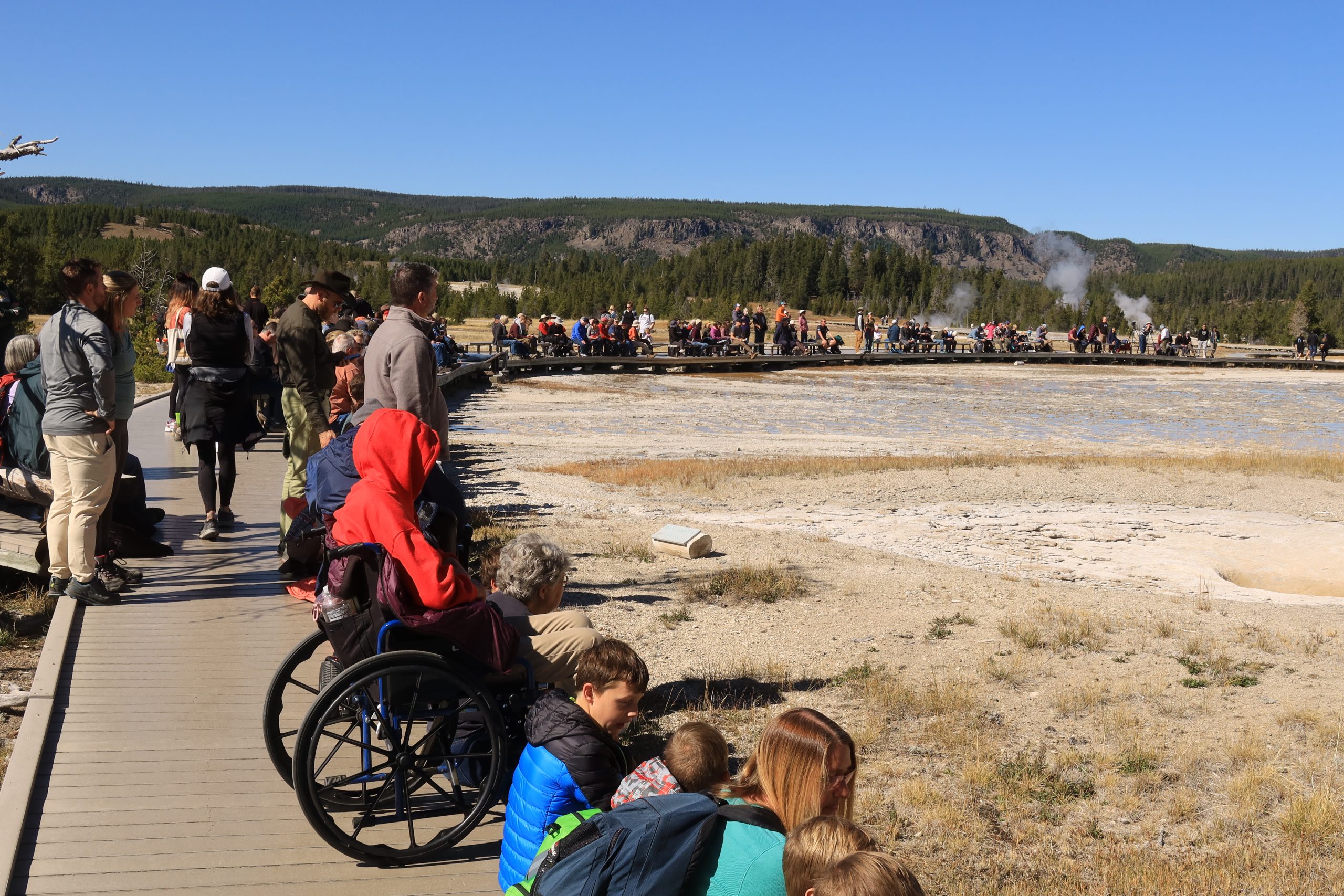
Yellowstone’s troubled history does not stop there. In recent years, a number of commentators have observed how wilderness and natural areas, including national parks, are primarily white spaces, places where people of color do not feel welcome. As I thought about my own experiences of Yellowstone, I realized that nearly everyone I saw there looked a lot like me, a middle-class white person. As a historian, I began digging into why the demographics of visitors to the park did not reflect the racial diversity of the nation as a whole. My research led me to Theodore Roosevelt, widely lauded as a hero of national parks.
Though Roosevelt created opportunities for African Americans, both as governor of New York and president of the United States, he harbored an attitude of white racial superiority that was a common view among Progressive leaders. It was most evident in their advocacy of eugenics, which Roosevelt supported. The concern for conserving racial purity was not separate from conserving nature. Protecting the purity of wild nature followed the same logic as preserving the purity of the white race.
My research into these topics gave me much to write about, but it also had me thinking about my place in this history. As I acknowledge in the Postlude of the book, “Diving deeply into the history of the national park has left me with ambivalence about a place I have loved for most of my life and thought I knew well.” Like any relationship, close examination makes it more complicated but also more interesting. I conclude, “I cannot stop loving the park, but I do so with a more complex understanding of why and how I have found it valuable in my life.”
 UNP blog