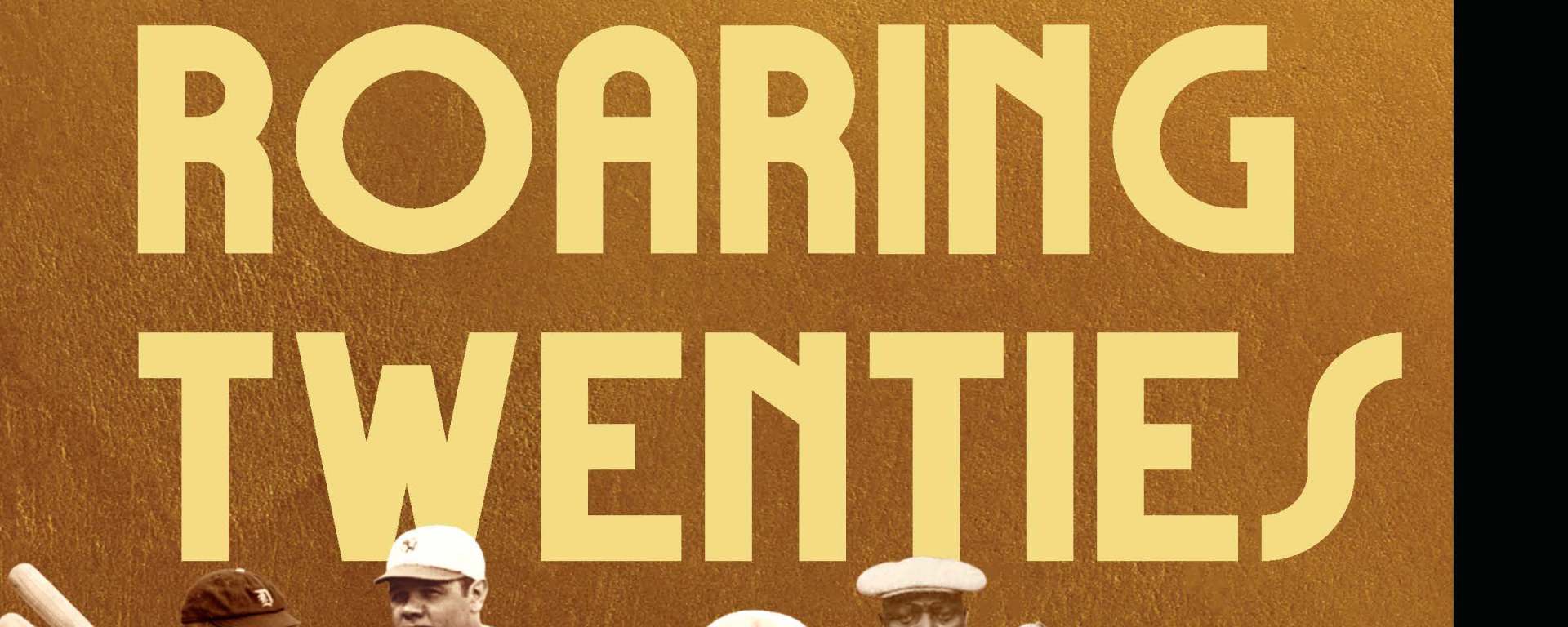
Thomas Wolf is the author of The Called Shot: Babe Ruth, the Chicago Cubs, and the Unforgettable Major League Baseball Season of 1932 (Nebraska, 2020), finalist for the Seymour Medal from the Society for American Baseball Research, and coauthor, with Patricia Bryan, of Midnight Assassin: A Murder in America’s Heartland. His most recent book Baseball in the Roaring Twenties: The Yankees, the Cardinals, and the Captivating 1926 Season (Nebraska, 2025) was published in September.

Why write about baseball in 1926, a season played two decades before I was born?
The game of baseball has always captivated me. I started reading box scores and listening to games on the radio when I was just eight or nine years old, growing up in a small town in Ohio, far from any major league ballpark. Even then, before I knew much about the history of the game, I recognized the glamour and importance of baseball as the national pastime. I read a children’s edition of a biography of Babe Ruth, and one of the first radio voices I listened to was Cincinnati Reds announcer Waite Hoyt, a teammate of Babe Ruth. During rain delays Hoyt would tell colorful stories about Ruth and his teammates who played together in the 1920s.
I wrote about Ruth and the Yankees in The Called Shot, published by the University of Nebraska Press in 2020. Baseball in the Roaring Twenties emerged from my desire to tell the story of Ruth’s Yankees battling Rogers Hornsby’s St. Louis Cardinals in the memorable seven-game World Series of 1926. But it was more than just baseball that attracted me to this subject. The season was played at the midpoint of a decade that came to be known for its excess, rebellion, and innovation. Prohibition had failed to dampen the spirits of those who wanted to party and drink at speakeasies or dance the new dances. It was an era of relative prosperity. More people could afford to buy automobiles and radios and go to motion picture shows.
It was also the Golden Age of Sports. Interest in college football was on the rise, thanks to Red Grange. A young woman named Gertrude Ederle swam across the English Channel faster than any man had done it. The first heavyweight championship fight between Jack Dempsey and Gene Tunney was staged in Philadelphia before a crowd of 130,000 boxing fans. And in the White House, the nation’s number one baseball fan—the first lady, Grace Coolidge—cheered for her hometown Senators.
Grace Coolidge’s Senators, winners of the American League pennants in 1924 and 1925, failed to reach the World Series in 1926, but the contest between the Yankees and Senators in 1926 was dramatic and historic. The pitching star of that series was thirty-nine-year-old Grover Cleveland Alexander near the end of his storied career. Born in rural Nebraska and named for the country’s sitting president, Alexander overcame epilepsy, alcoholism, partial deafness, and injuries suffered in combat during World War I, to win 373 major league games, third best in history. The highpoint of his career was the 1926 World Series where he won two games and saved one to lead the St. Louis Cardinals to their first world championship.
In doing my research for Baseball in the Roaring Twenties, I also learned about the parallel universe of Black baseball, where there were other pennant races and equally compelling post-season drama. The Atlantic City Bacharach Giants, champions of the Eastern Colored League, played the Chicago American Giants, winners of the Negro National League, in the Colored World Series of 1926. The series featured eleven games, which were played in four different cities over fourteen days. The pitching hero of that series was twenty-two-year-old Willie Foster, who joined the Chicago American Giants early in the summer after pitching that spring for his college team, the Alcorn Agricultural and Mechanical College. Foster pitched a 1-0 shutout in the final and deciding game between the two league champions. He went on to have an outstanding professional career in the Negro Leagues.
Nearly a century has passed since that splendid baseball season of 1926. In Baseball in the Roaring Twenties, I’ve tried to evoke the vibrancy of the times, tell stories about players and cultural icons, and acknowledge baseball’s pivotal role in our nation’s history.
 UNP blog