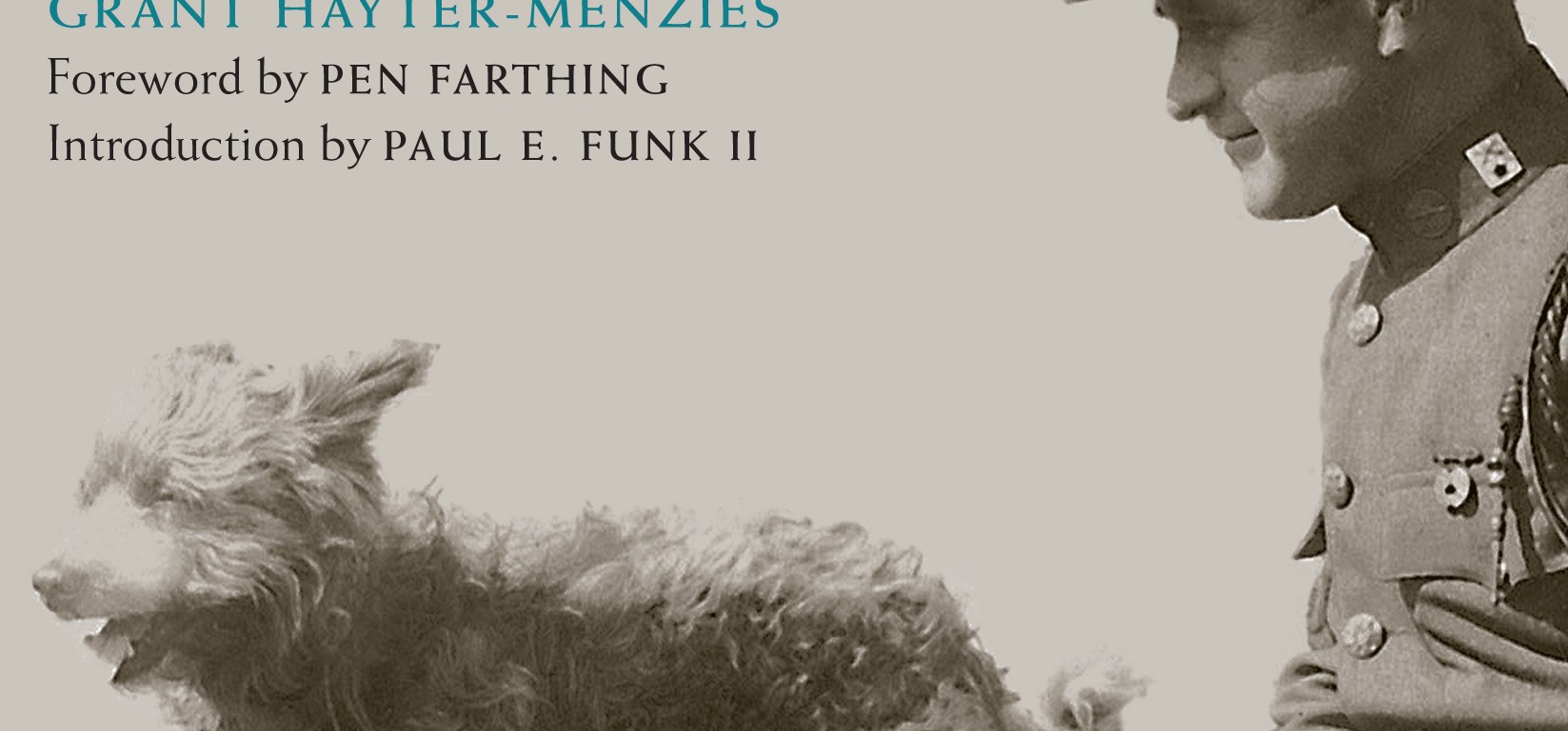
Grant Hayter-Menzies is the author of Dorothy Brooke and the Fight to Save Cairo’s Lost War Horses (Potomac Books, 2017) and From Stray Dog to World War I Hero: The Paris Terrier Who Joined the First Division (Potomac Books, 2015). The author donates a portion of each book’s sale to Nowzad Dogs, a nonprofit that reunites soldiers who served in Afghanistan with the dog or cat they adopted while deployed.
When she sat down in 1934 to write what was to become one of the most famous fundraising appeals in the history of animal welfare, Dorothy Brooke, founder of Brooke, Action for Working Horses and Donkeys, used as example an effort she had been made aware of taking place in her native England: to raise a bronze public monument to the horses who had served, suffered and died in the Great War.
As I wrote in my 2018 biography of Brooke, having set up a free equine veterinary clinic in a Cairo slum to serve the needs of the many elderly, ailing former war horses and army mules abandoned in Egypt after the war’s end to lives of hard labor in Egyptian streets, fields and quarries, Dorothy had actually witnessed the agonies of surviving equine veterans, and while she supported any movement to recognize their sacrifices, the needs of the living, in her view, superseded that of erecting an expensive, static memorial. Most of the utterly broken horses Dorothy saw daily in Cairo were beyond help, but it was expensive even to contemplate euthanizing them at scale. As she wrote in her letter, published in The Morning Post (now The Telegraph), asking that readers find it in their pocketbooks and hearts to help her in her work, “we shall be extremely grateful; and we venture to think that, in many ways, this may be as fitting (though unspectacular) part of a War Memorial as any other that could be devised.” Dorothy was to save over 5,000 former war horses, a precious handful of them returned to the green fields of England.
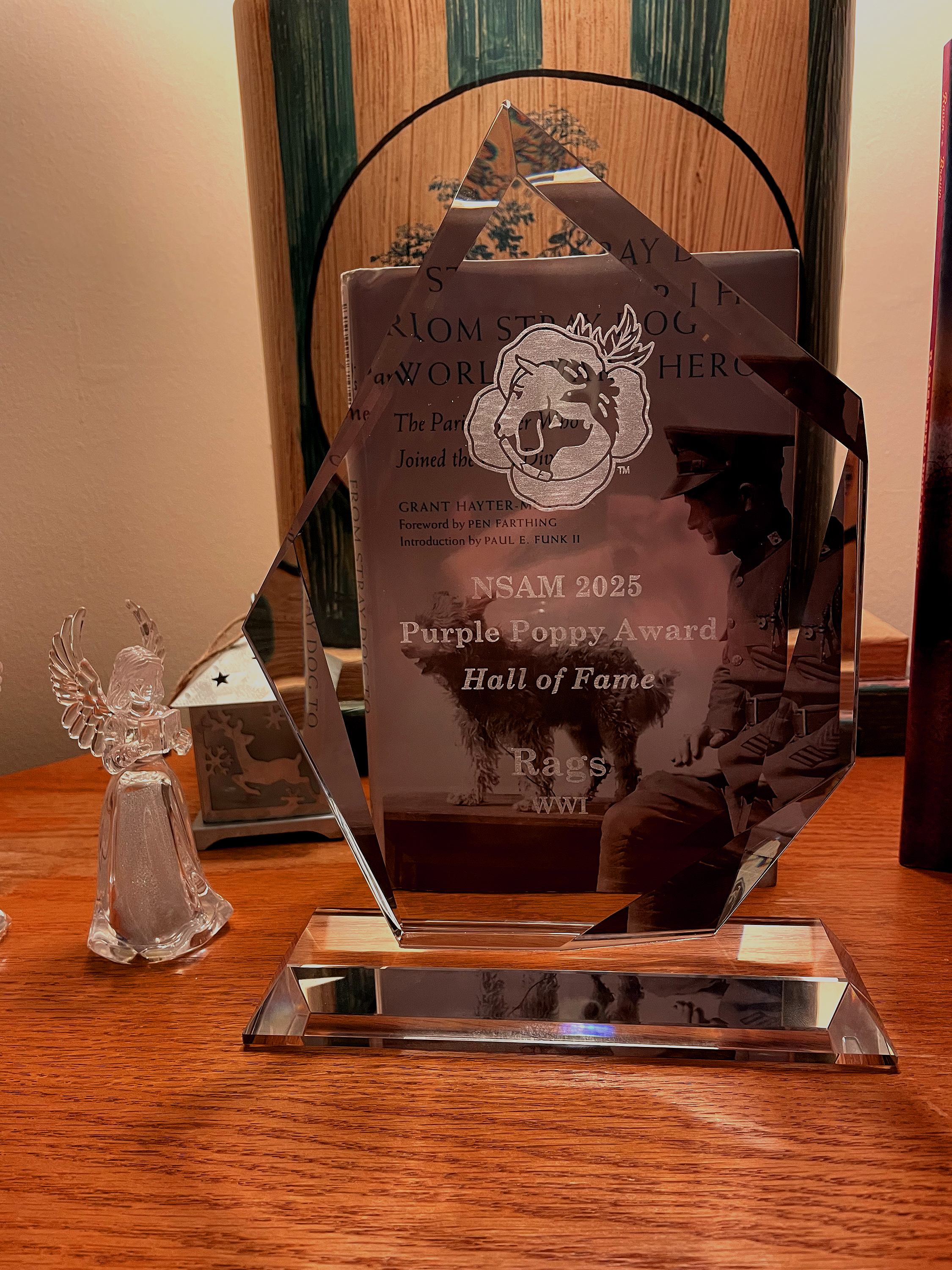
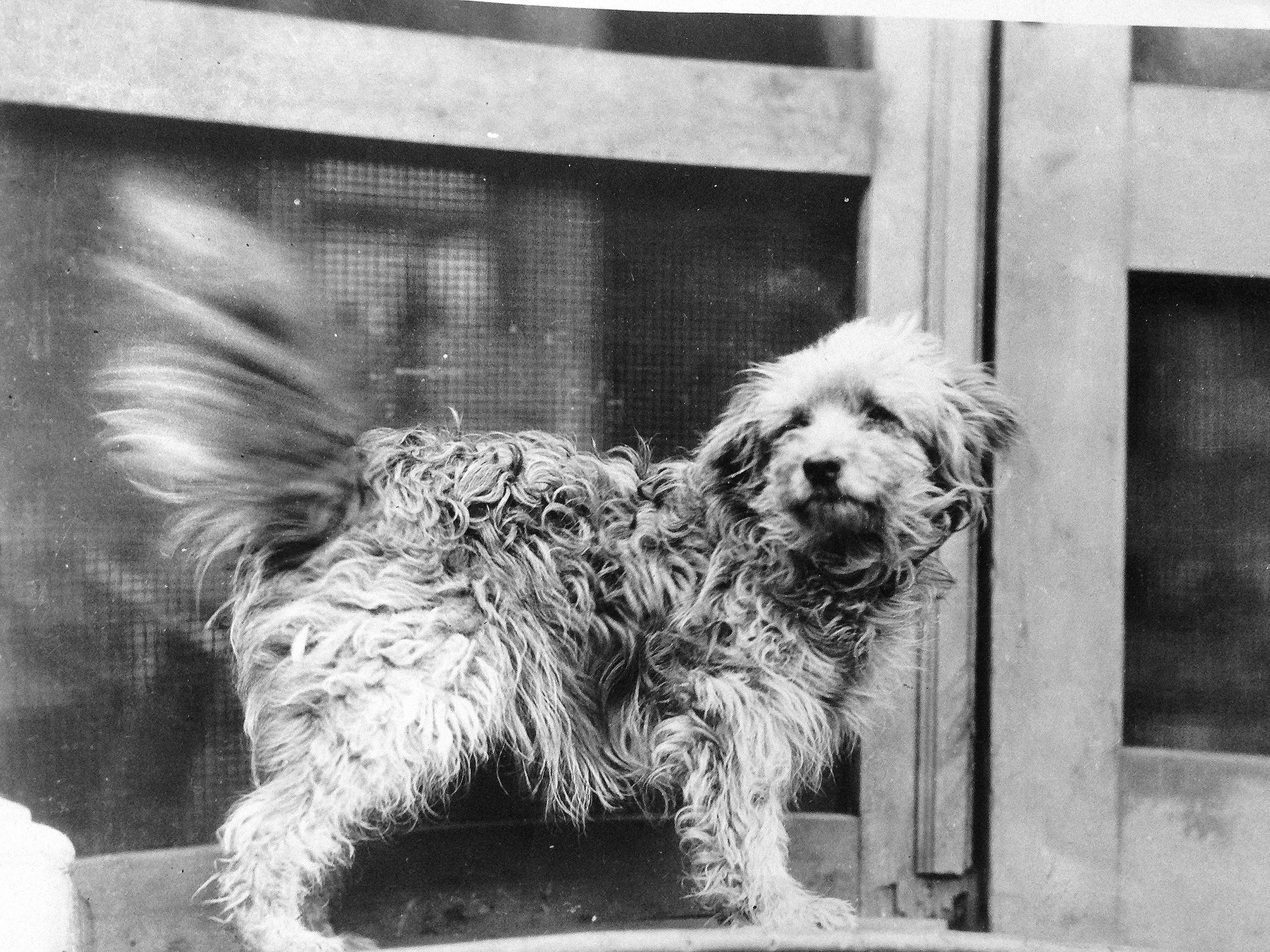
I thought of this letter and what might constitute fitting memorials in our time when, on 27 September 2025, Rags (1916-1936), the former Paris stray turned mascot and dispatch dog of the American First Division in World War I, received the Purple Poppy Award, bestowed by the National Service Animals Monument, Inc.
First envisioned by eminent American sculptor Susan Bahary, the NSAM is a 501(c)(3) whose mission is to create a memorial in the National Mall in Washington D.C., the greenspace bookended by the U.S. Capitol and the Lincoln Memorial, lined on each side with some of the nation’s most respected institutions and filled with historic memorials, to honor the work of service animals and their handlers throughout United States history.
In March 2022, the NSAM secured a hearing with the National Capital Memorial Advisory Commission to provide testimony for the inclusion of such a memorial in the Mall. Among those invited to testify, I was selected as biographer of Rags, whose extraordinary life, on the battlefield and off, I celebrated in my book From Stray Dog To World War I Hero: The Paris Terrier Who Joined the First Division (Potomac Books, 2015).
Happily, our appeal received bipartisan support and was rolled into an omnibus bill authorizing the building and funding of the first monument on federal land in the nation’s capital honoring service animals and handlers. This bill was signed into law by President Joseph R. Biden in December 2022. The monument must be paid for through private funds, with cost estimated in the range of $20,000,000.
In tandem with their total fundraising efforts, the NSAM mounts the annual Purple Poppy Awards. One of the 2025 honorees was Rags; receiving his award were Jay and Judy Butkus and daughter Emily, descendants of Major Raymond W. Hardenbergh (1877-1949), the officer who adopted Rags in the early 1920s after the death of his original handler, Sgt James Donovan, wounded along with Rags on 9 October 1918 in the Meuse-Argonne Offensive.
As with Dorothy Brooke’s suggestion of a more fitting memorial than a bronze statue, part of me can imagine $20 million might be put to far more productive use helping service animals in the here and now. I happen to think she was correct in that instance, as the immense success of her worldwide equine charity, still active today in developing nations across the globe, amply proves. But a memorial is a powerful tool. Unfortunately for Rags, before I published my book he had long fallen through the cracks of history. Unlike Sgt Stubby, well-publicized mascot of the 26th “Yankee” Division in World War I, Rags was not stuffed and put on display at the Smithsonian Institution but buried quietly wearing his medals in an animal cemetery outside Washington, D.C.; his portrait still hangs in First Division HQ at Fort Riley, Kansas, but circumstances of war and peace gradually removed this once famous dog from the front page news and thus from public awareness. Many other dogs, horses, and other animals who served in war, their names recorded or lost, are in the same boat.
As a biographer, a life well-lived fascinates me; I’m just as interested in how an individual is remembered after death and I am fascinated by how they are commemorated (or not, and why). I consider my biography of Rags to be something along the lines of Dorothy Brooke’s “fitting memorial” (as I consider all my books about the animal-human bond a collective memorial to the courage and loyalty of my late rescue dog, Freddie), but I know that if we are to fully engage the minds, hearts and support of the public for the work service animals do, we must preserve the memory of their bravery with memorials built to last longer than a book and designed to communicate its message not just in the present but the future. From this perspective, a memorial can prove itself more than worth its weight in gold, let alone bronze.
At her request, I provided Judy Butkus a few words to share along with her prepared remarks at the awards ceremony:
When I first visited Judy and Jay Butkus in March 2014, Judy put two objects into my hands.
One was a photograph of Rags, set in a silver frame. The other was a copy of a typed poem, “A Dog’s Prayer to His Master,” by Capt. Will Judy, which Capt. Judy had given to Rags’s human family.
Capt. Judy, who had met Rags, surely had him in thought when he founded National Dog Week (the last full week of September) and when he wrote “A Dog’s Prayer to His Master.”
Capt. Judy’s “Prayer” is a plea from a faithful dog that his human guardian be at least as faithful and responsible as his dog always was to him.
As Capt. Judy’s dog asks of his human:
O Lord of Humans,
make my master faithful to his fellowmen as I am to him. . . .
Make him as good a man as I am a dog;
make him worthy of me, his dog.
I try to be worthy of Rags, as I try to be worthy of my late Freddie, who inspired me to write about Rags.
Can we ask to be anything better?
Congratulations, dear and wonderful Rags.
 UNP blog