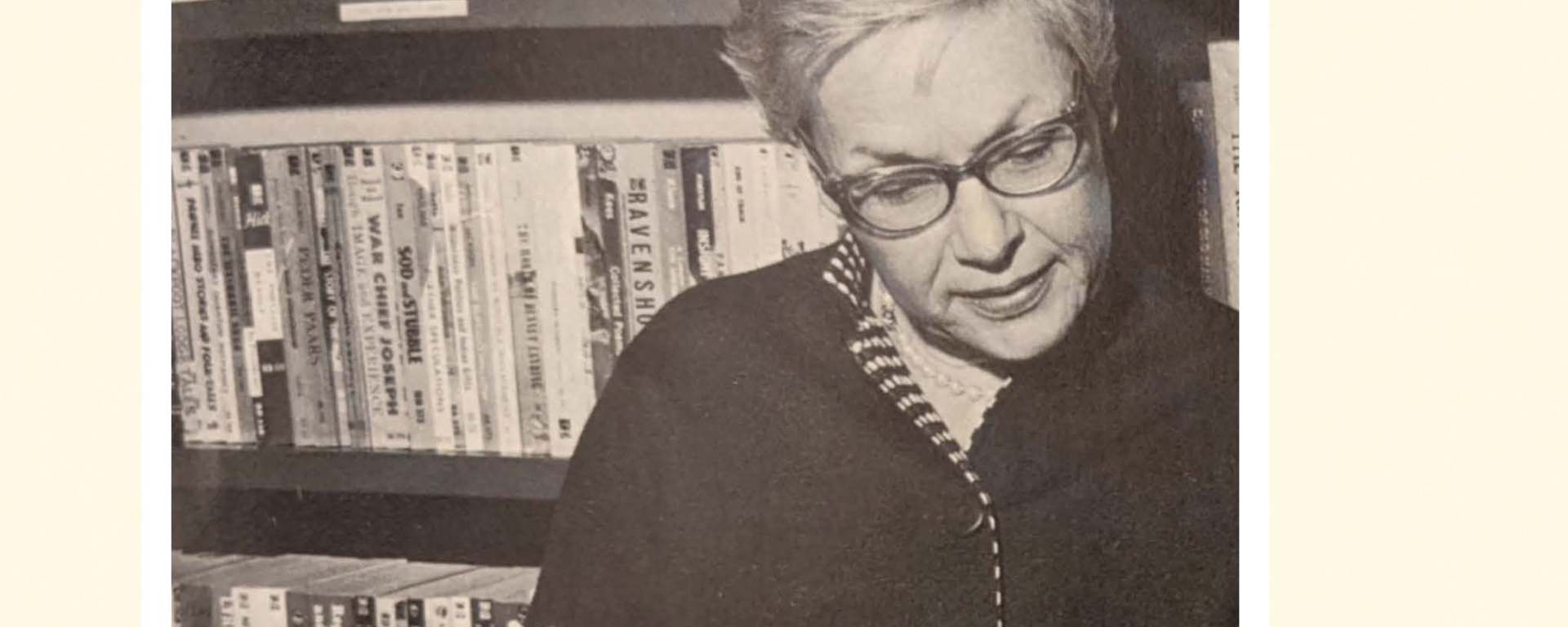
Brad Bigelow is a writer, instructor, and editor living in Missoula, Montana. He is the editor of the Recovered Books series for Boiler House Press and has been a writer for the Neglected Books website since 2006. With more than six hundred articles, the site celebrates the work of little-known writers. His new book Virginia Faulkner: A Life in Two Acts (Bison Books, 2026) was published this month.
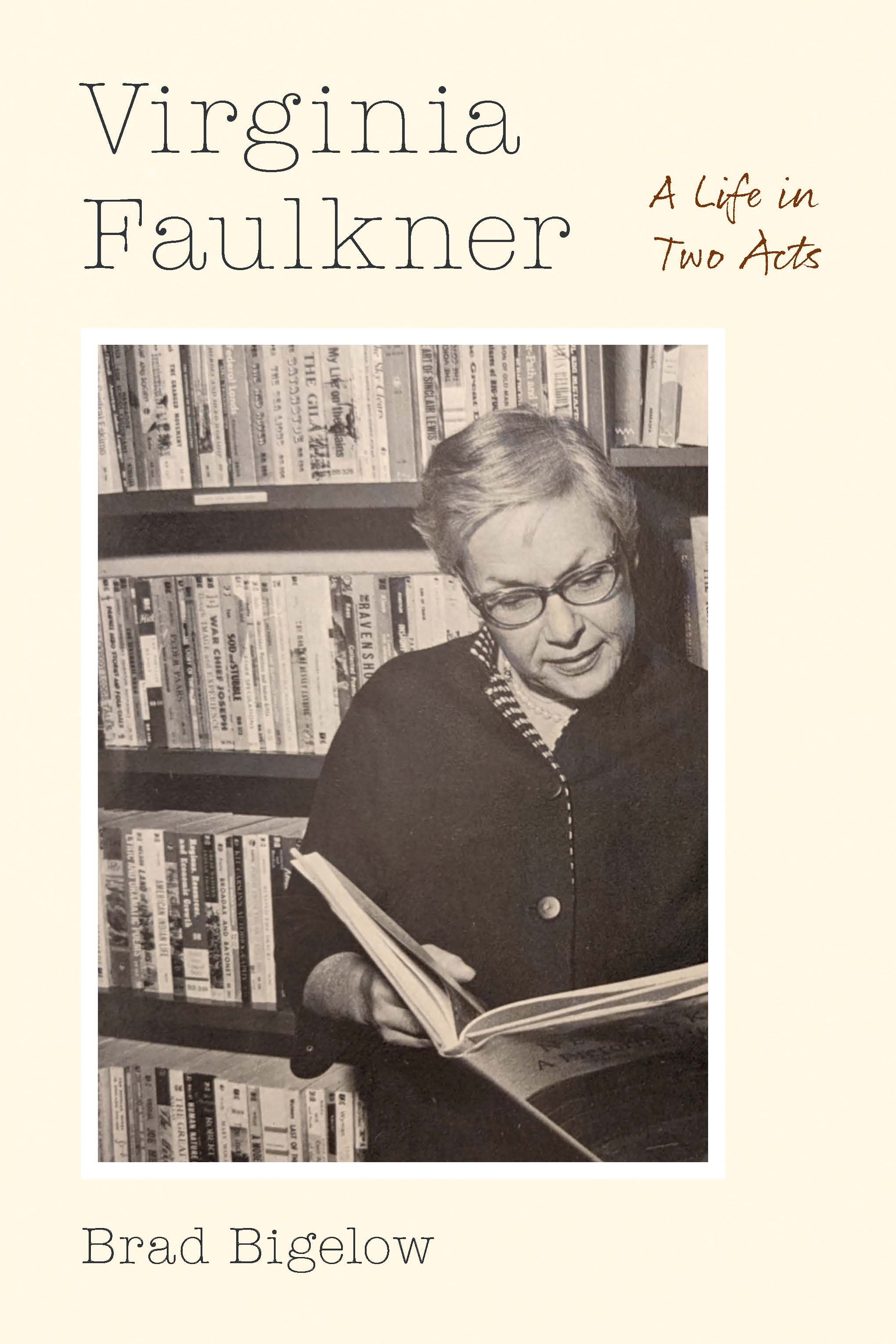
Why Virginia Faulkner? A writer whose books have been out of print for over 80 years, an editor whose name appears on almost none of the hundreds of books she worked on, a woman who’s been almost completely forgotten since she died in 1980. It’s hard to see why anyone would be interested in her story, and even harder to understand why someone would spend five years researching and writing her biography.
For years, I’ve been fascinated with forgotten books and writers, a subject I’ve been writing about since 2006 on my Neglected Books website. One of the books I featured early on was My Hey-Day, a collection of outlandish accounts of the adventures of Princess Murphy, an irrepressibly uncouth bon vivant who’d never met a party she couldn’t gate-crash. Its cover claimed these were tales “as told to Virginia Faulkner.” As is my habit, I did a little research and learned that Virginia Faulkner was born in Lincoln, Nebraska, attended Radcliffe, wrote for the Washington Post and Town & Country magazine, published two novels by the age of 23, worked as a screenwriter for MGM in Hollywood, then spent the last 25 years of her life as an editor with the University of Nebraska Press. That last bit stuck in my head. It seemed an odd trajectory: Washington, New York City, Hollywood . . . and then the University of Nebraska Press?
Fast-forward to 2020. Faced with the task of writing a thesis for my Masters in Biography program at the University of East Anglia just as the U.K. was entering lockdown in response to the COVID-19 pandemic and all the archives were closing for an indefinite period, I looked around for subjects I could adequately research online. Virginia Faulkner’s odd career path came to mind: why would a writer who’d had such successes walk away from it all and spend the second half of her life as an editor at a university press in Nebraska? There had to be a story behind it.
My curiosity increased when, early on, I contacted Samantha Shada, who had done some investigation and had a large PDF file of letters Faulkner had written her brother Ed in the early 1930s. The letters encompassed her time at an exclusive girls’ finishing school in Rome through her stint with the Washington Post, her early successes in New York, and her move to Hollywood in the fall of 1935. They were extraordinary letters: smart, funny, sharp-eyed, and self-deprecating. After reading them, I felt I was on a first-name basis and could think of her simply as Virgina. I could share her uncertainty as she was about to leave the Post for New York, where her first novel, Friends and Romans, would soon be acclaimed as the comic triumph of 1934. Despite the assurances of her publisher and editor at Simon & Schuster, she was torn over where to go as a writer. “If I’m ever really going to be any good,” she wrote Ed, “I’ll have to give up this smart, know-it-all line for something a little kinder and truer.”
Among the letters Samantha Shada had collected were five or six in a cryptic handwriting much different from Virginia’s. When I painstakingly deciphered and transcribed them, I saw that they documented a nervous breakdown she had not long after moving to New York. Evelyn Merriman, one of Virginia’s teachers in Rome, had come down from Connecticut, where she was working at a private school, and found her distraught and incoherent. Writing Ed Faulkner, Merriman wrote that Virginia feared that she could never survive as a writer in New York’s sophisticated and highly competitive literary world and was deeply depressed about her future. Merriman remained with Virgina, and over the next few days, the crisis passed.
But as I was to learn as I continued my research beyond my thesis, which only dealt with Virginia’s experiences between 1930 and her departure for New York in the summer of 1934, periods of crippling depression were a regular part of her life. They likely explained why she fled Hollywood for Europe in 1937, breaking her contract with MGM. One such period may have been behind the note, “River House Incident,” in Dana Suesse’s daybook just shortly after the two women began living together at the exclusive Manhattan apartment house in 1941. Depression—and Virginia’s habit of self-medicating with Scotch in response—certainly explained why she checked herself into a private mental health clinic in Michigan in 1950, where she would have received multiple rounds of electro-convulsive therapy, in keeping with practices of the day.
Though she was quick to point out that “I am not, never was, and never will be, psychotic (or nuts), and I got papers to prove it!” Virginia’s struggles with depression would continue throughout her life. Even after returning to Lincoln—many claimed at the insistence of her brother Ed, who worried about her stability—Virginia would sometimes retire to her bed with a bottle. After she became partners with University of Nebraska-Lincoln English professor Bernice Slote, Bernice would intercede when these episodes hit, and the two women would drive into Nebraska’s rural west, staying in small town motels and eating fast food, until Virginia felt ready to go back to work. If Virginia came back to Lincoln because of Ed, she stayed because of Bernice.
Once she began as an editor with the University of Nebraska Press, Virginia rarely looked back on her time as a writer. Instead, she invested her energies to publishing and celebrating Nebraska writers whose work she esteemed far higher than her own: Mari Sandoz; Wright Morris; and most of all—and hand-in-hand with Bernice—Willa Cather. She liked to quote a line from Cather’s novel, My Ántonia: “That is happiness: to be dissolved into something complete and great.” That odd trajectory I had noted when I first looked into Virginia Faulkner’s life—Washington, New York, Hollywood . . . Nebraska—reflects a choice that must have required tremendous courage and brutal self-honesty: “to give up this smart, know-it-all line for something a little kinder and truer.” And that, I think, is a story well worth telling.
 UNP blog