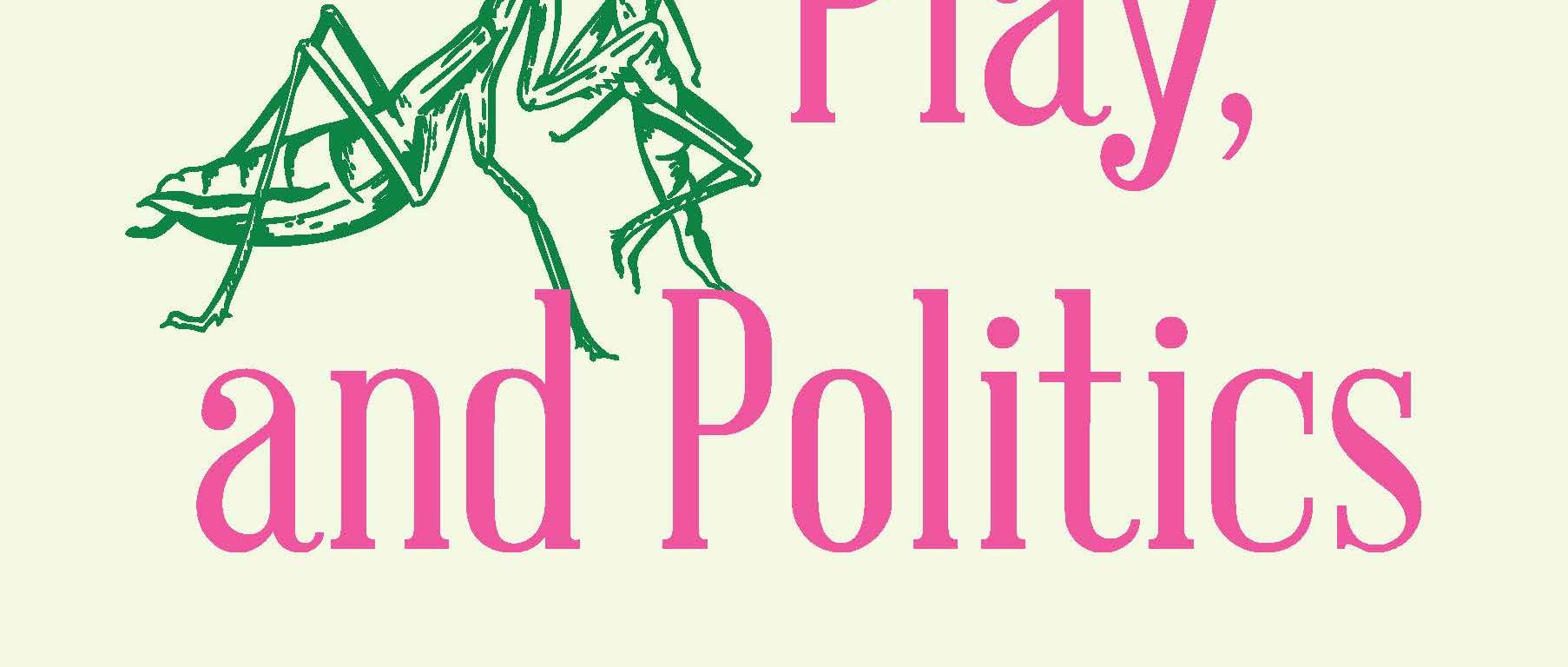
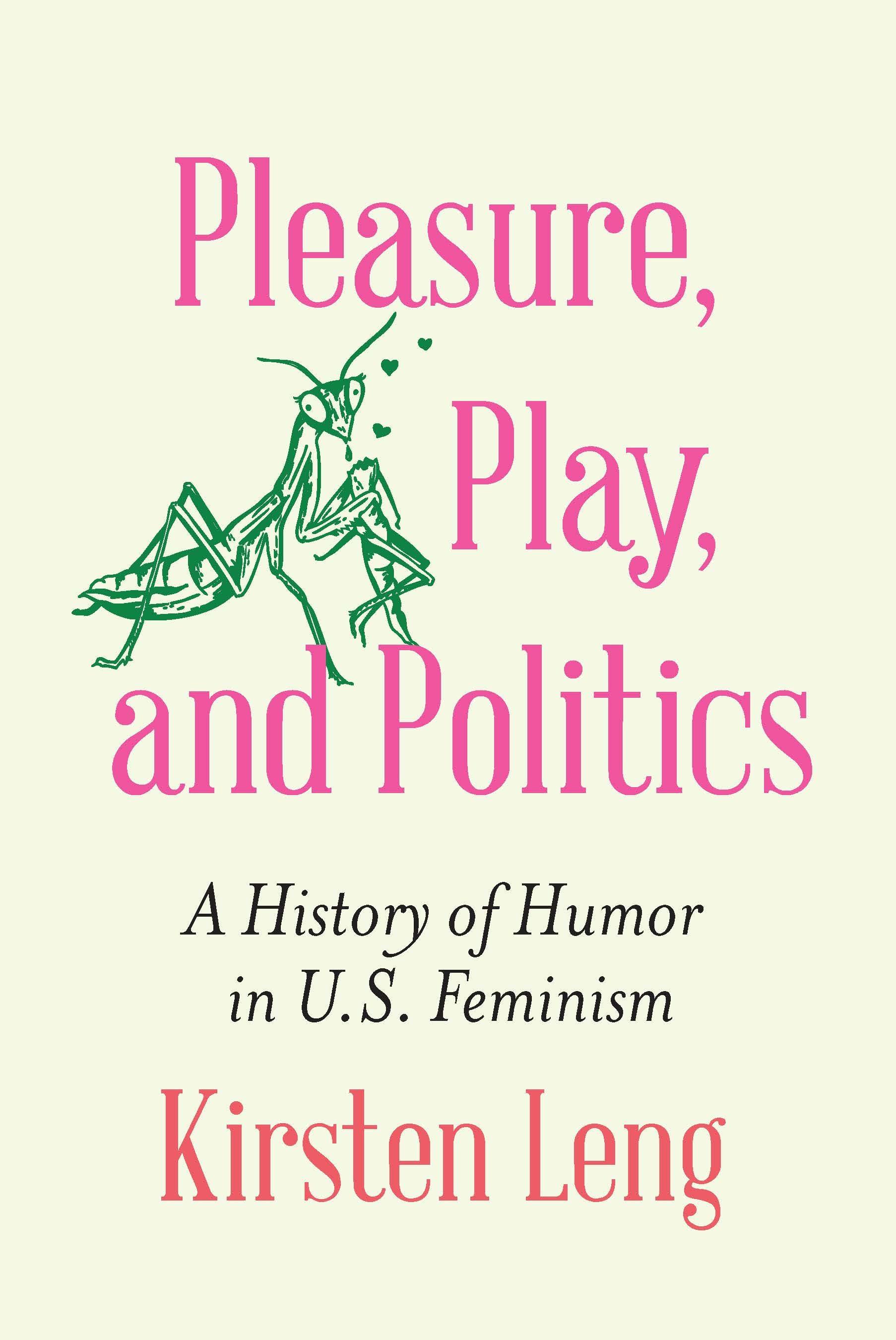
Kirsten Leng is an associate professor in the Department of Women, Gender, and Sexuality Studies at the University of Massachusetts Amherst. She is the author of Sexual Politics and Feminist Science: Women Sexologists in Germany, 1900–1933. Her new book Pleasure, Play, and Politics: A History of Humor in U.S. Feminism (Nebraska, 2026) was published in January.
Pleasure, Play, and Politics is the first book to examine the roles humor played in U.S. feminism during the late twentieth century. Based on extensive archival research, it brings to light the stunning, moving, and frankly hilarious ways feminists have used satire, irony, and spectacle as they worked to build a better world. The story it tells includes activism and music, political mobilization and cartooning, stand-up comedy and demands for change.
Kirsten Leng explores the ways culture and politics feed one another and shows how humor contributed to movement-building by changing hearts and minds, creating and maintaining a sense of community beyond a single issue, and sustaining activists over the long haul. The fascinating individuals, groups, and objects examined here—including the sex workers’ rights group COYOTE, the Guerrilla Girls, Florynce Kennedy, and the Lesbian Avengers—don’t just provide entertaining anecdotes or unsettle lazy assumptions that feminists are perennially dour and censorious: they offer a lesson or two for contemporary feminists and social justice activists. Taken together, they remind us that laughter can move us, that humor and anger can coexist, and that play and pleasure have a place in struggle.
Introduction
Recovering the History of Humor in U.S. Feminism
On January 21, 2017, the streets turned pink. Across the United States and around the world, millions of people turned out to oppose the election and inauguration of Donald Trump. The protests, collectively called “The Women’s March,” marked the first mass feminist protest of the twenty-first century. The march brought together people of all genders, races, religions, and ages—at least for a moment.
The march’s distinctive pinkness stemmed from the protestors’ now famous “pussy hats”—little, rosy, knitted satires that expressed a collective rejection of the boastful sexual entitlement Trump expressed in his Access Hollywood confessions. But the pussy hats were not the only examples of topical humor on display at the Women’s March. Signs boasting slogans such as “My Neck, My Back, This Pussy Will Grab Back,” “Girls Just Wanna Have FUN-damental Rights,” “Keep Your Tiny Hands Off Our First Amendment,” and “We’re Not Just Nasty Women, We’re Revolting” brought levity and catharsis to an event inspired by rage and despair.
Commenters reacted as if feminists had suddenly developed a funny bone. “The Women’s March this weekend, in addition to being forceful, moving, and, yes, huge, was funny,” wrote Alexandra Schwartz in the New Yorker. “Actually, it was hilarious, a vindication of the humor of women performed on a stage that stretched the whole world wide.” The signs marchers carried prompted another observer to say that “protestors around the country are proving that speaking up for what we believe in can be both serious and seriously clever.” An academic writing in a public-facing blog commented that protestors were committed to advocacy but “were having fun, too, using humor and satire to make political statements.”
Such reporting treated humor as a novelty—particularly in the context of a feminist action. A literary scholar said the march had inaugurated a new form of protest. A tech journalist attributed the march’s witty, “snarky” signs to the sensibilities of a younger, social media–savvy generation, writing that the march was like “Twitter and Instagram brought to life.” Virtually none of these commentators seemed to know that feminists have long used humor in their activism and art.
The historical record is full of examples for all to see—if anyone cared to look. Feminists dedicated to a range of causes have mobilized humor to highlight problems, demand change, transform attitudes, build community, and sustain energy for political work. Their humor, while sometimes light-hearted and whimsical, was often mixed with other powerful feelings, including anger. This emotional alchemy gave their work extra affective punch. Throughout the twentieth century and into the twenty-first, irony, satire, and outrageous spectacle found their way into feminist protests, plays, posters, speeches, songs, slogans, street theater, T-shirts, cartoons, concerts, and correspondence.
Pleasure, Play, and Politics aims to remind us of feminism’s humorous past. It brings to light the stunning, moving, and frankly hilarious ways feminists have used satire, irony, and spectacle as they worked to build a better world. It tracks their repeated discovery that humor could be incredibly powerful politically, a wonderful, playful, pleasurable source of strength. After all, few other modes of communication simultaneously engage the intellect, the emotions, and the body. Humor frees people to explore new ways of thinking and being, entertain challenges to the status quo, and perhaps even transform their attitudes. It can accomplish these feats because humor enacts a sphere of play somewhat removed from everyday life and its rules—and consequences. Yet humor’s effects are not only cognitive: humor moves us through the force of laughter. It can change us: it can get us to think things, do things, feel things. Indeed, as Cynthia Willett and Julie Willett have pointed out, new research on the enteric nervous system (that is, the gut) is revealing humor to be a full-bodied affair that can create visceral connections. As it turns out, a good “belly laugh” simultaneously eases our defenses against new ideas and renders us open to communion with others.
Tracing the role humor played in feminist activism and feminist culture illuminates how humor adds sweetness and pleasure to activism. It nurtures and sustains those involved in the seemingly endless pursuit of social justice, and the evident pleasure of playful protest helps recruit newcomers. In fact, as we will discover when we explore activism and art during the 1980s, humor’s sustaining power played an important role in keeping feminism alive during the movement’s doldrums.
This book focuses on the 1970s to the 1990s, an era of ups and downs. The mass mobilization and culture building of the 1970s was followed by the backlash of the 1980s, as Reaganite neoconservatives fought women’s rights and as fear and ignorance about HIV/AIDS prompted virulent homophobia. In the 1990s feminist thought, activism, and culture had a renaissance—dubbed the “third wave”—and AIDS activist groups such as ACT UP and Queer Nation sparked the birth of queer activism and queer theory. Particularly in periods when political and popular sentiment turned against feminism, humor helped keep the movement and its goals alive.
Feminists also used humor to fight for reproductive justice and pay and representational equity, as well as to decry sex and race discrimination, illuminate and celebrate queer lives, confront misogyny, and champion sexual pleasure—and even to mock sanctimonious behavior and attitudes among others in the movement. They put on satirical masquerade balls to advance sex workers’ rights; shook up the art world with ironic, iconic posters; staged outrageous protests and raucous street theater; and created sardonic cartoons, hilarious punk lyrics, music and comedy festivals, and subcultural stand-up circuits. In other words, they injected humor throughout feminist politics, culture, and activism during the late twentieth century.
 UNP blog