Stephen P. Phillips served in the U.S. Navy as a surface warfare officer and Explosive Ordnance Disposal technician. During his naval career he deployed to Haiti, Somalia, the Balkans, and the Persian Gulf and served in the Global War on Terrorism. Phillips is currently a design strategist and scientific diver at the Johns Hopkins University Applied Physics Laboratory. He is host of Talk a Little, Learn a Lot, the podcast of the American Society of Naval Engineers. His new book A Poisoned Chalice: The U.S. Navy in the Persian Gulf, 1987–1988 (Potomac Books, 2026) was published this month.
There are media reports that Iran has laid 12 mines in the Strait of Hormuz. While this is the first time they have mined the strait, it is not the first time they have employed mine warfare in the Persian Gulf.
For most of the 1980’s Iran and Iraq were at war. They sought to erode each other’s ability to finance the war by attacking the other’s economic critical vulnerability . . . the oil trade. The Iran-Iraq War at sea became known as “The Tanker War.”
Now declassified documents reveal that in 1984, the CIA assessed that Iran would mine Kuwaiti ports, since Kuwait supported Iraq, but would not mine areas where U.S. naval vessels operated, the Strait of Hormuz, nor any region outside of the Gulf. Iran proved to be more aggressive than anticipated and laid mines in the Persian Gulf and in the Arabian Sea during the Tanker War.
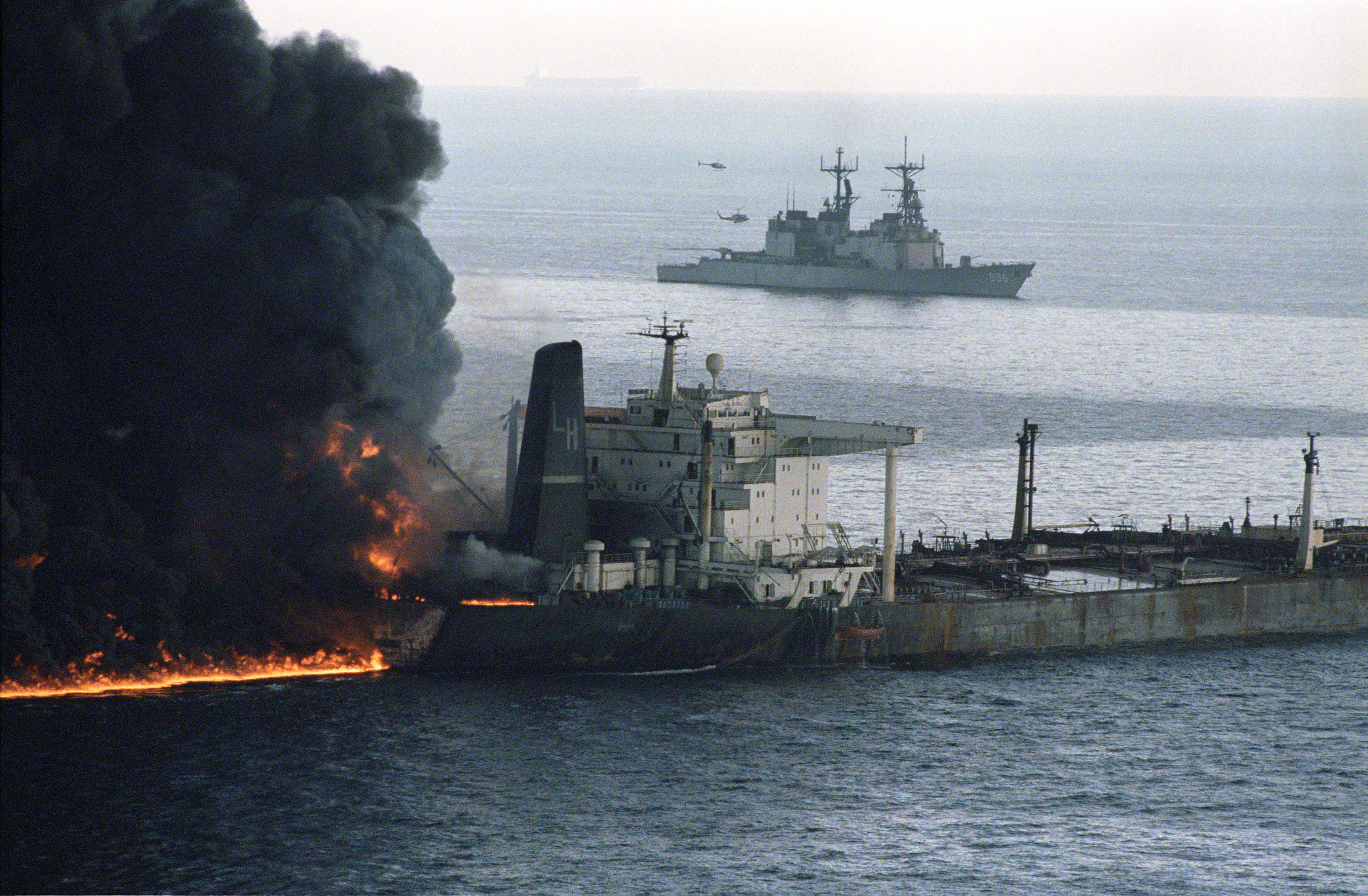
Iran laid mines in the approaches to Mina Al Ahmadi, Kuwait, in the Farsi Island shipping channel, in the Shah Allum waterway, and in an anchorage outside the gulf near the U.A.E. port of Khor Fakkan. They attempted to lay mines in the approaches to Bahrain but were caught in the act. U.S. Army helicopters from what was then known as Task Force 160 encountered the Iranian ship Iran Ajr laying mines. They fired at the ship, disabling it, and the next morning, the ship and crew were captured. Later the U.S. Navy sank the vessel.
Reminiscent of Iran Ajr, U.S. Central Command has reported sinking 16 Iranian minelayers, surface vessels that can be employed to lay mines.
During the Tanker War, Iran did not lay mines in the Strait of Hormuz because they wanted their own oil to continue to flow to the world’s markets.
Kuwait and Saudi Arabia asked both the Soviet Union and the U.S. to intervene in the Persian Gulf. Kuwait suggested reflagging their tankers under a U.S. flag to then receive protection by the U.S. Navy. The Reagan administration agreed to do so, primarily to ensure stability for the petroleum industry and to guard against economic impacts. The Navy operation to escort Kuwaiti tankers became known as Operation Earnest Will.
During this period, U.S. Navy and U.S. special operations forces fought against the Iranian Navy and the Islamic Revolutionary Guard Corps Navy.
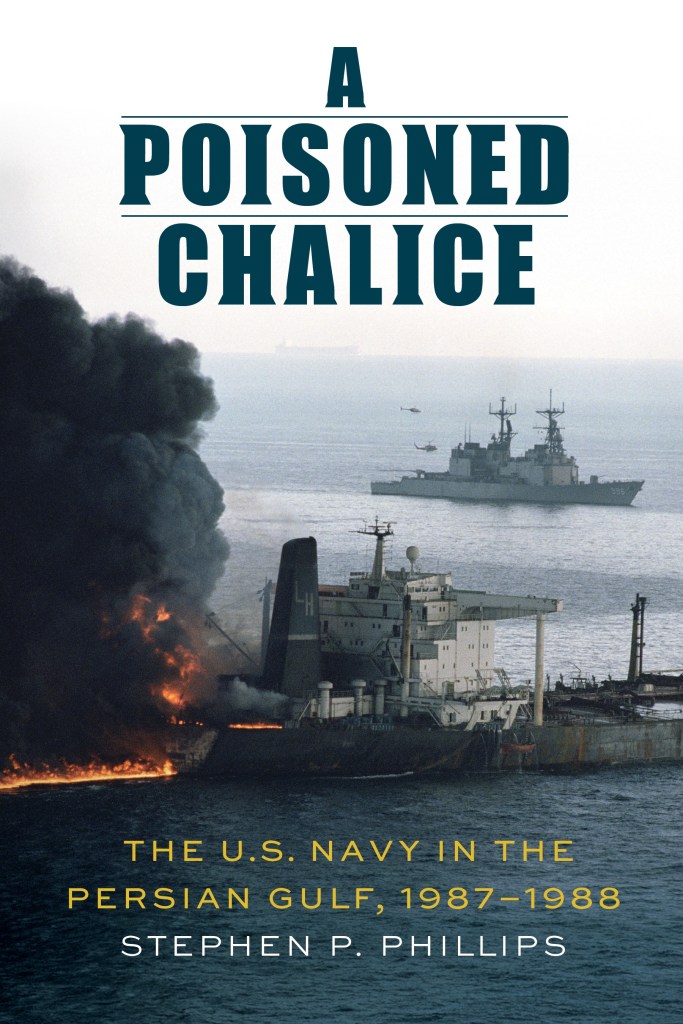
If interested in learning more about this part of U.S. naval history, and how it informs our ongoing war with Iran, I invite you to read my new book, A Poisoned Chalice: The U.S. Navy in the Persian Gulf, 1987-1988.
Potomac Books is offering a 40% discount when you use code 6AS26 at checkout.
 UNP blog