Author Michelle H. Raheja is an assistant professor of English at the University of California, Riverside. Her articles have appeared in American Indian Culture and Research Journal, American Quarterly, and edited volumes. Reservation Reelism: Redfacing, Visual Sovereignty, and Representations of Native Americans in Film (Nebraska, 2011) was published in January.
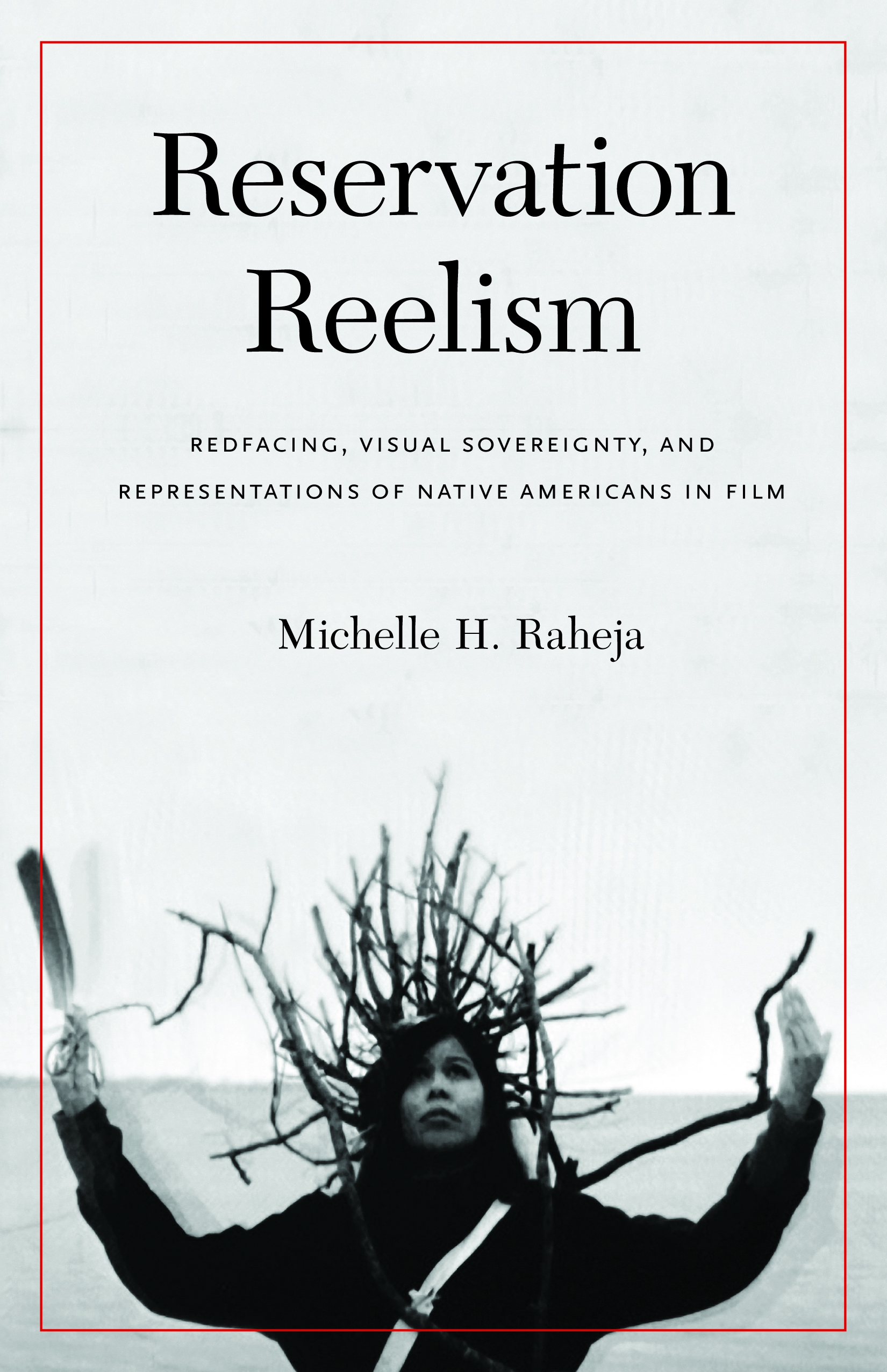
In Reservation Reelism: Redfacing, Visual Sovereignty, and Native Americans in Film, I examine the kinds of discursive violence Hollywood has enacted on Native Americans since the film industry’s inception, primarily through the genre of the Western. The typical Western almost always situates Native people as either somewhat sympathetic victims of history doomed to disappear as a race or as relentlessly savage perpetrators of violence whose genocide is deserved and desired. At the same time, the book considers more complex and nuanced alternatives to this binary opposition, as it is found in films from the silent era to the present, that were either directed by a Native filmmaker or starred a Native actor in a leading role who worked on and off screen to complicate stereotypical images of Indigenous peoples.
The release of Disney’s The Lone Ranger earlier this month brought the concerns of the book to the forefront of the important and often heated national and international debates on social media concerning representations of Native Americans in popular culture in general, and in Hollywood films in particular. The film has been almost universally panned by both Native and non-Native critics who were disappointed in the casting of Johnny Depp as Tonto, given the large number of talented Native American actors; the scarcity of Native American characters’ speaking roles (I counted only two); and the deployment of every single Hollywood Indian stereotype, from Tonto’s pidgin English and bizarre regalia to Chief Big Bear’s pronouncement that Native Americans are a vanishing race beyond hope and without a future. On her blog Native Appropriations, Adrienne Keene writes that the film “combine[s] ALL the stereotypes”; Hanay Geiogamah argues in a Los Angeles Times interview that the film “represents a major setback in our efforts to combat stereotyping of our image.” Others, such as actor Saginaw Grant, who plays Chief Big Bear in the film (one of the two speaking roles played by a Native), endorse the film and Johnny Depp’s role as Tonto. Fidel Rodriguez contends that the film sheds light on the genocide of Native people and presents them in a positive light (since the film’s villains are two white men, a corrupt railroad baron, and a cannibalistic Indian killer). While I have found these discussions enormously engaging, I was disappointed that the occasion for such debate led to a generally lackluster, boring, and clichéd regurgitation of the worst parts of the original television series. I don’t put much faith in Hollywood’s interest in presenting or ability to present Native Americans as complex human beings with a viable present and future whose past precedes the founding of the United States by tens of thousands of years. Given the growing number of Indigenous filmmakers who are producing vital, vibrant, and interesting work that operates outside of the Western film paradigm, a prominent conversation about these films and the artists who create them seems long overdue. For example, Chris Eyre, whose Smoke Signals (1998) is perhaps the best-known film by a Native American filmmaker, has created work in a number of different genres that challenges stereotypes about Indigenous peoples. Igloolik Isuma and Arnait Video Productions, two Inuit filmmaking collectives, also recently produced Atanarjuat (The Fast Runner), Before Tomorrow, and The Journals of Knud Rasmussen, the latter a poignant, award winning, and often humorous trilogy of stories about Native American lives that was shot in Nunavut, Canada, and features Inuktitut dialogue. This film presents Indigenous history and stories from an Indigenous perspective.
Disney’s recent rehash of The Lone Ranger reminds me of Jim Jarmusch’s Dead Man (1996), a deeply humorous and scathingly critical but entertaining sequel to the queer, colonial buddy story. It is also a much more nuanced, thought-provoking, and interesting postmodern Western rendition of the original radio show than Disney’s recent release. Johnny Depp stars in both films, but as very different characters. Unlike The Lone Ranger, which relies on the name recognition of its single star actor, Dead Man features a much more compelling cast: Crispin Glover, Robert Mitchum, William Hurt, Gabriel Byrne, Iggy Pop, Alfred Molina, and Billy Bob Thornton. Shot in black and white, Dead Man centers on the relationship between the ironically named William Blake (Johnny Depp), a hapless accountant from Ohio who inadvertently ends up on the wrong side of the law, and the equally ironically named and often comedic Nobody (Gary Farmer), an enigmatic Native American poetry aficionado who quotes from Blake’s poetry throughout the film and resurrects the white anti-hero from near death, only to usher him on to the spirit world at the film’s conclusion. Dead Man addresses the issue of Native American genocide, but it does so with the understanding that Indigenous people have a present and a future. Farmer, an accomplished Cayuga actor, is much more critical of settler colonialism than Depp’s tragic Tonto character; his lines include “”stupid f***ing whiteman” and “often the evil stench of white man precedes him.” He outlives Blake, indicating that Native American characters aren’t merely anachronistic bit players in the colonial drama of the frontier. Instead of mocking the rituals of prayer and gratitude, as Tonto does in the Disney film by shakily “feeding” the dead crow headpiece he wears whenever he feels the need to appear mentally unstable, Nobody continually asks Blake for tobacco throughout the film, a request for reciprocity and an acknowledgment that theirs is a relationship of equals. In the end, it is revealed that Blake needs the tobacco in order to thank Nobody for putting him in a canoe and sending him back to the spirit world.
Since performing the role of Tonto, Depp has reportedly offered to purchase land at the Wounded Knee site in South Dakota and repatriate it to the Lakota people in appreciation of Native Americans. Perhaps a more effective way of positively influencing Native lives and changing public perceptions would be to found a project dedicated to funding, training, and disseminating works by Native American filmmakers that feature much more nuanced and exciting representations of contemporary Indigenous people. It may help limit the kinds of shopworn screen stereotypes Disney has recycled this summer.
-Michelle H. Raheja
 UNP blog