Happy University Press Week! Help us celebrate university presses November 11-15. Since 2012, members of the Association of University Presses have participated in an annual celebration of University Presses.
This year’s theme for UP Week is “Step UP.” This theme makes space for presses and their supporters to explore the myriad ways our community’s publications and platforms give context to current issues and events, offer solutions to global challenges, and present diverse voices in a broad range of disciplines.
The #UPweek blog tour today features “HOW does your press #StepUP?” Posts on today’s topic, exploring how university presses take action from sustainability initiatives to community service, come from Harvard Education Press, Columbia University Press, University of Pennsylvania Press, and University of Illinois Press.
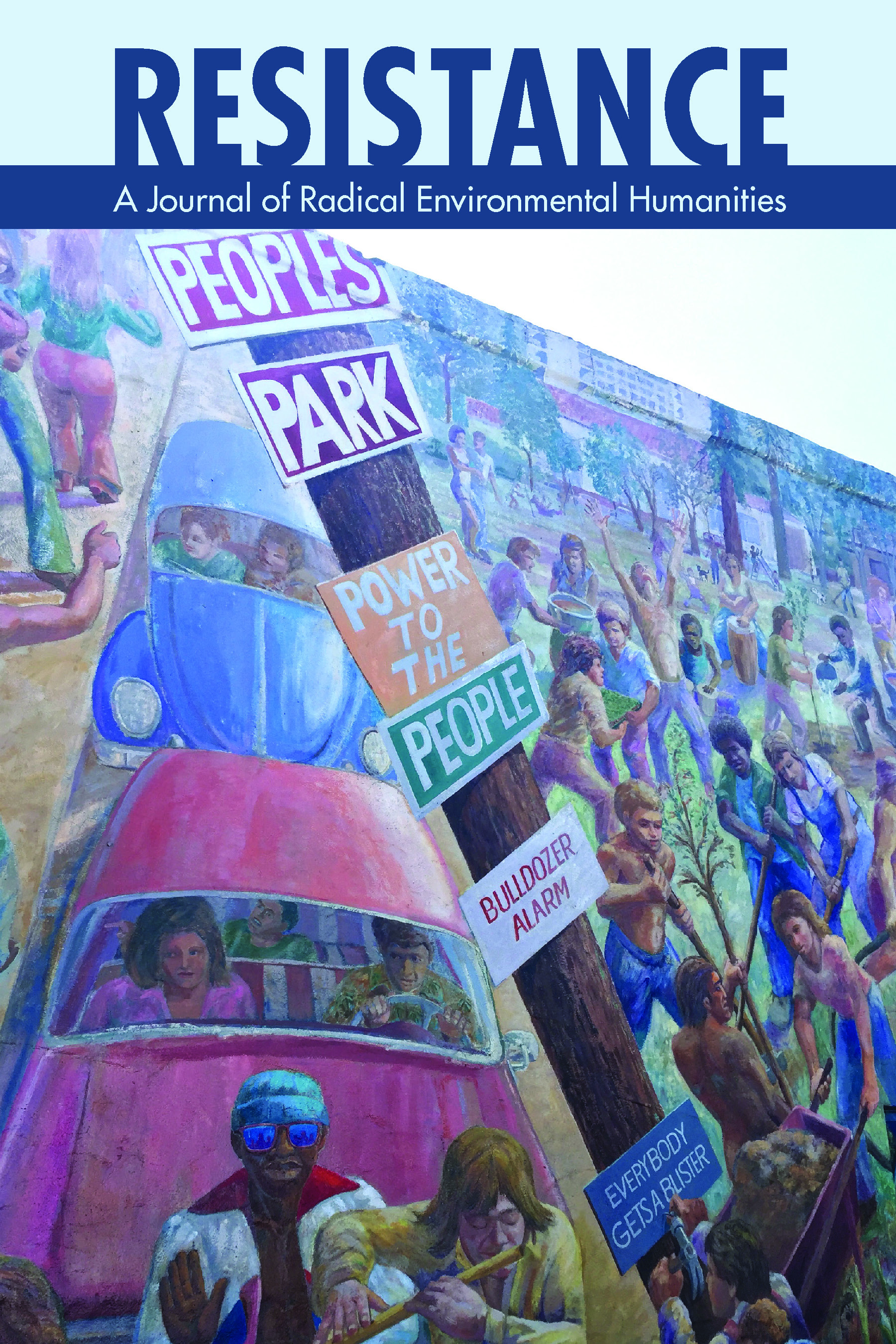
For our contribution, Marco Armiero, editor-in-chief of Resistance: A Journal of Radical Environmental Humanities, will discuss how the journal #StepsUP
From Resilience to Resistance
I’m writing these few lines from my office in Barcelona, Spain, as Cyclone Dana has just struck the city, flooding the airport, various roads, and even some local shops. In fact, my roommate’s bookstore was flooded—not from rain directly entering but because the pipes in the walls couldn’t handle the water pressure. Following the Catalan regional government’s advisories, my university even asked us to leave campus and return home.
While Barcelona was severely impacted, it pales in comparison to the devastation that unfolded just days ago in Valencia, located about 350 kilometers south of here. Global news outlets shared shocking images of cars swept away by water and mud in Valencia and its surrounding areas, stark evidence of the storm’s intensity. At least 220 lives have been lost, with the toll potentially rising in the coming days.
I mention Cyclone Dana and the tragic events in Valencia for several reasons. Partly, it’s a conscious move to resist the academic tendency to write from a detached, “view-from-nowhere” perspective. This choice highlights the importance of grounding socio-ecological narratives in real, embodied experiences. While environmental crises often take a global form—think, for instance, of the Anthropocene narrative—Resistance, our journal, is committed to situating crises in tangible, community-based experiences that truly drive mobilization. The “Radical Environmental Humanities” framework underpinning our work reflects a pursuit of transformative change, rooted in these local, lived experiences.
Indeed, we often find that people are moved not by scientific data or graphs, but by stories, emotions, and the visceral experiences of suffering and solidarity, which have historically ignited social change. This is why the environmental humanities are experiencing significant growth and enjoying increased public interest: perhaps more than ever, our society needs stories that can reveal the crisis and inspire a collective quest for radical alternatives. And although the Valencia floods may seem painfully self-evident in the images we see on our screens, the stories behind such disasters are often obscured. These narratives show us that so-called natural disasters are, in fact, as much social, political, and cultural phenomena as they are environmental.
Events like Valencia’s recent tragedy illustrate that science and engineering alone cannot address climate challenges. Political will and democratic consensus on climate policies are also critical. Notably, regions with recent severe weather events have often been governed by leaders resistant to environmentalist policies, underscoring the political stakes.
The recent shift of our journal’s title from Resilience to Resistance encapsulates our commitment to radical change. While “resilience” suggests a system’s ability to bounce back, “resistance” implies a transformative critique of the conditions that caused the crisis in the first place. However, our journal is not parochial; we recognize that resilience has a different meaning and conveys a sense of flexibility—perhaps more effectively than resistance, which can evoke a potentially risky rigidity. Yet, resistance can also be highly adaptable, adjusting to diverse terrains, building alliances, and fostering social innovations.
In sum, Resistance is for those who understand that we cannot confront the socio-ecological crisis without addressing issues of power, injustice, and history. Within the pages of our journal, you won’t find an easy solution to the crisis; we don’t claim to have formulas that will save us. Yet, if stories can indeed mobilize change, Resistance serves as a powerful means to reclaim the possibility of imagining another world, and in doing so, we may discover that it is already here.
Marco Armiero is well-known for his passionate commitment to working with disenfranchised communities while fostering environmental, social, and narrative justice. His book Wasteocene: Stories from the Global Dump (Cambridge, 2021) made a significant contribution to the current debate on the so-called Anthropocene and is a reference point for scholars and community organizers all over the world; it has been translated into Italian, Spanish, Bosnian-Croatian-Serbian, and French, with Chinese and Portuguese editions currently under production. In 2023 he published a book on the political ecology of the Vajont Dam Disaster (2000 victims, Italy 1963) which will be translated into English by MIT Press in 2025.
Check out the Resistance lecture series here.
 UNP blog