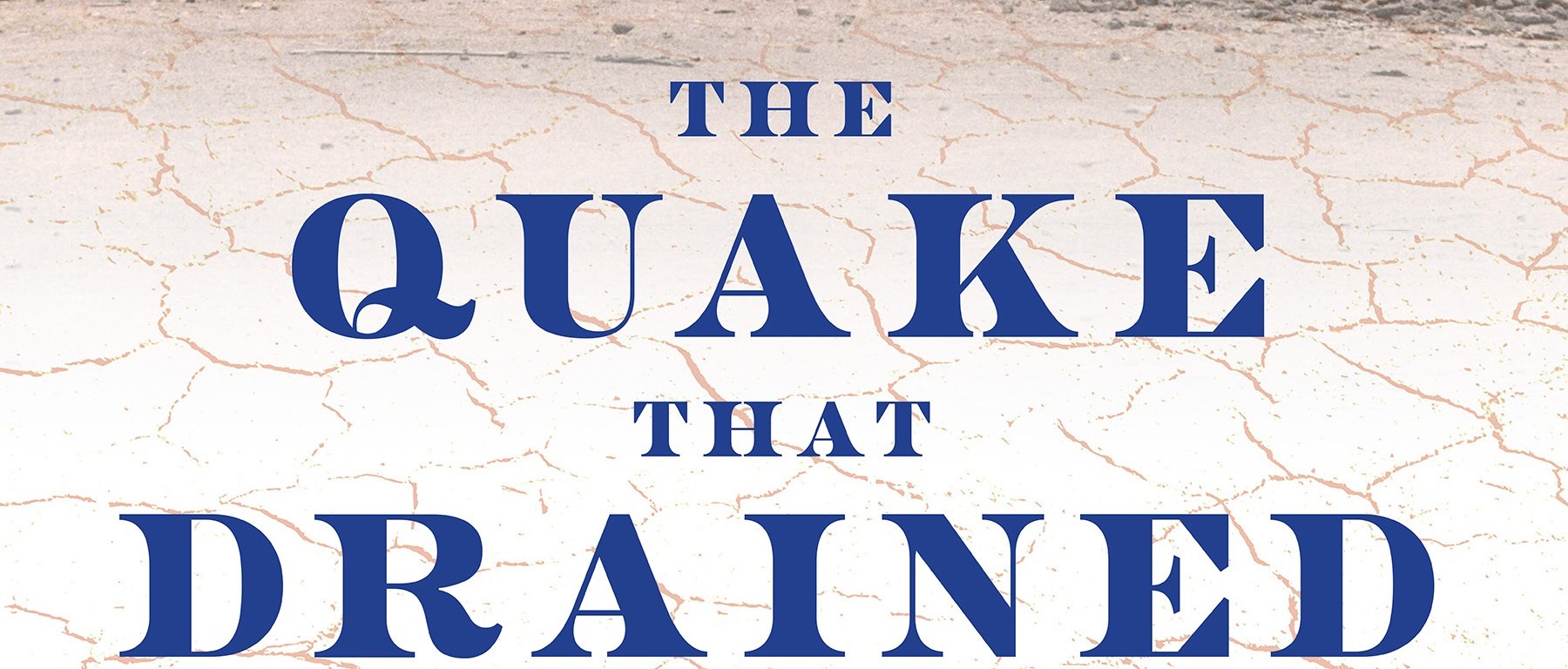
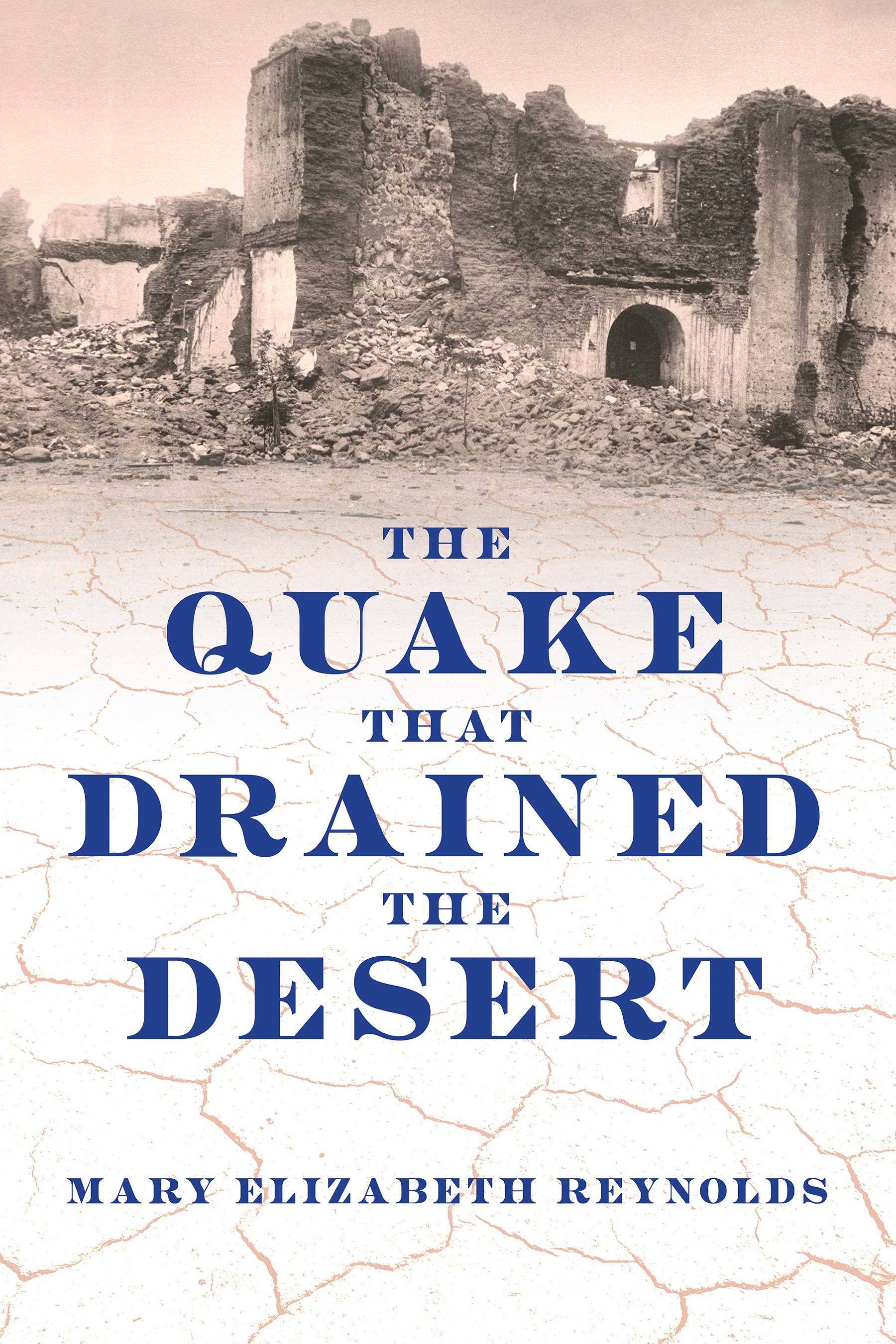
Mary Elizabeth Reynolds is the publicity manager at the University of Arizona Press and a freelance writer whose work has appeared in the Arizona Daily Star newspaper as well as Desert Leaf, Planning, and True West magazines. Her book The Quake That Drained the Desert (Bison Books, 2026) was published in October.
“I know someone who lives near there,” said my friend Lee Blackwell, when I first mentioned the 1887 Bavispe, Mexico earthquake to him. “Maybe he knows someone who can tell you more about it.” I made the email connection to sculptor Jess Davila of Huachinera, Mexico, and the next conversation with Lee was “Let’s go!”
In May 2014, I travelled with Lee, Joan Vandenbos, and Dutch Altoff in Lee and Joan’s sturdy Subaru station wagon. As the crow flies, it’s not that far to Hauchinera and Bavispe from our starting point in Tucson, but the border crossing in Douglas/Agua Prieta and the rural roads made for two days of driving.
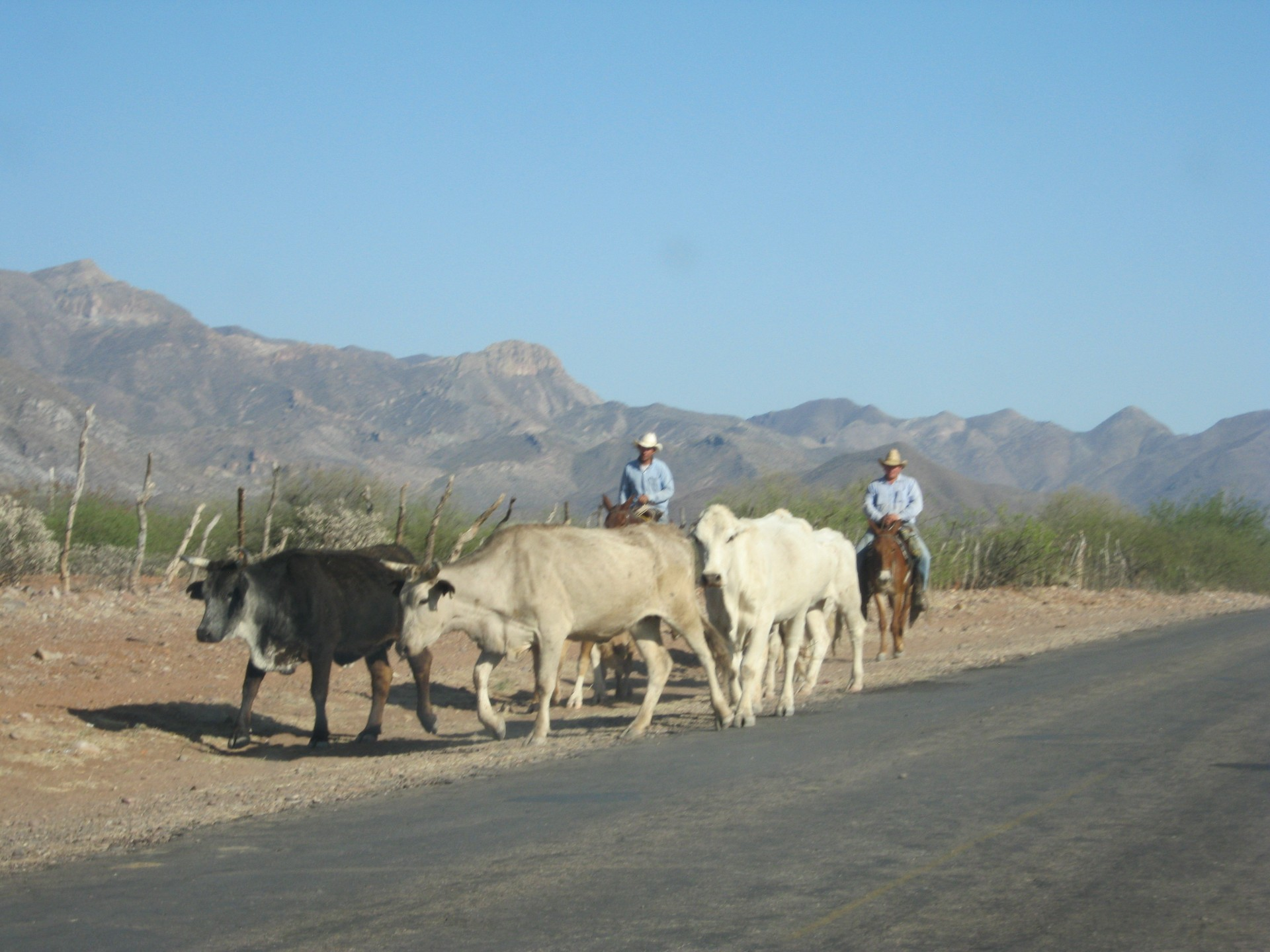
We drove south through deserts and hills, with cowboys herding longhorn cattle along the road.
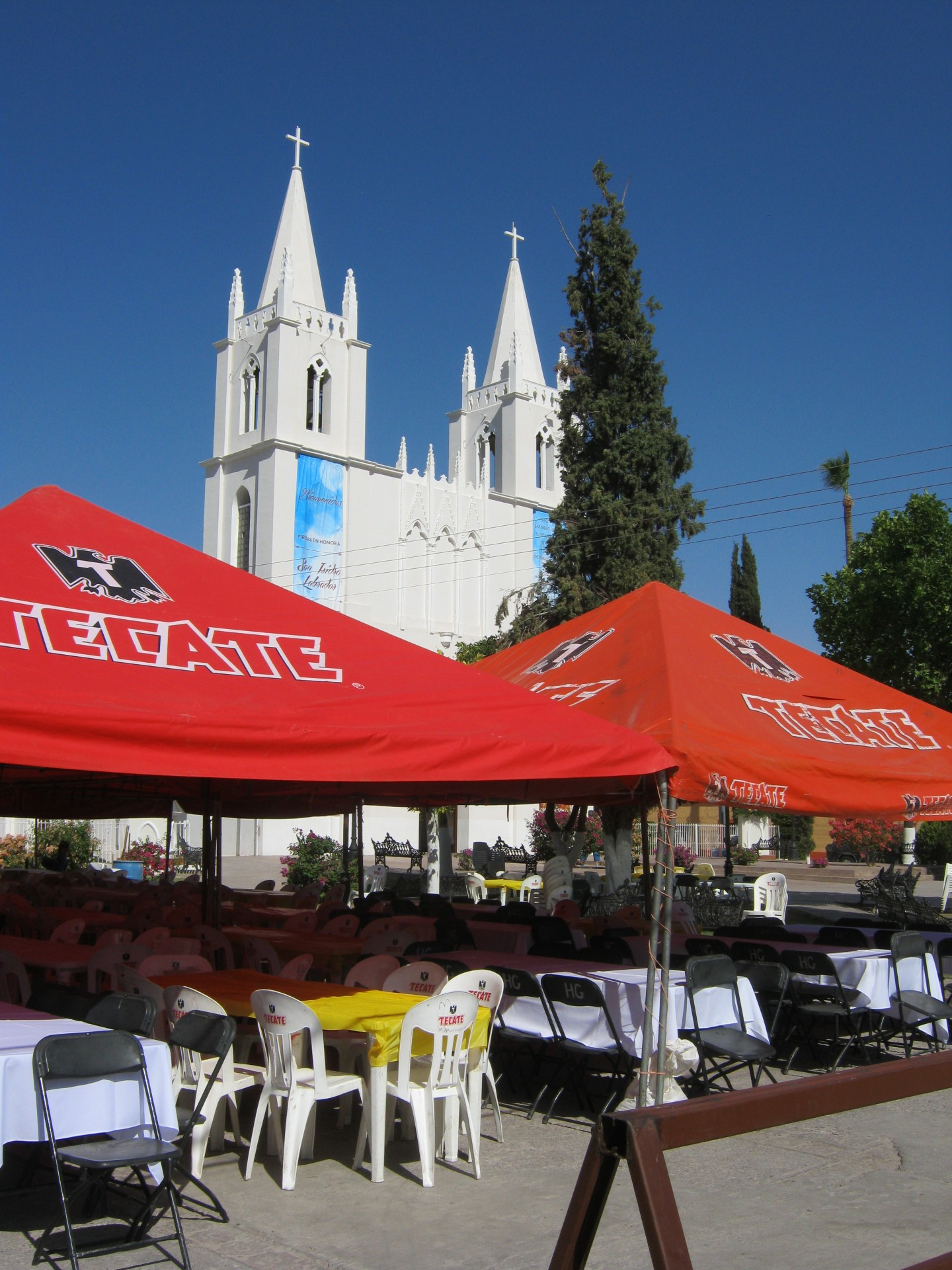
Up and over a ridge and down into the valley of the Rio Bavispe, we arrived at Huasabas and Granados. Lee and Joan had stayed in Granados before, so we decided to stop for the evening. We just missed the office hours of the Hotel Granados, so we went to the plaza to find someone who might know the manager.
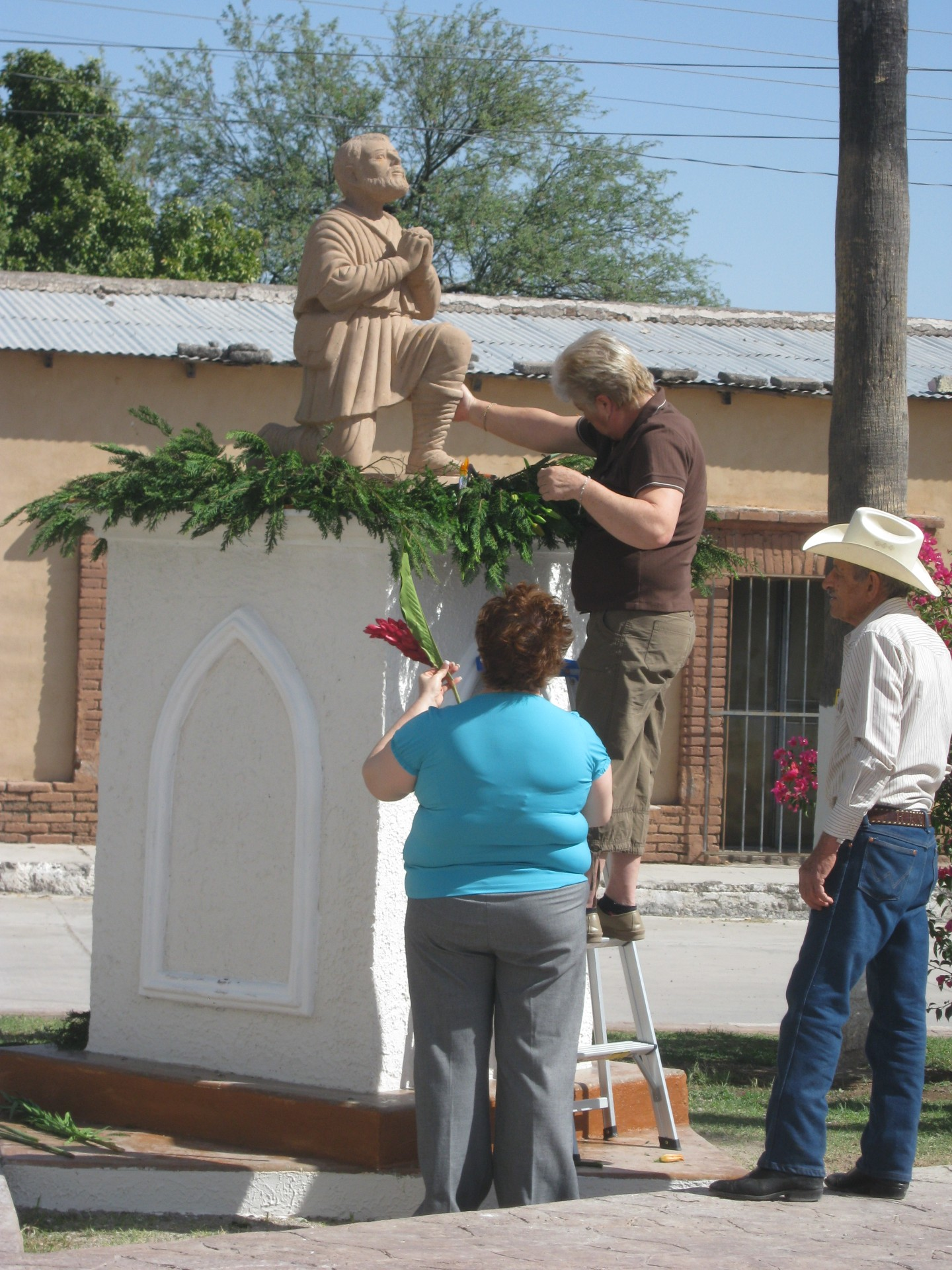
The town was preparing for San Isidro Labrador four-day festival. Saint Isidro, the farm laborer. I later learned that San Isidro is also patron saint of Madrid, a city very much unlike Granados. Like in Spain, Mexico saints’ days often involve branding by the local beer and flowers everywhere.
We had our first view of the Rio Bavispe the next morning, it flows south here and eventually into the Rio Sonora. This is low river season, before the rains of summer. On the other side of the mountains (where we’re heading), Rio Bavispe flows north!
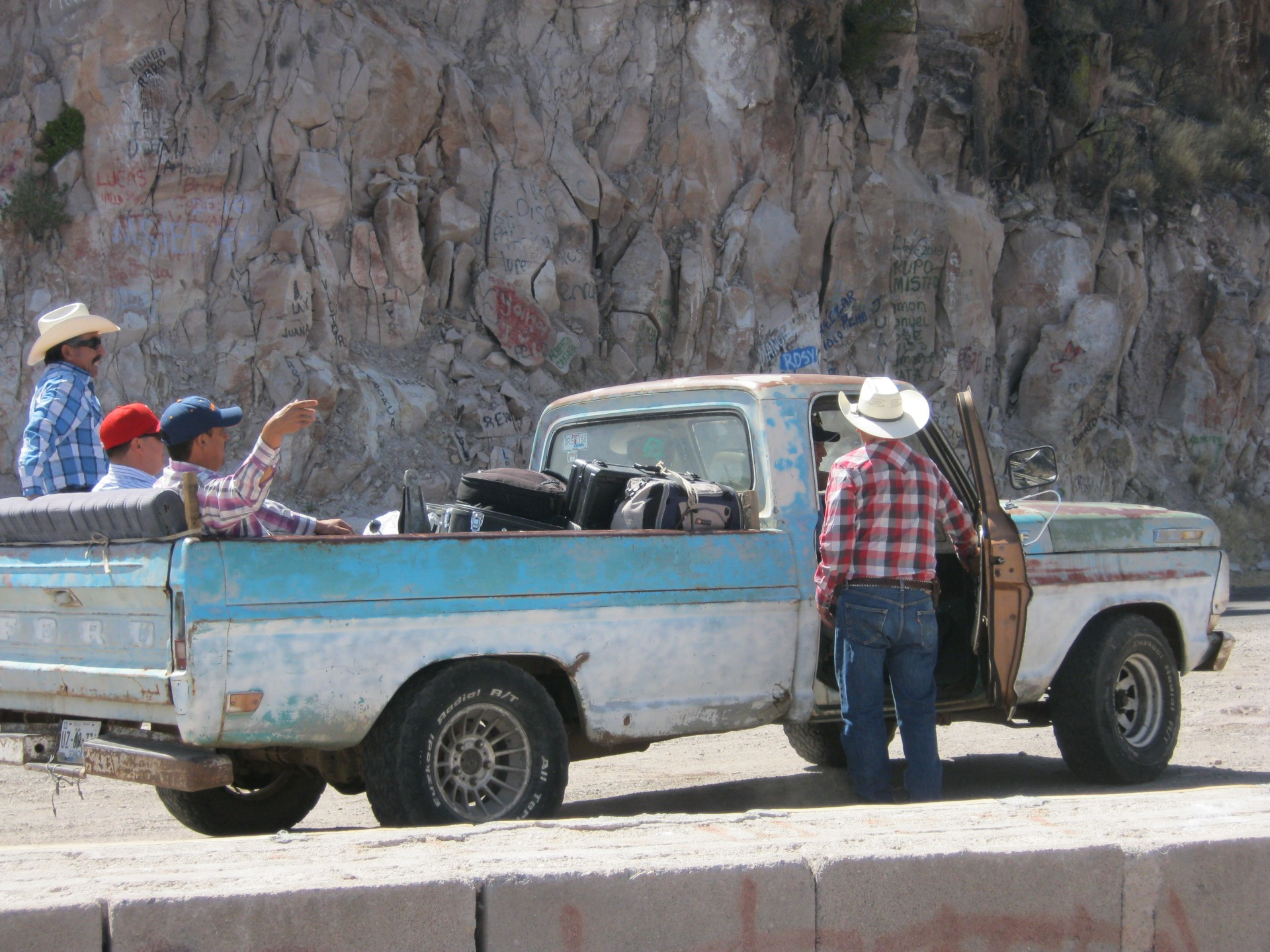
Onto the top of the next ridge, Lee skillfully drove us to Cruz del Diablo (Devil’s Cross) where two canyons meet. At this overlook, we met a family band in their pick-up headed for the San Isidro fiesta in Granados. Lee chatted with them and came away with a CD of their music.
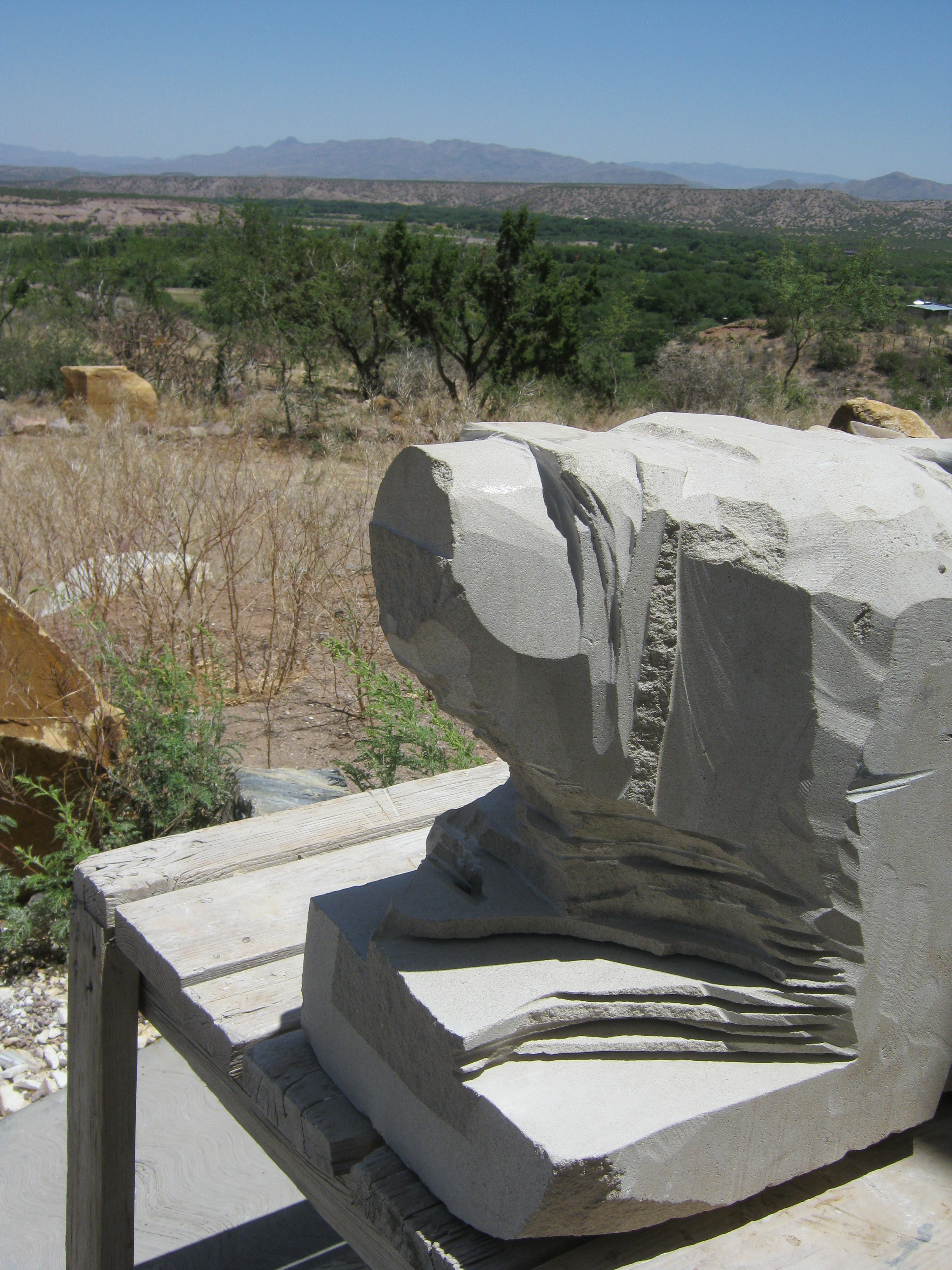
At last, we arrived in the town of Huachinera, home of Lee’s friend who would be our guide, sculptor Jess Davila. The town is home to the Centro Artístico y Cultural de Huachinera, with studio space, classrooms, and museum space. We checked out one of Davila’s sculptures in progress.
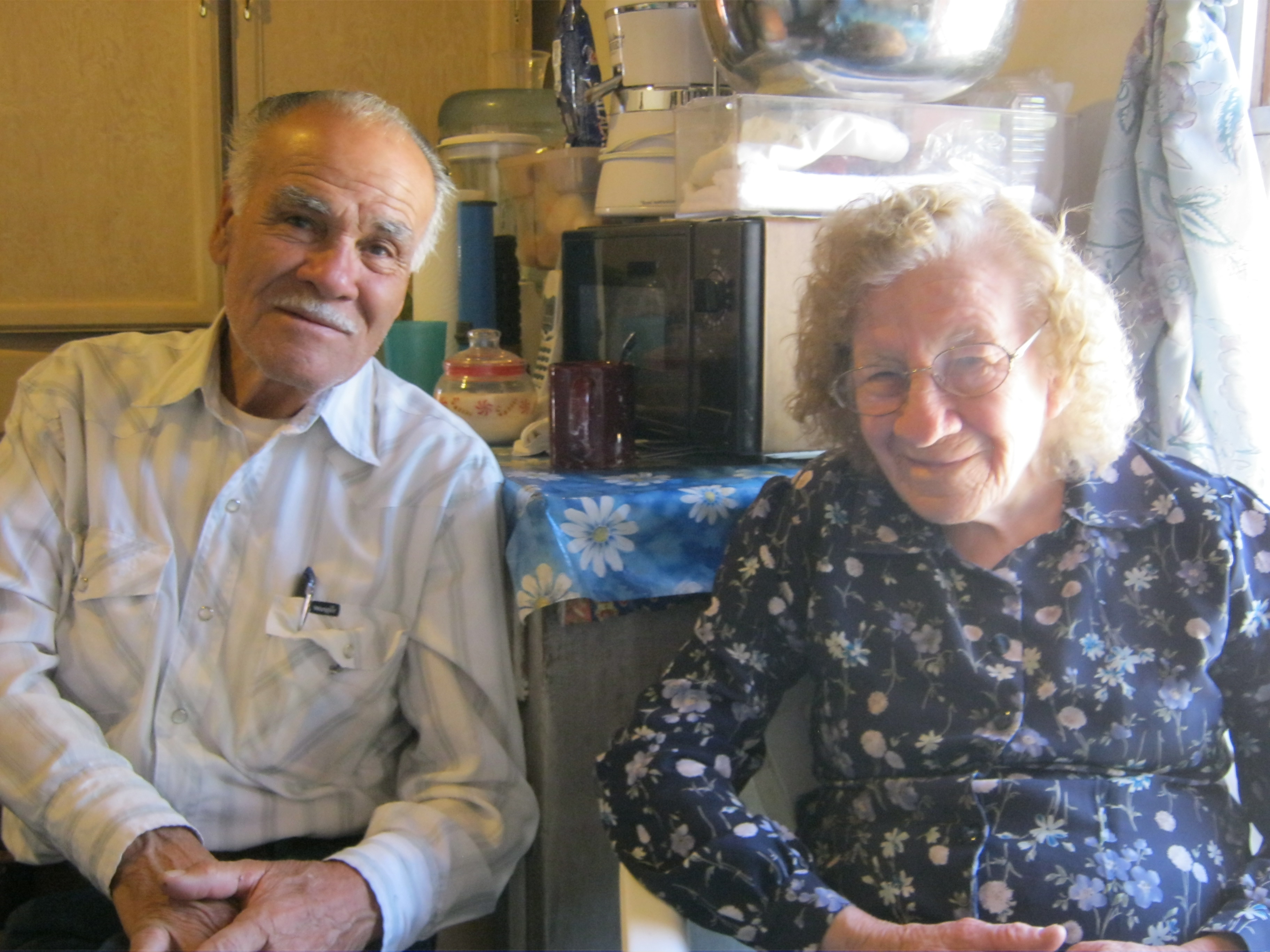
The next day, I interviewed Jess’s aunt Lolita and her cousin José. Lolita told me about her great uncle Chico, who felt the earthquake in the town plaza and remembers watching the burros bolting in fear. She said that the earth cracked open in the milpa (farm field) and swallowed another great-uncle up to his waist, then popped him out again!
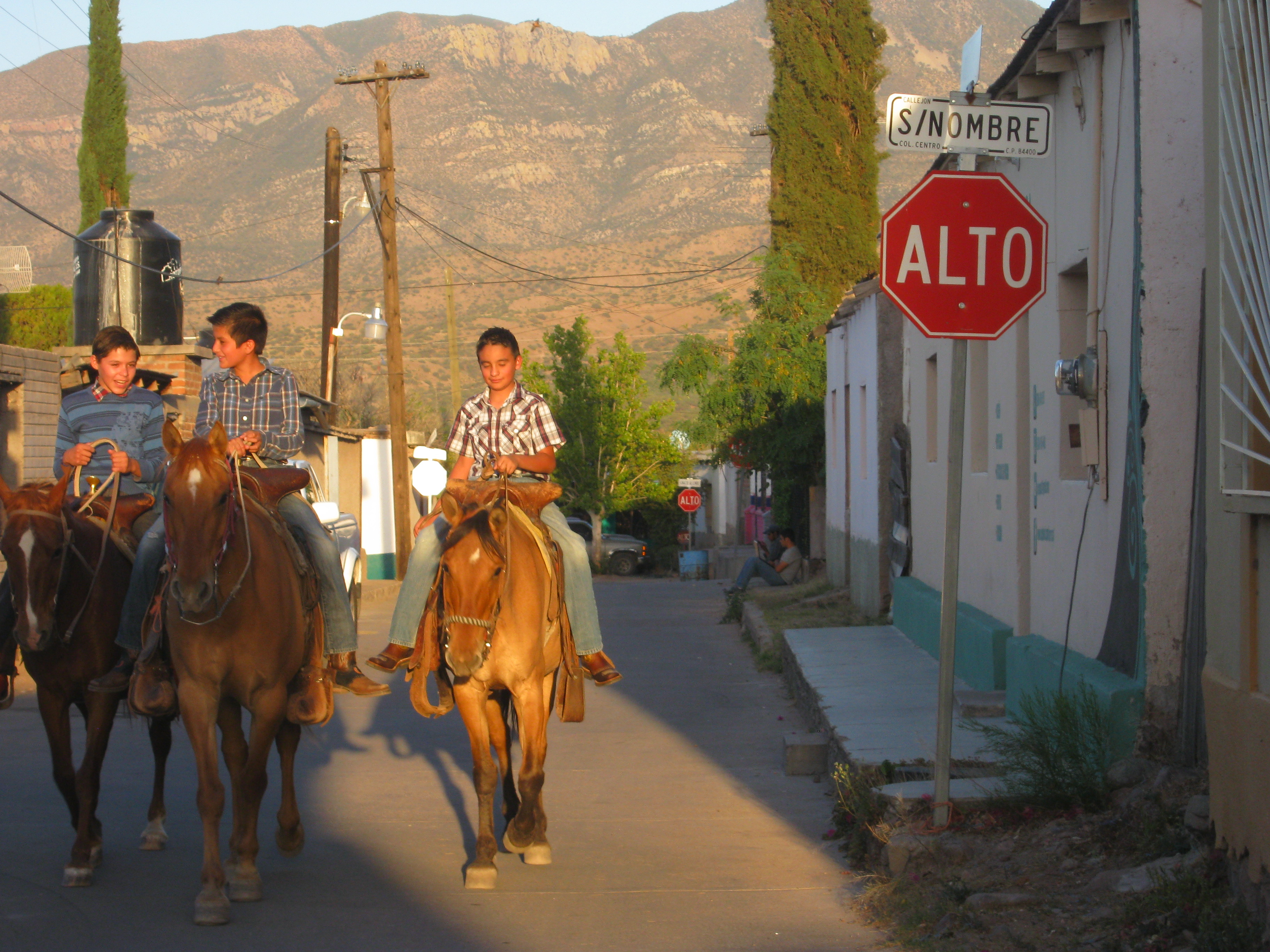
The celebration of San Isidro de Labrador in Huachinera meant everyone takes a “vuelta” or a ride around the town, with cowboys sharing horses so everyone could ride.
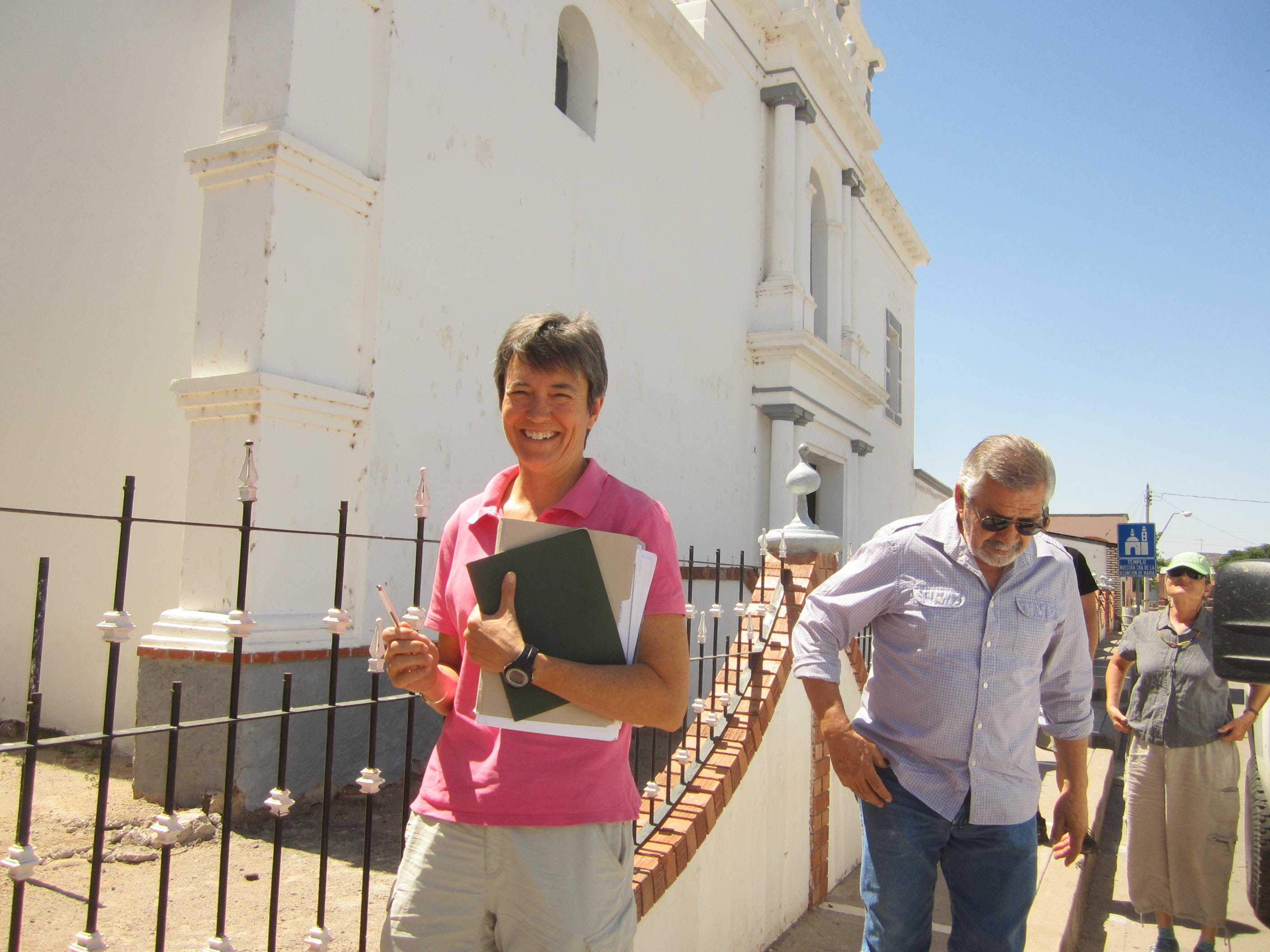
I always had my notebook and pen ready to take notes. Here I am with Jess Davila and Joan Vandenbos in front of the rebuilt church in Bavispe.
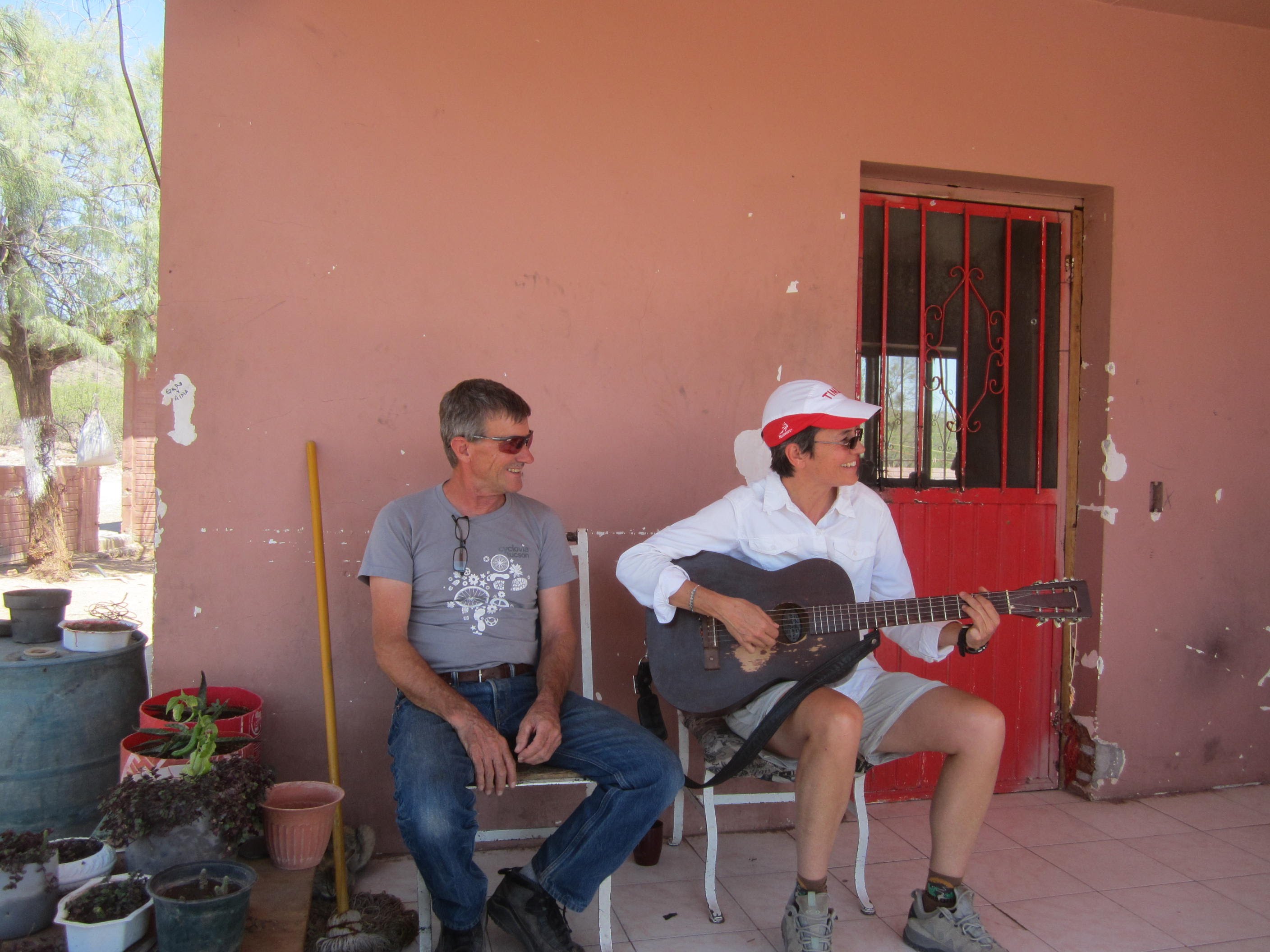
After three days of conversations, family stories, and a few myths about Apaches, it was time to head home. We opted for dirt roads this time so we could pass by Cañon de los Embudos, where the U.S. Army negotiated with Geronimo and the Apaches, a story also featured in the book. We stopped at a remote ranch house, where Lee and Joan had given a ride to someone about ten years ago. They invited us for coffee and allowed me to play the cowboy’s guitar, a random and sweet final experience in Mexico.
This trip was the favorite part of my research: going to the heart of earthquake country to connect with people whose personal stories made dusty newspaper and journal reports come to life.

