From the desk of Dawn G. Marsh

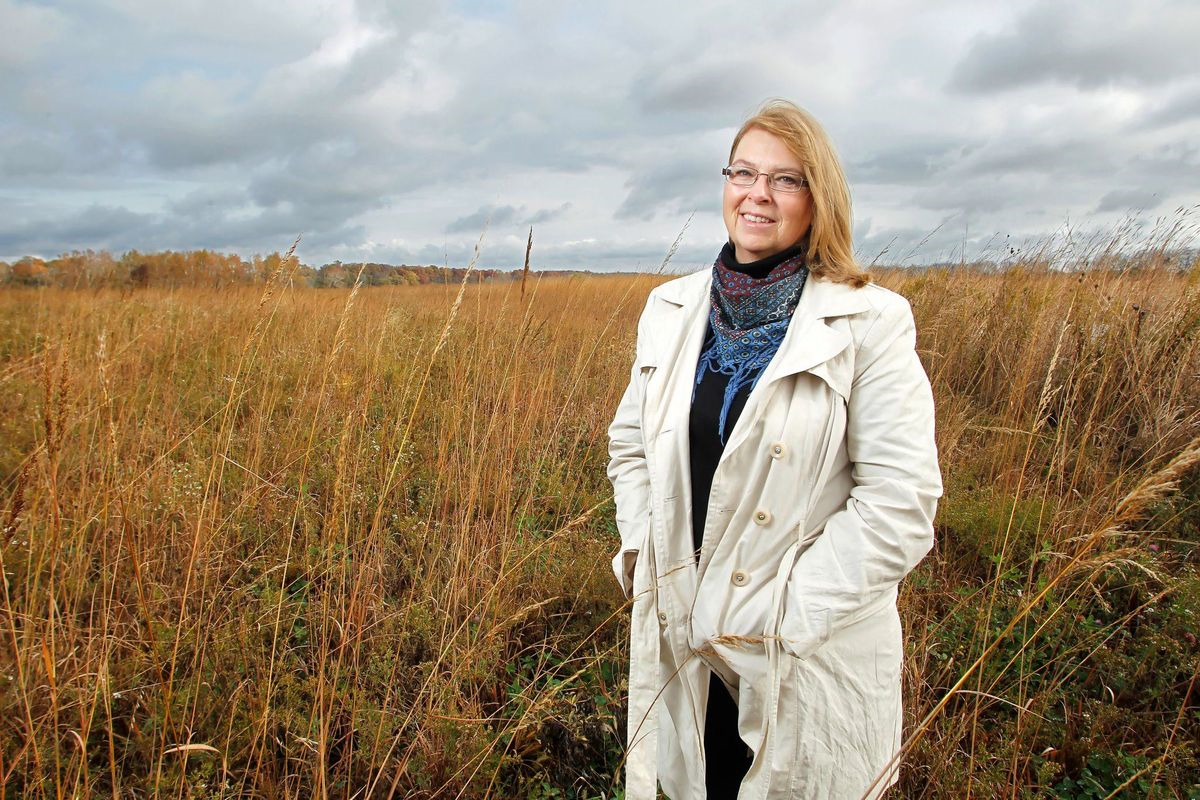
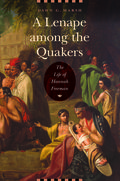
Marsh_author photoBelow author Dawn G. Marsh writes about the genesis of her book, A Lenape among the Quakers (UNP, March 2014), in graduate school.

My book, A Lenape among the Quakers: The Life of Hannah Freeman, emerged from the pages of a dissertation completed to fulfill the requirements for a doctoral degree in history. The path to that dissertation topic was not out of the ordinary. But the space between the dissertation and the final manuscript is as convoluted as the course of the Brandywine River, the center of Hannah Freeman’s world.

My interest in Pennsylvania’s Indian history was both pragmatic and personal. I wanted to work with Sharon Salinger because she was a highly respected colonial scholar, and she had a reputation for being a tough dissertation advisor. And as both a Pennsylvanian and a Native American scholar, I knew that the state’s history was a perfect example of an overly mythologized colonial story that silenced and subverted the history of Native Americans. There was much work to do on that score.

During the early stage of my graduate program, Dr. Salinger brought to my attention a piece published Marshin the Pennsylvania Magazine of History and Biography. Marshall Becker, an anthropologist, provided a brief discussion of a source he described as the “earliest known autobiography of a Native American woman.” That got my attention. I did not realize it then, but I was beginning a long journey, with Hannah at my side every step of the way. The Examination of Indian Hannah, written by Moses Marshall in 1798, is not an autobiography as such but rather a two-page deposition used to satisfy Chester County’s residence requirements in order to commit Hannah Freeman to the poorhouse. She was their first inmate and the only Native American woman. Two hundred years later, her story opened a door to a little-known past, and I walked through.

Continue reading “From the desk of Dawn G. Marsh”

The Marketeers Club: Reading is fundamental—but struggling to become a priority

Tish Fobben is the direct response manager at the University of Nebraska Press. 

A recent Shelf Awareness newsletter headline caught my eye, “RIF Survey: Reading Important, but Not a Top Summer Priority.” Shelf Awareness reported “a new survey commissioned by Reading is Fundamental and Macy’s found that 17% of parents believe reading is a top summer priority and that children spend nearly three times the hours playing video games or watching TV than reading during summer vacation. . . . While summer reading may not be the top priority, 83% of respondents still considered it extremely/very important to them that their child reads this summer.”

I recognize the disconnect between “very important” and a “high priority” in my own life. I just don’t expect to see it in other’s. Books have a lot of competition out there and I have been repeatedly shocked (and insulted, I’m afraid) by how compelling a TV program, computer game, or Nook app is for our five-year-old daughter, in comparison to, say, a conversation with me.  

But as a book publisher and the parent of a young child, I have to believe that reading is fundamental. (And I do.) I’ve heard experts recommend that parents model reading during the day (since children are typically in bed before their parents settle down for their own reading). Although most parents of a young child can only fantasize about the luxury of reading during the day—there is nothing as powerful (or contagious) as behavior, good or bad. Since the summer solstice I resolved to “get caught reading” by my daughter. (The days are getting shorter now—there’s no daylight left to waste!) Reading during the day goes against my longtime, frustrating tendency to save the pleasure of reading until my bedtime, at which point I doze off after a few paragraphs—thus making an “extremely important goal” a low priority.

Continue reading “The Marketeers Club: Reading is fundamental—but struggling to become a priority”

From the desk of Kate Buford: What’s in a Name?

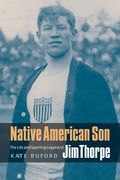
9780803240896Kate Buford is the author of Native American Son: The Life and Sporting Legend of Jim Thorpe.

We know the legal facts by now. On Wednesday, June 18, the U.S. Trademark Trial and Appeal Board, part of the U.S. Patent and Trademark Office, cancelled six different trademark protections associated with the Washington Redskins professional football team. Federal trademark law does not permit registration of trademarks that “may disparage” individuals or groups or “bring them into contempt or disrepute.”

Each of the trademarks in question contained the word “redskin.” The 2–1 decision said that “the recognition that this racial designation based on skin color is disparaging to Native Americans” was demonstrated “by the near complete drop-off in usage of ‘redskins’ as a reference to Native Americans beginning in the 1960s.”

A similar ruling was handed down in1999, but was later overturned on appeal. The current case was filed in 2006 by five new petitioners, targeting registration—and the protection it ensured—of the Redskins team name between 1967 and 1990.

Prior to the decision, strong momentum had been building to pressure the football team to change its name. President Obama, Democratic members of Congress, journalists, and other members of the public have urged the Redskins to change the name, largely through denunciation.

But the new lawsuit took a different tack, hitting the $1.7 billion franchise where it would hurt: merchandise—T-shirts, license plate holders, sweatshirts, beer glasses, decals, and more. Forbes estimates the brand alone to be worth $145 million. With that much money in the game, the ruling, in turn, could have a direct effect on other NFL franchises because football’s revenue-sharing system gives them all a stake. “Maybe this is the tipping point for the rest of the league,” said Gabriel Feldman, director of the sports law program at Tulane University.

Continue reading “From the desk of Kate Buford: What’s in a Name?”

Backgrounding the Outward Odyssey Series

This op-ed originally appeared on Spaceflight Insider. Colin Burgess is the editor for the Outward Odyssey Series.

During a recent interview, I was asked where ideas for new books originate. I replied that they usually come quite unexpectedly and often are derived from casual conversations or notions that people suggest. The important thing is to recognize these verbal prompts when they appear, and then act on them.

However, the entire concept of the Outward Odyssey series was not mine to begin with, and on this occasion the idea came from a more traditional source. It all started with a March 2003 query from my new-found publisher, the University of Nebraska Press, and specifically the press’s then editor in chief, Gary Dunham, a self-confessed spaceflight enthusiast who said he had enjoyed publishing my two previous books, Teacher in Space and Fallen Astronauts. Dunham was excited about the possibility of a series of books on the history of space exploration, something along the lines of a “people’s history” that did not privilege technical advances nor a manifest destiny approach to the subject. His idea was to instead  look at the social history of spaceflight and its impact on people. He felt eight volumes might be a good starting point, and asked me if I would consider taking on the role of series editor.

Although the project was well beyond anything I had ever attempted before then, I rather boldly and without any professional editing qualifications replied that I felt I was up to the challenge.  This not only involved finding suitable authors and having each prepare a proposal based on a suggested book outline, but bringing them all up to speed on the social mandate of the series and where each book fit within the overall scheme of the series. I also emphasized their contractual obligations and offered information on the fixed style guide they had to employ in what they wrote. My role, once each proposal was found acceptable by the editorial board, would be to guide them through the writing, editing, and publication process on behalf of the press. I became basically a go-between, constantly communicating with all of the potential authors and the publisher.

I began by looking at authors of previously published books on space exploration, but then realized we needed a whole new generation of authors for the series officially dubbed Outward Odyssey.  As a member of several online space forums I was able to submit notices asking for any potential authors to contact me with their ideas, resumés, and examples of any previously published articles or other works.

To kick-start the series I contacted long-time friend and spaceflight enthusiast Francis French; together we tossed around ideas for the first book in the series, which we thought should cover the first pioneering human spaceflights carried out by the United States and the Soviet Union. We felt it was important to explore both the achievements of American astronauts as well as those of the Soviet cosmonauts, and this recognition of all participants in the highly competitive international space race set the trend for the rest of the series, which embraces the spaceflight and space spectaculars (and tragedies) from all spacefaring nations. We set out to not only relate the stories of successive spaceflights, but to emphasize the stories and backgrounds of those who flew missions, especially focusing on what inspired them to saddle up on these incredible adventures.

9780803226395Our book, titled Into That Silent Sea: Trailblazers of the Space Era, 1961 –1965, dominated our lives for the next couple of years and resulted in a massively oversized manuscript. In consultation with Dunham we decided that it would be an injustice to heavily crop the manuscript. Instead, it was divided evenly and became two volumes; the second book took on the title In the Shadow of the Moon: A Challenging Journey to Tranquility, 1965–1969. As before, the main title originated from Samuel Taylor Coleridge’s The Rime of the Ancient Mariner.

Those first two books in the series traced the story of human space travel, from Yuri Gagarin’s pioneering flight in 1961 to Neil Armstrong as he was about to set foot upon the moon. In the meantime I had found another suitable author, Chris Gainor, to prepare a manuscript that detailed the centuries-long lead-up to Gagarin’s flight; launched another follow-on book that related the history of Project Apollo (called Footprints in the Dust: The Epic Voyages of Apollo, 1969–1975, with multiple chapter authors); and initiated another on the Skylab space station program. NASA journalist David Hitt had contacted me regarding the proposed Skylab book and mentioned that he was researching a book on the life of Skylab astronaut Owen Garriott. I convinced Dave to look at writing about the entire Skylab program, and he convinced Owen Garriott to join him in the project as co-author. Soon another Skylab astronaut, Joe Kerwin, asked if he could participate. Thus two NASA astronauts were involved in writing Homesteading Space: The Skylab Story along with Hitt.

Continue reading “Backgrounding the Outward Odyssey Series”
Reason for Hope? Blackhorse et al v Pro-Football, Inc. and the Future of a Racial Slur

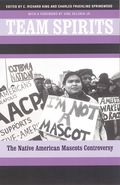
9780803277984C. Richard King is Professor of Ethnic Studies at Washington State University at Pullman and the author and editor of several books, including Team Spirits: The Native American Mascot Controversy and Unsettling America: Indianness in the Contemporary World.

On June 18, 2014, The U.S. Trademark and Patent Office Trademark Trial Appeal Board (TTAB) voided trademarks associated with Washington, DC NFL franchise, because it found the team’s name, Redskins, to be “disparaging.” The ruling, which followed precedent established by TTAB over the past two decades that had dismissed a range of trademark applications using the name, predictably was met with adulation by opponents and outrage by supporters. In fact, the decision lit up social media, spawning #newredskinnames, which dominated trending topics for much of the day. Focusing on the celebratory tones, raging resentment, and partisan politics palpable in immediate reactions, we might easily lose the larger import of the decision, while overlooking its limitations and dangers.

It is best not to think of the ruling as an end point. It rather moves the struggle to the next phase, fostering reconfigured dialogues and debate, while opening new fronts for action and reaction. Indeed, neither the name nor the brand will cease, and even if appeals uphold the decision, the franchise will retain rights, if more limited and less profitable. The organization said as much the same in its press release: “We’ve seen this story before. And just like last time, today’s ruling will have no effect at all on the team’s ownership of and right to use the Redskins name and logo” (emphasis original). This is certainly not the end. Nevertheless, the finding is a hopeful sign, or better said, another positive development for those opposed to the name. It adds to growing political pressure and the increasingly audible voices of dissent. In other words, the fight will continue with increased visibility and heightened momentum.

Much of the coverage, but happily not all, has centered on the ruling by TTAB and its propriety, the impact on and reaction of the franchise, and the minutiae of intellectual property law. The media has disappeared American Indians again, often burying, if not altogether erasing, them. Many readers will not learn the identities and actions of the five Native American plaintiffs, Amanda Blackhorse, Marcus Briggs-Cloud, Philip Gover, Jillian Pappan, and Courtney Tsotigh, who courageously brought the case to TTAB, nor will be given a fuller understanding of the long history of opposition to the team and its name, an opposition that dates back more than four decades and its in a larger pattern of empowerment. Indeed, as important as this ruling is, it is not the first time TTAB has taken up the question. In fact, it comes more than two decades after Suzan Harjo, Raymond D. Apodaca, Vine Deloria, Jr., Norbert S. Hill, Jr. Mateo Romero, William A. Means, and Manley A. Begay, Jr. filled suit against the NFL, seeking to nullify associated trademarks. Then, as now, TTAB ruled in favor of the plaintiffs.

Continue reading “Reason for Hope? Blackhorse et al v Pro-Football, Inc. and the Future of a Racial Slur”

Doc Martyn’s Soul: BEA and University Presses

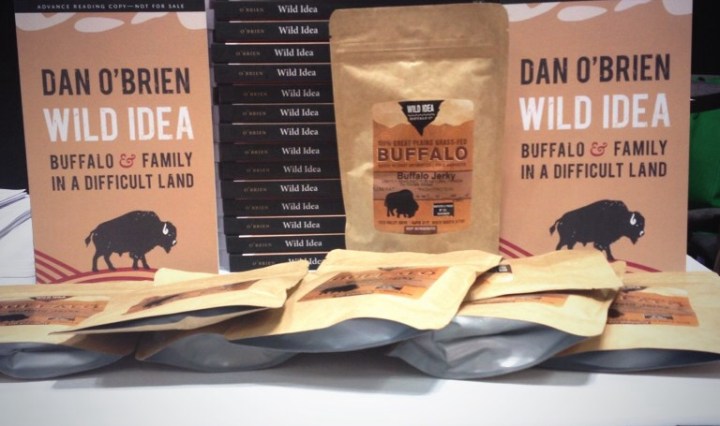
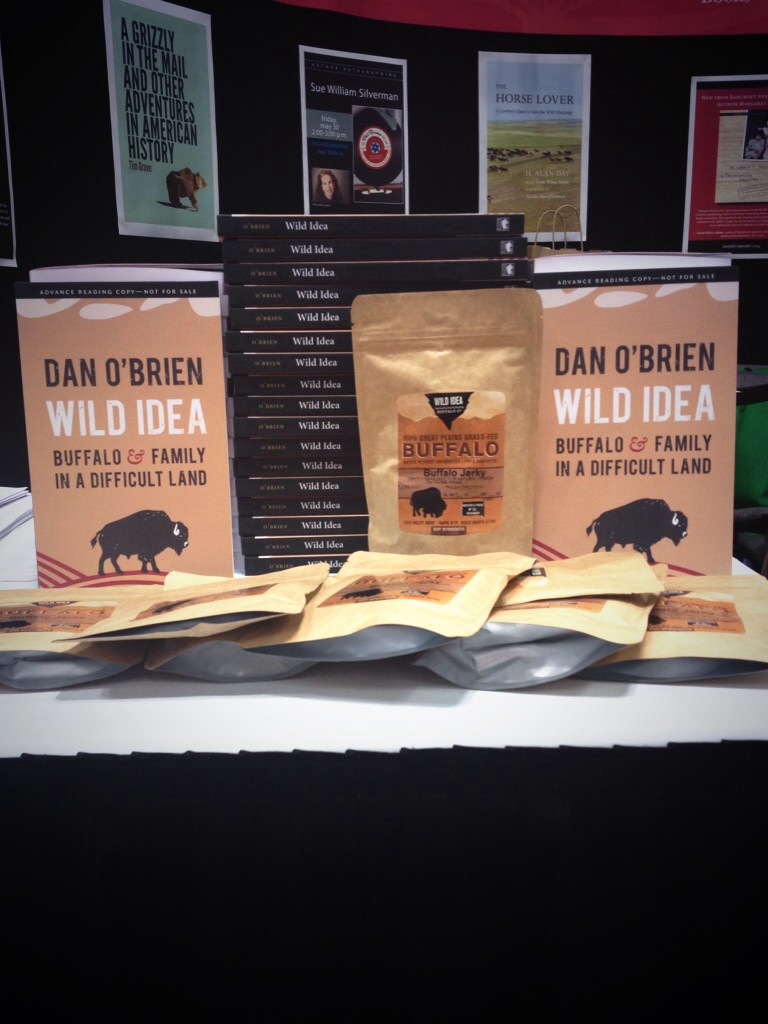
O'brien galleys from BEA 2014It already seems a long time ago, but the annual book industry melee that is BookExpo America recently came and went. BEA drew its usual crowd of industry insiders, booksellers, librarians, media, and many others, plus about eight thousand members of the paying public. Publishers took booth space in varying degrees of pomposity, striving to outdo each other’s displays so that those few key people at the show (the buyers and the media) took notice of everyone’s latest attempts to reach the top of the best seller charts. In the build up to the show, during its course, and now, a week or so later, I’ve been pondering how BEA and university presses interact–or perhaps, should interact. Having completed my eighth BEA, I should be a part of the jaded, cynical crowd that complains about the hassle of reaching the Javits Center each day (and leaving at the end of the day, which is quite truly a much worse task), the expense of being in New York for a week, the lack of book buyers placing orders any more, the downtrodden, woebegone publishing industry, and so on. But I don’t feel that way. Instead, I am invigorated each year by the sight of people worming their way through overcrowded walkways between publishers of all sizes and ilk. It is a fascinating mix of people and books, and I love it.

UNP has exhibited at BEA for many years, one of the few university presses that might claim diehard status in this regard. Gone are the oft-discussed glory years when university presses hogged whole sections in the Javits Center, when “University Press Row” was actually a row and not just a block. There were seventeen university presses exhibiting this year. UNP and the University Press of New England were the only two UPs who took a double booth, but fifteen others ranged in size from the University of Hawaii Press to Yale and Harvard. All UPs in attendance were waving their university press flags high and proud. But why? What purpose does exhibiting at BEA serve? The popular publishing cynicism that I noted earlier is not simply, truth be told, not only cynical, it is, surely, based on the quite real statistical measures that publishers can apply to exhibiting: book buyers don’t attend in the numbers they used to and they certainly don’t place on-the-floor orders in the quantity they used to. Of course, part of the lack of orders and buyers can be attributed to the decline in independent bookstores, but even those few stores don’t send their staff to BEA in the numbers they used to. So why do we still bother?

Continue reading “Doc Martyn’s Soul: BEA and University Presses”

From the Desk of an Intern: Where I’ll Be May 29

Anne Nagel is a PhD student at the University of Nebraska-Lincoln, an intern at the press, and a collector of elephants. What are you doing Thursday, May 29? I will be sitting in a shady garden courtyard attending a reading that I helped set up. As a student intern at the University of Nebraska Press, I had not expected that I would be pitching and executing my own ideas for a major project. Of course, I had hoped that I would be able to make a substantial contribution, preferably by using my writing skills, but I think I expected that … Continue reading From the Desk of an Intern: Where I’ll Be May 29