Off the Shelf: Swords from the East by Harold Lamb

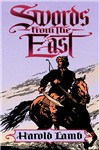
Swords from the East cover image Read from the Foreword to Swords from the East by Harold Lamb, edited by Howard Andrew Jones:

"Harold Lamb wrote that he’d found something “gorgeous and new” when he discovered chronicles of Asian history in the libraries of Columbia University. He remained fascinated with the East thereafter, which is evident from his first stories of western adventurers in Asia to the last book published before his death in 1962, Babur the Tiger. All of his popular fiction is anchored in Asia, whether it be the cycle of Khlit the Cossack, descended from the Tatar hero Kaidu, or Durandal’s Sir Hugh of Taranto, who travels into Asia during the conquests of Genghis Khan, or even the adventures of Genghis Khan himself, as related in “The Three Palladins” in this volume.

Continue reading “Off the Shelf: Swords from the East by Harold Lamb”

Off the Shelf: A Summer to Be by Isabel Garland Lord

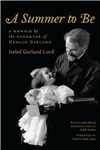
A Summer to Be Cover image Read the beginning of the Introduction from A Summer to Be: A Memoir by the Daughter of Hamlin Garland by Isabel Garland Lord, edited and with an introduction by Keith Newlin:

"Readers who come to A Summer to Be because of an interest in Hamlin Garland will discover a fascinating side of the writer that he never revealed in his eight volumes of autobiography—the intensely-loving, domineering father whose deep love for his eldest daughter led him to change the trajectory of his career even as that love impeded his daughter's independence. Garland was ill equipped by temperament for marriage and fatherhood, to which he came late, marrying in 1899 at age thirty-nine. He had spent his adulthood in almost incessant travel as he fulfilled lecture engagements and indulged his own wanderlust by exploring the West, by visiting the goldfields in the Yukon, and by journeying to England to meet the authors with whom he had been corresponding. As he entered his fourth decade, he found it difficult to break his solitary habits and enter the inevitable compromises of marriage and family life. Though he was a devoted father who spared no effort to ease the passage into adulthood of his two daughters, Mary Isabel, born in 1903, and Constance, born in 1907, his fatherly guidance was as often overbearing as it was loving—as Isabel (who dropped her first name in her late teens) amply illustrates in her memoir.

Continue reading “Off the Shelf: A Summer to Be by Isabel Garland Lord”

Off the Shelf: Shelby’s Folly by Jason Kelly

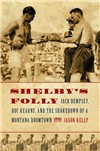
Shelby's Folly cover image Read the beginning of Chapter 1, "High Noon in Shelby", from Shelby's Folly: Jack Dempsey, Doc Kearns, and the Shakedown of a Montana Boomtown by Jason Kelly:

"Dust kicked up around Shelby, Montana, at dawn on July 4, 1923, as thousands of people started venturing into the streets. From cots in overcrowded hotel lobbies, sleeping cars on railroad sidings, and campsites along the Marias River, boxing fans awakened to a holiday festival before the heavyweight championship fight between Jack Dempsey and Tommy Gibbons. Still more arrived by train and car, clogging the town that had hoped for many more free-spending tourists despite having no place to put them.

Continue reading “Off the Shelf: Shelby’s Folly by Jason Kelly”

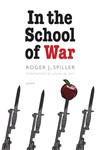
Off the Shelf: In the School of War by Roger J. Spiller

SpillerRead from the introduction to In the School of War by Roger J. Spiller:

"After artillery deploys for battle, arranges itself into batteries, a commander usually orders a ranging shot, a round or two meant to estimate how far his guns will reach. Or so it was before modern science intervened. Although we don’t know for sure, someone among Henry V’s archers at Agincourt—masters of the lethal, indirect firepower that would turn that day in his favor—must have fired such a shot, adding one more tactical detail to the King’s picture of the field where he and his men were about to fight. Centuries later, Robert E. Lee reserved to himself the order for the first shot as he looked over the open fields at Fredericksburg and General Burnside’s Grand Divisions forming for their attack. In those days, after throwing a few cannonballs in the enemy’s direction, a commander could see for himself just when the enemy’s advancing troops might fall under the shadow of his imaginary artillery fan. Then he could decide whether to open up his artillery to spoil the attack or, waiting longer, to kill it outright—the “it” being hundreds or even thousands of other human beings.

Continue reading “Off the Shelf: In the School of War by Roger J. Spiller”

Off the Shelf: Footprints in the Dust edited by Colin Burgess

Footprints in the Dust cover imageRead the beginning of the Prologue, "Realization of a Dream of Ages" by Colin Burgess from Footprints in the Dust: The Epic Voyages of Apollo, 1969-1975:

"It was the spring of 1961, and the United States was in desperate need of some good news. The nation was experiencing considerable pain and undergoing an inescapable insight, with a mounting number of civil rights protests highlighting a desire for profound attitudinal change. At the heart of this movement was the spreading use of nonviolent “sit-ins,” for the most part courageously led by young black college students protesting against enforced segregation in department stores, supermarkets, theaters, libraries, and elsewhere. Over the next few years these demonstrations would escalate in size and turmoil, often marred by violence, deaths, and bloody divisions across the nation.

Continue reading “Off the Shelf: Footprints in the Dust edited by Colin Burgess”

Off the Shelf: Where the Rain Children Sleep by Michael Engelhard

Where the Rain Children Sleep cover image
Read from "Skiing Walhalla" in Where the Rain Children Sleep: A Sacred Geography of the Colorado Plateau by Michael Engelhard with new essays and a new preface by the author:

"I awaken to dishwater light and the SHUSHing of snow sliding down the tent fly. Poking my head through the entrance I find our campsite muffled by cloudbanks. Already, Kate hovers near the canyon rim, eager to capture the sweet light of morning with her camera. By the time I’ve wriggled into my ski pants—condensation showering me from the domed ceiling—and coffee is steaming on the stove, there is movement in the abyss. Wet shrouds drag across ponderosa-clad slopes. Where the fabric thins, the sun bleeds through in an amorphous smear. Elsewhere, gashes reveal Toroweap ridges and pinnacles perched atop raw-boned Coconino scarps. To the northeast, a thick broth spills across the Painted Desert, barely contained by the glowing rim of Vermilion and Echo cliffs.

Continue reading “Off the Shelf: Where the Rain Children Sleep by Michael Engelhard”

Off the Shelf: Things Seen by Annie Ernaux

Things Seen cover image Read from "1993" in Things Seen by Annie Ernaux, translated by Jonathan Kaplansky, foreword by Brian Evenson:

"April 8

Condominium meeting. People talk about staircases, basements, etc. Every issue tackled becomes an opportunity for people to show their knowledge, “we need to install meters at such and such a place,” to tell an anecdote “in the building where I lived before,” a story “the other day, the tenant on the fifth floor.” Stories are a need to exist.

Continue reading “Off the Shelf: Things Seen by Annie Ernaux”

Off the Shelf: In the Neighborhood of Zero by William V. Spanos

In the Neighborhood of Zero cover image 
Read the beginning of Chapter 2, "Captivity" from In the Neighborhood of Zero: A World War II Memoir by William V. Spanos:

"After a rough crossing of the English Channel, the 106th Division arrived at the battered seaport of Le Havre, a city that had been virtually leveled during the Normandy invasion, where a convoy of U.S. Army trucks, “The Red Ball Express,” was waiting to transport us to our destination. During the crossing our officers had informed us that we were being assigned to an area in the Ardennes Forest, specifically a mountain area called the Schnee Eiffel, west of the village of St. Vith in Belgium near the Luxembourg border. We were, they said, going to replace the 2nd (“American”) Division, a renowned unit, desperately in need of respite, having been in combat since the invasion of Italy in September 1943. Although the ground we were to take over from the 2nd was on the front lines separating the Allies from the German forces, it was, we were relieved to hear, an inactive zone, providing the perfect conditions for easing a raw and inexperienced division into combat action.

Continue reading “Off the Shelf: In the Neighborhood of Zero by William V. Spanos”

Off the Shelf: American Lives edited by Alicia Christensen

American Lives Reader cover imageRead from "Long Live the Red Terror!" by Fan Shen, from American Lives: A Reader edited by Alicia Christensen:

"Chairman Mao, the Great Leader, officially launched the Cultural Revolution in his May 17 proclamation in the People’s Daily, calling for the masses to smash the five-thousand-year-old Chinese culture and to rid the country of any foreign influence, in order to build a brand new communist culture. “Power to the Red Guards!” said the Great Leader. “Expose and destroy the hidden enemies who have been sleeping among your ranks!” ordered the Great Leader. Overnight, people young and old all rose at the summons of the Great Leader. After the giant bonfire, the fire of the Revolution spread fast and wide throughout the Big Courtyard.

Continue reading “Off the Shelf: American Lives edited by Alicia Christensen”

Off the Shelf: Rooney by Rob Ruck, Maggie Jones Patterson, and Michael P. Weber

Rooney cover image Read from the Introduction of Rooney: A Sporting Life by Rob Ruck, Maggie Jones Patterson, and Michael P. Weber:

"As writers in the press box composed their epitaphs for the Pittsburgh Steelers, Art Rooney stood and headed to the elevator. Pittsburgh had won its first division title in forty years that season, but Rooney’s Steelers were losing 7–6, and only 22 seconds remained in their playoff game against the Oakland Raiders. Facing fourth-and-ten from their own 40 yard line, they needed to gain 25 yards to get within field goal range. Pirates announcer Bob Prince held the elevator door for Art, two priests, and a friend. Art said nothing as the elevator slowly descended. “I figured we had lost,” he later explained, “and I wanted to get to the locker room early so I could personally thank the players for the fine job they’d done all season.”

Continue reading “Off the Shelf: Rooney by Rob Ruck, Maggie Jones Patterson, and Michael P. Weber”