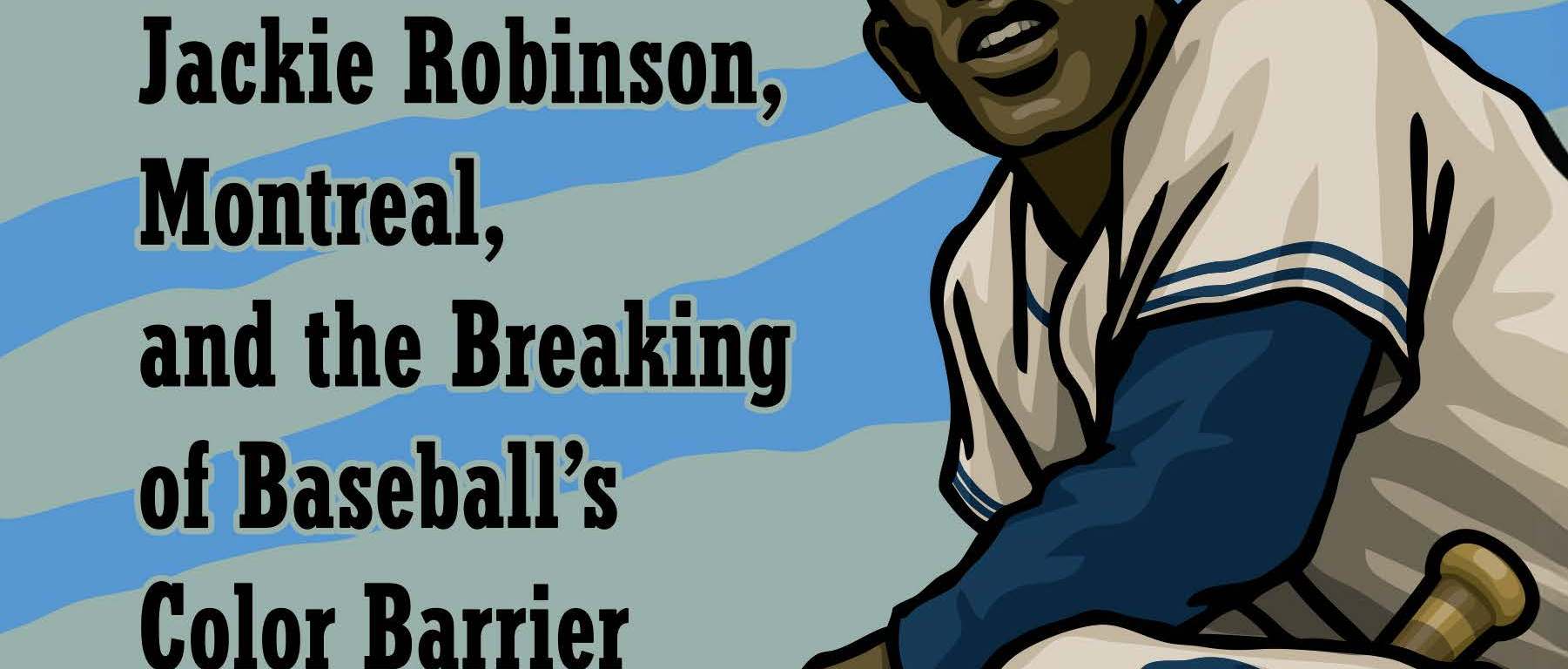
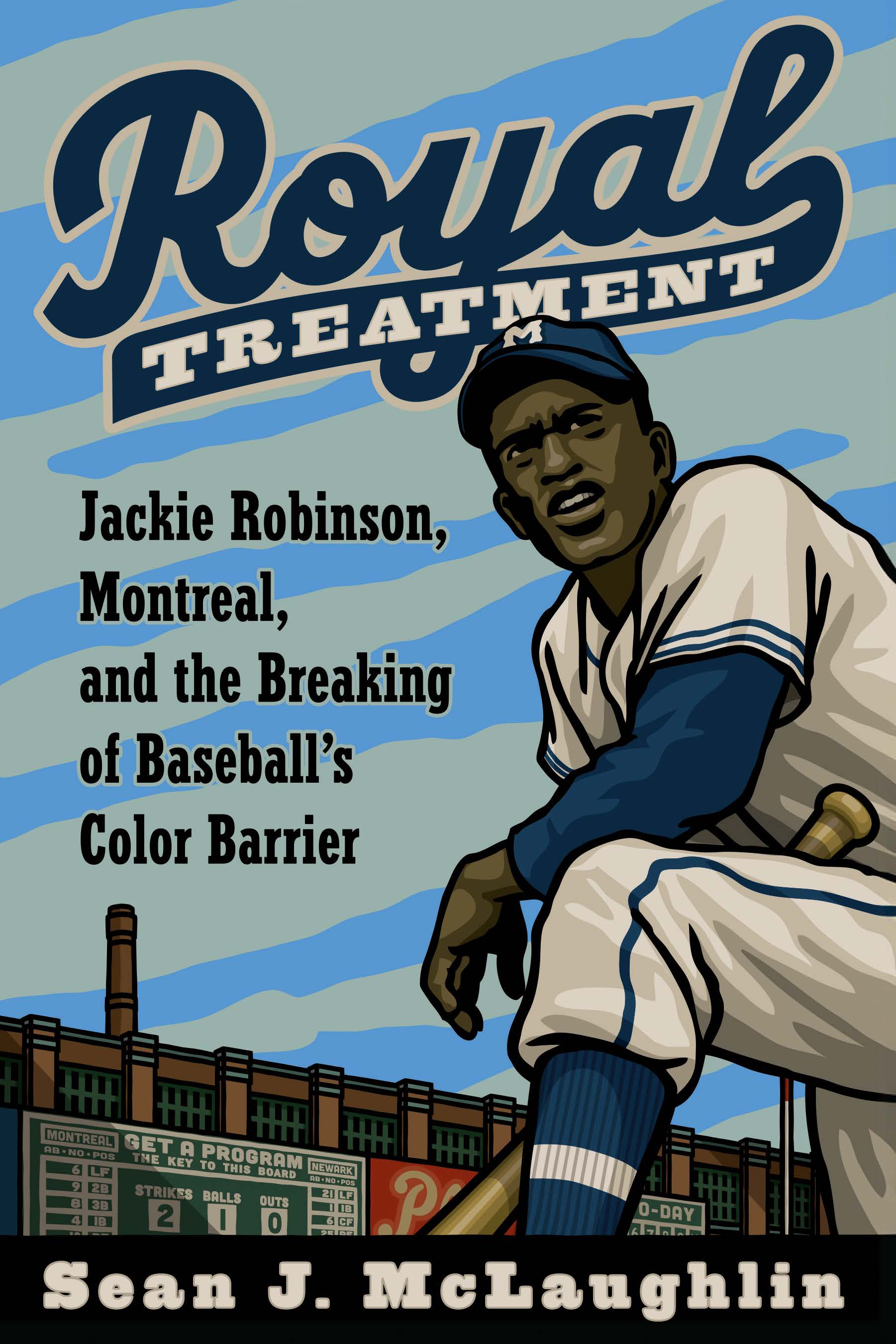
Sean J. McLaughlin is a historian, serving as the director of Special Collections and Exhibits at Murray State University in Kentucky. He is the author of JFK and de Gaulle: How America and France Failed in Vietnam, 1961–1963 and coauthor of The Finest Place We Know: A Centennial History of Murray State, 1922–2022. His most recent book Royal Treatment: Jackie Robinson, Montreal, and the Breaking of Baseball’s Color Barrier (Nebraska, 2026) came out in April.
The story of Jackie Robinson’s prodigious talent, his courageous journey, and his influence on both the game of baseball and American society writ large has been told well and often. What hasn’t been told is the full story of his first season in the minor leagues in Montreal. In 1946, before moving up to the Brooklyn Dodgers, Robinson spent a season thrilling home crowds in a Canadian city with Major League aspirations. He played for the AAA Montreal Royals of the International League, leading the team to victory in the Junior World Series.
In Royal Treatment Sean J. McLaughlin explores Robinson’s experience in Canada as a Minor Leaguer and the warm embrace he received from Montrealers well before he became one of baseball’s household names.
Introduction
As of this writing, it has been a decade since the release of the 2013 film 42, an updated take on the Jackie Robinson origin story that delighted baseball fans and reminded its general audience that great social change in America typically comes first in the sporting realm before trickling down through the world of politics. There were star turns from the late great Chadwick Boseman in the lead role, alongside a perfectly cast Harrison Ford as Brooklyn Dodgers General Manager Branch Rickey, father of the Great Experiment to integrate Major League Baseball. We will never know how this version would have compared to the proposed Spike Lee biopic project that fell apart in the late 1990s, but filmgoers were mostly pleased with director Brian Helgeland’s effort, and Warner Brothers turned a tidy profit off its investment.
Baseball’s fan community shows off the best of its lawyerly tendencies when it turns its passions to big questions about who belongs in the Hall of Fame, who was the best X from Y era, and so on. There is no debate that Jackie Robinson integrated modern professional baseball in America after crude racists closed the door to Black players in the game’s early years. (Defensive whiz Moses Fleetwood Walker caught for one season with the Toledo Blue Stockings of the American Association in 1884 and has the distinction of being the last Black player to compete at the non-Negro League Major League level until Robinson’s Dodgers debut in 1947.) But when exactly did this profound milestone for baseball and the broader civil rights struggle actually take place?
The stock view is that baseball’s color line collapsed when Robinson donned Dodger blue and white for Opening Day at Ebbets Field in Flatbush on April 15, 1947. Commissioner Bud Selig declared this date Jackie Robinson Day in 2004, and it has been marked leaguewide ever since as both a remembrance celebration for a very special player and a gentle annual reminder that those in the game should aspire to being good and open-hearted.
There are, however, more compelling arguments that the real anniversary of this momentous change came much earlier, either when Robinson signed his first contract in “white” baseball with the AAA Montreal Royals of the International League on October 23, 1945, or when he first took to the field in a Montreal Royals uniform in Florida for a spring training game at City Island Ballpark in Daytona Beach on March 17, 1946, or when he made his regular-season debut as a Royal on the road at Roosevelt Stadium in Jersey City on April 18, 1946. Whichever you find most appropriate for a commemoration, one thing is clear: all roads go through Montreal. No wonder, then, that this defining moment in the Robinson story gets so little attention—for Americans, it unfolds not just in foreign Canada, but in its doubly foreign francophone cradle of Québec.
This brings us back to 42 and some plot-writing 101. Any good cinematic story typically involves a hero’s triumph over adversity. As Chris Lamb so thoroughly shows in Blackout: The Untold Story of Jackie Robinson’s First Spring Training (University of Nebraska Press, 2004), Robinson’s first spring training in Jim Crow Florida in 1946 provided a full array of villains from which to choose. There was an ignorant mob that threatened violence, venal police officers who shared its beliefs, and city officials who went along with racial discrimination ordinances because it seemed easier in the moment than getting on the right side of history. Robinson does indeed appear in a Royals uniform in 42, but all of these scenes take place on hostile territory—the practice fields of central Florida—never north of the border on home turf during the Royals’ march to a Junior World Series championship as the best AAA Minor League team of 1946.
At home in Québec, absolutely no tension at all was in the ballpark or among the white francophones in Villeray, the Robinsons’ temporary home neighborhood; to the contrary, Montrealers immediately adored Jackie Robinson, he loved them back, and an unbreakable bond between the player and his new neighbors took root during his lone Minor League season. Such was the hype surrounding his arrival that the stands for a cool Minor League home opener were filled with a who’s who of the biggest names in Québec’s political, cultural, and social life. Among them was twenty-four-year-old Maurice “Rocket” Richard, a fiery winger for the Canadiens, fresh off his second Stanley Cup victory. Here was an undisputed champion and francophone icon, the best player of his generation of the country’s most beloved sport, cheering himself hoarse for Robinson along with a cross section of Montrealers who bridged every single one of Canada’s linguistic, sectarian, and class divides.
It may be difficult for us today to imagine such a talented player as an underdog, but there were absolutely no guarantees of a big league future for Robinson when the 1946 Minor League season began. At a time when too many American voices still argued against change, Montrealers consciously chose to make a deep emotional investment in his success, and Robinson never forgot it. As Robinson himself admitted to a reporter from the CBC (Canadian Broadcasting Corporation) years later, “Had it not been for the fact that we broke in in Montreal, I doubt seriously if we would have made the grade so rapidly.”
Robinson’s season in Montreal ended in a riot, but not the sort you might think.
Steal some savings on this book and more with our Baseball Book Sale! Enter coupon code 6BAB26 in the discount code field of your shopping cart and click “Apply” to save 40%. Offer expires June 12, 2026 and is good for U.S. and Canadian shipments only.

