Harvey Solomon is a freelance writer based in Washington, DC. He is the author of three nonfiction books, including Such Splendid Prisons: Diplomatic Detainment in America during World War II (Potomac Books, 2020). He has written articles for dozens of publications, including the Boston Herald, the Los Angeles Times, the Hollywood Reporter, and Variety.

In real estate the mantra is location, location, location. In writing narrative nonfiction history it’s research, research, research.
Unearthing documents buried deep in archives and libraries is a painstaking, vital though sometimes fruitless task. Yet when you hit paydirt with a box that contains what I like to call a “nugget” of history—a memo or letter or report or drawing or photograph or some other relevant find—it’s one of those clenched fist, yessss moments.
For Such Splendid Prisons, my award-winning Potomac book that came out six years ago, anything other than print materials was an afterthought. When you’re writing about events that took place more than three quarters of a century ago, the chance of finding original film is a very long shot.
But print materials are another story. And thanks to Dr. Robert Conte, then the historian at the Greenbrier Hotel in White Sulphur Springs, West Virginia, I uncovered a goldmine of nuggets in its archives—a room lined with battered gunboat steel file cabinets, the kind that weigh a ton even when they’re empty. And these are jam packed. They hold materials available nowhere else on earth, and Bob generously gave me the keys to the castle. While I was working there one day he mentioned that there might be film footage of the diplomats somewhere. Enmeshed in the wealth of print materials, I didn’t inquire further.
But his offhand mention stayed in the back of my mind for years. So when I was visiting West Virginia last fall, I inquired again. Bob’s retired now, but in one phone call he reached the right person, and the next morning we met her at the Greenbrier’s cavernous warehouse that contains everything and anything related to hotel operations. In a distant, crowded corner amidst furniture, display cases, clothes, and more were several large, wheeled containers packed with boxes.
Wedging in a couple of chairs, we set to work. Since many boxes held miscellaneous papers and memorabilia, we focused first on a box of videotapes in various sizes and formats: Beta, VHS, ¾” U-matic, etc. But since the Greenbrier has a long history, every tape was for some bygone event or meeting. Onto another box, and another, churning through more irrelevant tapes until we hit one with a simple handwritten notation: “Japanese diplomats.”
EUREKA! Thirty minutes in and we’d struck gold! But we had no way of seeing what was on it. Transferring old videotapes into digital files involves yet more legwork. Several weeks later I found a company able to do the job. The week after I finally got to see the results: around ten glorious minutes of silent, black and white footage that had been converted from the original eight or 16 mm film.
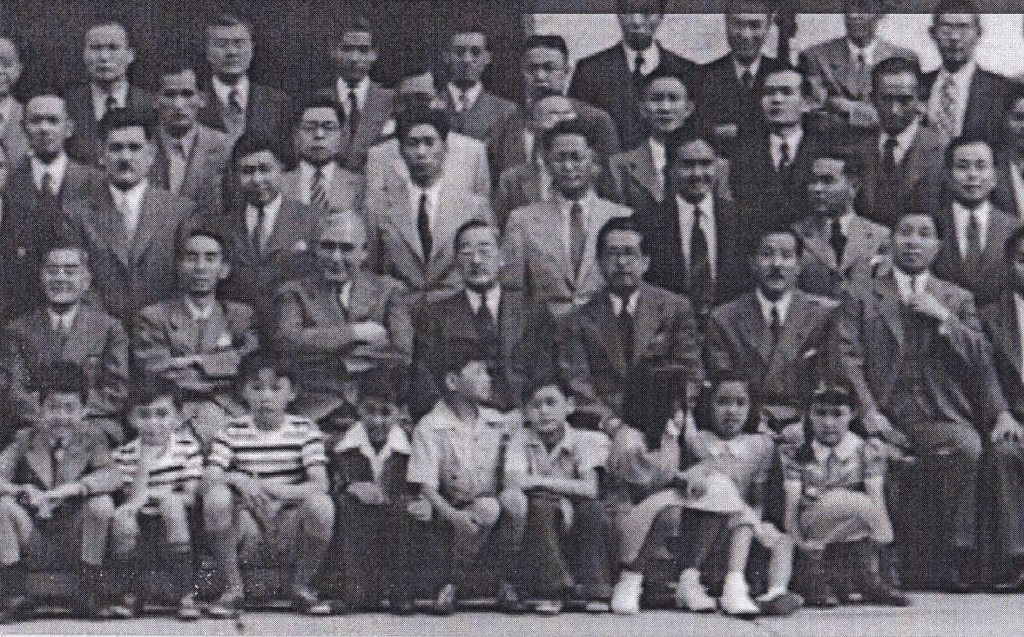
The footage is a spliced-in compilation of film shot at the Greenbrier from winter to early summer 1942. It includes daily activities of the German, Italian and Japanese diplomats and their families—making snowmen, strolling about, exercising, heading to play tennis, and posing for group photos. I was even able to identify several diplomats on sight, people I’d been reading about now most unexpectedly, amazingly brought back to life.
This footage has never been seen in more than 85 years. If you’d like to be among the first people to see it, I’ll be including snippets during my Zoom talk, “A Luxurious Detention: How the U.S. Held Axis Diplomats after Pearl Harbor,” for the Smithsonian Associates on Wednesday, June 3rd starting at 6:45 p.m.
History—in black and white, grainy, and a bit disjointed—unfolding before your eyes.
 UNP blog