Dr. Strangeolve, or How I Learned to Stop Worrying and Love the Typo

Kyle Simonsen is an Assistant Project Editor who loves scotch, hip hop, and mowing the lawn. I still remember finding my first typo. I don’t remember the book now, though given that I was about twelve or so, I’m sure it was some sci-fi paperback; I read a lot of those then. Nor do I remember what the error was. What I do remember is feeling a sort of confusion at the error, and then a dawning awareness that mistakes like those I sloppily made at school (somehow misspelling “bump” on a spelling test B-U-M-B is one my mother still teases … Continue reading Dr. Strangeolve, or How I Learned to Stop Worrying and Love the Typo

People Make Publishing: Reading with a different purpose

Kathryn Owens is an Associate Project Editor and creates wheel-thrown ceramics.  I often feel like an impostor in an office teeming with bookworms. My childhood was not spent buried in books. I was a mini-adventurer out conquering the woods in my family’s backyard. Books to me weren’t half as exciting. Truth be told, they still aren’t. Curling up with a novel before bedtime or on a rainy day has never been appealing. I don’t host book clubs or swaps. In fact, I shirk the occasional invitation. When asked what’s on my reading list, I usually reply with a simple, lackluster … Continue reading People Make Publishing: Reading with a different purpose

Doc Martyn’s Soul: Publishing for the Good of Humanities

The humanities have come under fire recently, the discipline finding itself in a “war” zone according to Dr. Stephen Behrendt in his recent lecture, “What Good Are the Humanities, Anyway,” the first in the Chancellor’s Distinguished Lecture Series. Behrent’s use of the oft-overused war metaphor wasn’t simple laziness or rhetoric, it was instead, a smart, thoughtful way to direct the attention on the humanities away from the negative of battle and towards the positive of imagination, creativity, and enlightenment. Behrendt’s timely lecture set about indicating that there is hope for the humanities yet. From the perspective of publishing the humanities … Continue reading Doc Martyn’s Soul: Publishing for the Good of Humanities

From the desk of Jared Carter: Braking for Poetry

Jared_CarterJared Carter has received the Walt Whitman Award of the Academy of American Poets, the Poets’ Prize, a fellowship from the John Simon Guggenheim Memorial Foundation, and two literary fellowships from the National Endowment for the Arts. His newest book, Darkened Rooms of Summer, is a collection of poems that conjures the landscape of the Midwest and the lives of everyday Midwesterners.

I have no prior experience with National Poetry Month, but I did do a bit of promotion for poetry back in the 1980s. In those days I had an old tan-colored Volvo station wagon that I drove around the Midwest, occasionally giving poetry readings to just about anyone who would listen.

This in itself is not remarkable. But on the Volvo’s rear bumper I had affixed a sticker I had found in some flea market that read, in bold capital letters, I BRAKE FOR DELMORE SCHWARTZ. The 1980s was an age of catchy bumper stickers but still, I was convinced that I had one of the most mysterious and at the same time one of the most appropriate bumper stickers an aspiring poet could ever wish for.

Looking back on those days, I realize that my only other attempt to promote poetry in general may have been the choice of location for my various book launches, all of which, curiously enough, took place during the month of April.

In April of 1981 my first book was launched at a cocktail party in Greenwich Village, hosted by my agent. The book was published by Macmillan and my agent got me an advance of a hundred dollars, which wasn’t bad in those days. It was a nice party, too. Courtesy of the publisher, all of my East-Coast friends attending were given free copies of the new book, which I was told was an old New York publishing custom. I can assure you that no freebies are passed out at book launches today.

Continue reading “From the desk of Jared Carter: Braking for Poetry”

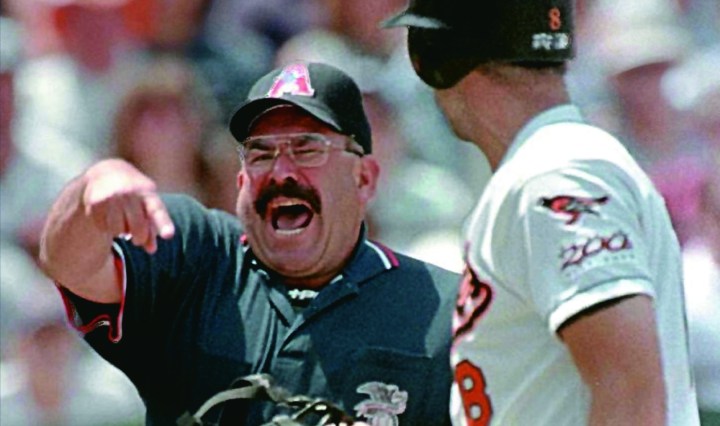
From the desk of Al Clark: Instant Replay in MLB

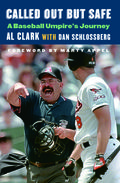
ClarkAl Clark was a professional umpire for thirty years, working more than three thousand games, including two All-Star Games, seven playoff series, and two World Series. Called Out But Safe (May 1, 2014) is his autobiography written with former AP sportswriter Dan Schlossberg. Below, Clark writes about the new “instant reply.” 

One of the great powers baseball holds for all its fans—from the little leaguers to the major leaguers—is continuity and consistency. From year to year and even decade to decade, the fans know not many changes will occur. Sure, some changes come in order to enhance fan interest, like holding more playoff games, or holding night games at Wrigley Field, or even league realignments to create regional rivalries, like the change made by the Houston Astros when they joined the American League to create a natural rivalry with the Texas Rangers of Arlington.

But seldom do the Lords of Baseball—the commissioner and the owners—change the rules of the game and parameters as they have done this year. The last time a baseball rule was changed was in the 1970s, when the American League adopted the Designated Hitter (DH) rule. This year “Instant Replay” has been adopted to ensure against certain plays being decided incorrectly by the umpires, and it has altered how a runner trying to score can “attack” home plate when the catcher has possession of the ball or how a catcher can position himself when waiting to receive a throw from another fielder.

Continue reading “From the desk of Al Clark: Instant Replay in MLB”

From the desk of Emily Levine

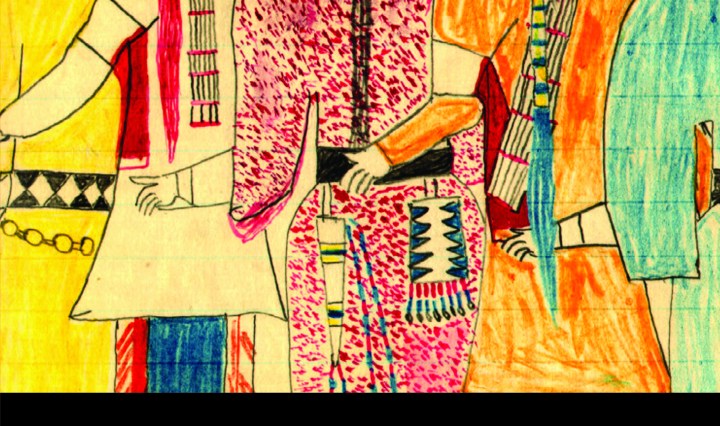
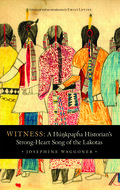
WaggonerEmily Levine is an independent scholar and the editor of Witness: A Húŋkpapȟa Historian’s Strong-Heart Song of the Lakotas.

I am privileged and honored to be the editor of Josephine Waggoner’s monumental life’s work. What historian would say no to editing one of the few new Native manuscripts to come to light in recent decades? What historian would say no to bringing to publication the voluminous work of a Hunkpapa historian long unrecognized? What historian would say no to taking on this work when asked to do so by members of the woman’s family? Looking back, I am chagrined to say, this one. While I was pleased with my work on Waggoner’s collaboration with Susan Bettelyoun, published as With My Own Eyes: A Lakota Woman Tells Her People’s History (University of Nebraska Press, 1998), I was not ready to undertake another long-term project and had work of my own that I was interested in pursuing. I think I actually said no twice before I gave in and agreed to compile and edit this new manuscript material.

Would I have agreed if I’d known it would be a thirteen-year-long labor of love, consuming time and resources I often didn’t have? That it would take over my life and become a single-minded pursuit? I believe there is truth in what members of Josephine’s family have told me: that I was the one meant to do this work and that I cared enough to do it justice. Perhaps it helped that I am not an academic, that I could work without deadlines, that no promotion or tenure considerations were involved, and that I did not suffer the scrutiny of colleagues. My loyalty lay only with Josephine Waggoner, her family, and the Lakota people.

Continue reading “From the desk of Emily Levine”

The Marketeers Club: Goodreads

Clip-art-book_GoodreadsWhen I discovered Goodreads last summer I was intrigued. I hadn’t really thought about what the site was or how it could be used in terms of marketing books. My first thought was, “What a lovely site for book nerds to come together and talk about their favorite thing: books!”  

I have since become a Goodreads user, emphasis on the word “user.” I don’t write reviews and I don’t contribute to book discussions. I rate books and mark them “to-read” or “read” for my own personal enjoyment. I have just two “friends” on the site. I’m never critical of a book I “star” because I wouldn’t finish reading it if I didn’t enjoy it at least a little bit. My minimum score is three stars. I often agonize over the fact that you can’t rate a book with ½ stars. What if I think a book really deserves a ½ star more, but I don’t think it deserves five? It’s my one, really BIG complaint about Goodreads.

When Amazon bought Goodreads in May 2013, there was a lot of shock, concerns, and jokes. What would the acquisition mean for this trendy little book site? Would Amazon completely change the platform? Would people have to pay a subscription? Maybe more advertising would fill up your screen or worse, you’d have to sign into an Amazon account to use it! I think my favorite tweet  was:

@faitherinhicks: Amazon bought Goodreads? … that's gross. 😦

or

@FakeEditor: Amazon just bought Goodreads. And in other news, Barnes & Noble didn't.

In a recent interview with the Atlantic, Goodreads founders Otis and Elizabeth Chandler answered questions about the evolution of their online community and the backlash they incurred as a result of the Amazon purchase. Back in May, many users’ opinions were clouded by a strong dislike for Amazon and the theory that Amazon would take away crowdsourced reviews, along with everything else that could possibly be good about Goodreads. Another tweet:

@okgirl96: I don't view Amazon's acquisition of Goodreads as a positive. Inevitable, yes.

Continue reading “The Marketeers Club: Goodreads”