From the desk of Al Clark: Instant Replay in MLB
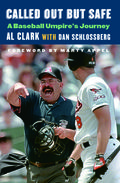
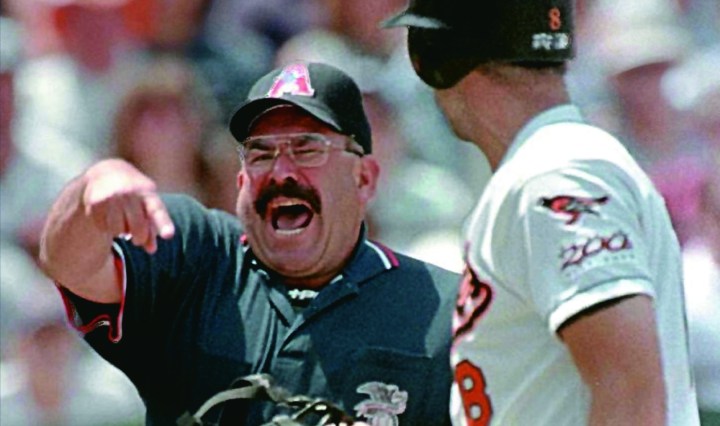
ClarkAl Clark was a professional umpire for thirty years, working more than three thousand games, including two All-Star Games, seven playoff series, and two World Series. Called Out But Safe (May 1, 2014) is his autobiography written with former AP sportswriter Dan Schlossberg. Below, Clark writes about the new “instant reply.” 

One of the great powers baseball holds for all its fans—from the little leaguers to the major leaguers—is continuity and consistency. From year to year and even decade to decade, the fans know not many changes will occur. Sure, some changes come in order to enhance fan interest, like holding more playoff games, or holding night games at Wrigley Field, or even league realignments to create regional rivalries, like the change made by the Houston Astros when they joined the American League to create a natural rivalry with the Texas Rangers of Arlington.

But seldom do the Lords of Baseball—the commissioner and the owners—change the rules of the game and parameters as they have done this year. The last time a baseball rule was changed was in the 1970s, when the American League adopted the Designated Hitter (DH) rule. This year “Instant Replay” has been adopted to ensure against certain plays being decided incorrectly by the umpires, and it has altered how a runner trying to score can “attack” home plate when the catcher has possession of the ball or how a catcher can position himself when waiting to receive a throw from another fielder.

Continue reading “From the desk of Al Clark: Instant Replay in MLB”

From the desk of Emily Levine

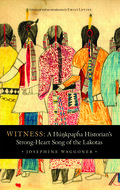
WaggonerEmily Levine is an independent scholar and the editor of Witness: A Húŋkpapȟa Historian’s Strong-Heart Song of the Lakotas.

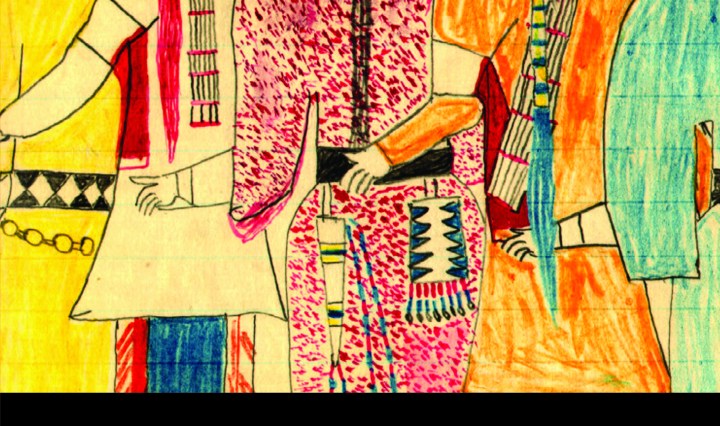
I am privileged and honored to be the editor of Josephine Waggoner’s monumental life’s work. What historian would say no to editing one of the few new Native manuscripts to come to light in recent decades? What historian would say no to bringing to publication the voluminous work of a Hunkpapa historian long unrecognized? What historian would say no to taking on this work when asked to do so by members of the woman’s family? Looking back, I am chagrined to say, this one. While I was pleased with my work on Waggoner’s collaboration with Susan Bettelyoun, published as With My Own Eyes: A Lakota Woman Tells Her People’s History (University of Nebraska Press, 1998), I was not ready to undertake another long-term project and had work of my own that I was interested in pursuing. I think I actually said no twice before I gave in and agreed to compile and edit this new manuscript material.

Would I have agreed if I’d known it would be a thirteen-year-long labor of love, consuming time and resources I often didn’t have? That it would take over my life and become a single-minded pursuit? I believe there is truth in what members of Josephine’s family have told me: that I was the one meant to do this work and that I cared enough to do it justice. Perhaps it helped that I am not an academic, that I could work without deadlines, that no promotion or tenure considerations were involved, and that I did not suffer the scrutiny of colleagues. My loyalty lay only with Josephine Waggoner, her family, and the Lakota people.

Continue reading “From the desk of Emily Levine”

The Marketeers Club: Goodreads

Clip-art-book_GoodreadsWhen I discovered Goodreads last summer I was intrigued. I hadn’t really thought about what the site was or how it could be used in terms of marketing books. My first thought was, “What a lovely site for book nerds to come together and talk about their favorite thing: books!”  

I have since become a Goodreads user, emphasis on the word “user.” I don’t write reviews and I don’t contribute to book discussions. I rate books and mark them “to-read” or “read” for my own personal enjoyment. I have just two “friends” on the site. I’m never critical of a book I “star” because I wouldn’t finish reading it if I didn’t enjoy it at least a little bit. My minimum score is three stars. I often agonize over the fact that you can’t rate a book with ½ stars. What if I think a book really deserves a ½ star more, but I don’t think it deserves five? It’s my one, really BIG complaint about Goodreads.

When Amazon bought Goodreads in May 2013, there was a lot of shock, concerns, and jokes. What would the acquisition mean for this trendy little book site? Would Amazon completely change the platform? Would people have to pay a subscription? Maybe more advertising would fill up your screen or worse, you’d have to sign into an Amazon account to use it! I think my favorite tweet  was:

@faitherinhicks: Amazon bought Goodreads? … that's gross. 😦

or

@FakeEditor: Amazon just bought Goodreads. And in other news, Barnes & Noble didn't.

In a recent interview with the Atlantic, Goodreads founders Otis and Elizabeth Chandler answered questions about the evolution of their online community and the backlash they incurred as a result of the Amazon purchase. Back in May, many users’ opinions were clouded by a strong dislike for Amazon and the theory that Amazon would take away crowdsourced reviews, along with everything else that could possibly be good about Goodreads. Another tweet:

@okgirl96: I don't view Amazon's acquisition of Goodreads as a positive. Inevitable, yes.

Continue reading “The Marketeers Club: Goodreads”

People Make Publishing: The Book Attachment

Rob Buchanan is the Sales Coordinator in Marketing and an experienced Twinkie chef.  It is almost impossible for me to get rid of a book. The first books I ever bought were paperbacks of the Belgariad series by David Eddings. I bought them when they were fairly new back in the late 1980s. I didn’t take care of my books back then like I do now, so they have seen a lot of wear and tear. I’m not sure they would survive another reading, so if I ever get the desire to read the series again, I will probably have to … Continue reading People Make Publishing: The Book Attachment

Doc Martyn’s Soul: Buzz Words

Buzz words abound in all businesses; certainly they have a prominent place in publishing. Some buzz words—content, metadata, discovery, analytics, for example—are perennial, always seeming to hover around the peripheries of publishing, creating a shadow, partly because of the weight they carry and partly because no one seems to know what to do with them. For years, ebooks has been a buzz word. You could choose an adjective at random and it would fit the relationship that publishers have had with the word ebooks: scary, exciting, innovative, repressive, paranoid, overwhelming, cash cow! Other words come and go more frequently. MOOCs … Continue reading Doc Martyn’s Soul: Buzz Words