Fifty Years: Remembering Medgar Evers
The following article by John R. Salter, Jr. first appeared in Against the Current, issue #165. John R. Salter, Jr. (Hunter
Gray) is a long-time activist, social justice community organizer, and radical
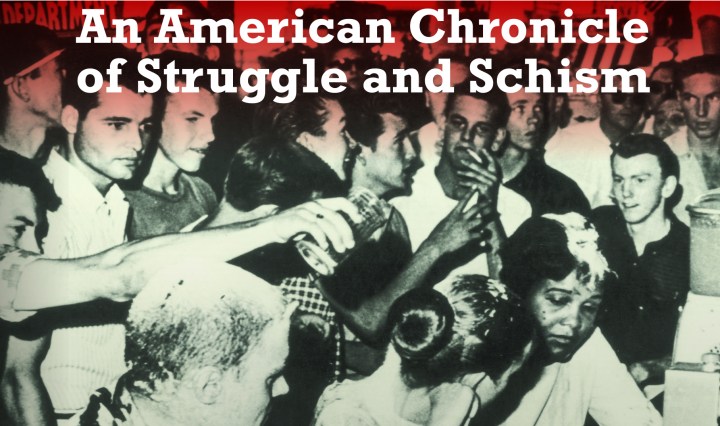
university professor who now lives in the mountains of Eastern Idaho. His book, Jackson Mississippi: An American Chronicle of Struggle
and Schism, is published by the University of Nebraska Press (2011). The Journal of Southern History called Salter’s book an “Essential reading. . . . A valuable account of events and insight into the internal dynamics of the [civil rights] movement.”
 Around 2 AM, September 1, 1961, my spouse Eldri and I crossed the
Mississippi River into the Magnolia State’s Closed Society. We were both in our
mid-20s. Married a few weeks before at Superior, Wisconsin, where I had done an
academic year of college teaching, we had come directly from my home town of
Flagstaff, Arizona. We were headed to private and all-Black Tougaloo Southern
Christian College, just north of Jackson, where a teaching position awaited me.
A sociologist, I also had a fair amount of grassroots organizing under my belt
and, before long, was to have much more.
At that point, the State
of Mississippi was very close to police state status. With its sanguinary
history, expanded and dominated by the post-1954 white Citizens’ Councils of
America (“State’s Rights and Racial Integrity”), it was a total and pervasive
segregationist complex, backed up by legions of white “lawmen” and
white vigilantes. African Americans, almost half the population, were kept
“down,” deprived of the right to vote or demonstrate, and mostly lived in
or close to poverty. Most whites either supported the system or remained
silent.
I came to know Medgar
Evers, Mississippi Field Secretary of the NAACP, very well from 1961 to his
death. Early after Eldri, and I arrived at Tougaloo, I was asked by an activist
student, Colia Liddell (later to become Colia Liddell Lafayette Clark), if I
would be the Advisor to the newly developed North Jackson Youth Council of the
NAACP. Very small at that point, it was the only youth council in Jackson and
environs. Of course, honored, I accepted. Not long thereafter, I become a
member of the board of directors of the Mississippi NAACP, and, still later, as
we entered a period of dramatic turbulence, chairman of the strategy committee
of the Jackson Movement. I worked with Medgar closely. And I always had
tremendous respect for him.
There was a significant
strain of Choctaw Indian in his family background. I, myself, am one-half
American Indian (Abenaki and Mohawk) — and that was only one of a number of
bonding factors that quickly developed between us.
Born in Newton County in
1925, he served in the European Theatre during the Second World War, was
educated at all-Black Alcorn A&M, and in 1954 became the first NAACP Field
Secretary in the history of the state. He wasn’t really an organizer; was sort
of a lone wolf who traveled lonely and mighty dangerous trails. He kept the few
dissidents that existed in the state together in little groups that did as much
as they felt they could do; persuaded people to attach their names to pioneer
civil rights lawsuits; investigated and tried to publicize the many atrocities
which occurred each week. And, on orders from the National Office, he sold
NAACP membership cards.
Medgar was a very stable,
very cool person. The only time that I ever saw him break down came in the Fall
of 1961, at an evening dinner session of the annual convention of the
Mississippi NAACP — in the “Negro” Masonic Temple on Jackson’s Lynch
Street. It was first time we had met him — and I was much impressed by his
cheerfulness and optimism. The police were parked outside and, inside, the
delegates from the scattered, and generally moribund NAACP units around the
state, had finished giving their reports.