Off the Shelf: Corkscrewed by Robert V. Camuto

Corkscrewed cover image New in paperback, read from the Introduction to Corkscrewed: Adventures in the New French Wine Country by Robert V. Camuto:

"It was a perfect day to lose faith in wine. By midmorning on June 21, 2005, the heat and humidity were conspiring to make it another in a series of stifling hot days in Bordeaux. I’d set out from Saint-Émilion in my tiny Citroën rental car—windows rolled down to make up for the lack of air conditioning—en route to Vinexpo, the world’s largest wine convention held once every two years in the sprawling convention site north of the city.

Continue reading “Off the Shelf: Corkscrewed by Robert V. Camuto”

BookExpo America Photos

UNP staff returned to the office this week with photos from last week's BookExpo America. Check out our facebook page for even more photos. Attendees head into the BookExpo Exhibit Hall at the Jacob K. Javits Convention Center in New York City.  Sue Resnick signs copies of her new book, Goodbye Wifes and Daughters, the story of the 1943 mining disaster in Bearcreek, Montana. Steve Steinberg, co-author of 1921: The Yankees, the Giants, and the Battle for Baseball Supremacy in New York, signs his new book during an autographing session. A view of the UNP booth. BookExpo America is a great place for … Continue reading BookExpo America Photos

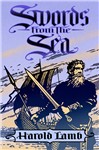
Off the Shelf: Swords from the Sea by Harold Lamb

Swords from the Sea cover image Read the beginning of the Introduction from Swords from the Sea by Harold Lamb, edited by Howard Andrew Jones, Introduction by S. M. Stirling:

"One thing we tend to forget about the pulps was how many of them there were, and how much was written for them. The science-fiction and fantasy segments and the superhero pulps remain freshest in memory, because they were at the root of traditions that have continued and flourished ever since; and the Western, if not in such condition, is not forgotten. But in fact, the adventure pulps contained dozens of distinct subgenres: Western, Oriental, Detective, South Seas, any number of historical types such as the pirate story or the tale of the Crusades. And miscegenation in plenty—tales of detectives having adventures in Chinatown, for example, or of super-science set among Tibetan mahatmas (the last a specialty of Talbot Mundy, a contemporary of Lamb’s), or psychic Chinese detectives involving “spicy” tales of white slavery.

Continue reading “Off the Shelf: Swords from the Sea by Harold Lamb”

UNP at BEA: A preview

Book Expo America begins in a few hours, and the University of Nebraska Press will be there (booth 3733, if you're interested). Stop by our booth for a sneak peek at our fall season, for freebie titles (numbers are limited, so stop by soon) of forthcoming books, and to meet the UNP marketing department.

Tomorrow,  two of our authors, Sue Resnick of Goodbye Wifes and Daughters, and Steve Steinberg of 1921, will sign copies of their books. Steve's signing will be from 10 to 10:30 a.m., and Sue's will run from noon to 12:30.

We'll be posting updates and stopping back by periodically throughout BEA. In the meantime, here's an interview with the authors of 1921 — a title rich in New York history, which is fitting, as BEA is in New York:

How did this book come about?

Lyle

I’d written a couple of books on Yankee history, and I
had it in the back of my mind to write one on the 1921 Yanks winning their
first pennant. My memory gets a bit hazy there, but I remember casually
mentioning it to Steve about five years ago. I knew Steve was a Yankee
historian. A year or so later at a Society for American Baseball Research
(SABR) convention, I think it was Toronto in 2005, Steve asked me if I was
working on the ’21 Yankees book. He said he was thinking of doing one, but if I
was doing it, he would move on to something else. I said I really hadn’t done
anything on it, and if he had started researching it then he should go ahead
and write the book. I’m not sure who suggested we work on it together and
expand it to include the Giants, but we both agreed that would make a much
better book.


Steve

I had done a number of articles on the Yankees of this
era, inc. the 1922 and 1926 pennant races, but not ’21. I was puzzled that—with
all the baseball books written on seasons-no one had done one on 1921. I recall
joking with Lyle at a couple of SABR conventions, as we graciously went back
and forth: “You should do the book on the ’21 Yankees,” and “No, you do it.” In
the meantime, neither of us jumped on it, and I became concerned someone else
would run with it. At some point I recall looking closely at the National
League race of that year and realizing that the pennant race there was as
dramatic as that of the American League. If we would combine our efforts on the
book, we’d have the time and resources to do justice to the entire 1921 season
and both pennant races.

Continue reading “UNP at BEA: A preview”

Off the Shelf: Nature’s Aristocracy by Jennie Collins

Read from the Editor's Introduction to Nature's Aristocracy: A Plea for the Oppressed by Jennie Collins, edited and with an introduction by Judith A. Ranta: "Jennie Collins wrote Nature’s Aristocracy; or, Battles and Wounds in Time of Peace: A Plea for the Oppressed at a time when questions about the meaning of work and about relations between labor and capital were being passionately debated. During the headlong postbellum expansion of American industry, people struggled to understand the changing workplace. One journalist wrote in 1869, “It is becoming more and more plain, and being more and more freely admitted, that this … Continue reading Off the Shelf: Nature’s Aristocracy by Jennie Collins

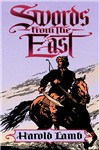
Off the Shelf: Swords from the East by Harold Lamb

Swords from the East cover image Read from the Foreword to Swords from the East by Harold Lamb, edited by Howard Andrew Jones:

"Harold Lamb wrote that he’d found something “gorgeous and new” when he discovered chronicles of Asian history in the libraries of Columbia University. He remained fascinated with the East thereafter, which is evident from his first stories of western adventurers in Asia to the last book published before his death in 1962, Babur the Tiger. All of his popular fiction is anchored in Asia, whether it be the cycle of Khlit the Cossack, descended from the Tatar hero Kaidu, or Durandal’s Sir Hugh of Taranto, who travels into Asia during the conquests of Genghis Khan, or even the adventures of Genghis Khan himself, as related in “The Three Palladins” in this volume.

Continue reading “Off the Shelf: Swords from the East by Harold Lamb”

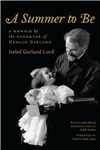
Off the Shelf: A Summer to Be by Isabel Garland Lord

A Summer to Be Cover image Read the beginning of the Introduction from A Summer to Be: A Memoir by the Daughter of Hamlin Garland by Isabel Garland Lord, edited and with an introduction by Keith Newlin:

"Readers who come to A Summer to Be because of an interest in Hamlin Garland will discover a fascinating side of the writer that he never revealed in his eight volumes of autobiography—the intensely-loving, domineering father whose deep love for his eldest daughter led him to change the trajectory of his career even as that love impeded his daughter's independence. Garland was ill equipped by temperament for marriage and fatherhood, to which he came late, marrying in 1899 at age thirty-nine. He had spent his adulthood in almost incessant travel as he fulfilled lecture engagements and indulged his own wanderlust by exploring the West, by visiting the goldfields in the Yukon, and by journeying to England to meet the authors with whom he had been corresponding. As he entered his fourth decade, he found it difficult to break his solitary habits and enter the inevitable compromises of marriage and family life. Though he was a devoted father who spared no effort to ease the passage into adulthood of his two daughters, Mary Isabel, born in 1903, and Constance, born in 1907, his fatherly guidance was as often overbearing as it was loving—as Isabel (who dropped her first name in her late teens) amply illustrates in her memoir.

Continue reading “Off the Shelf: A Summer to Be by Isabel Garland Lord”

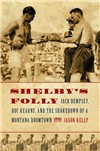
Off the Shelf: Shelby’s Folly by Jason Kelly

Shelby's Folly cover image Read the beginning of Chapter 1, "High Noon in Shelby", from Shelby's Folly: Jack Dempsey, Doc Kearns, and the Shakedown of a Montana Boomtown by Jason Kelly:

"Dust kicked up around Shelby, Montana, at dawn on July 4, 1923, as thousands of people started venturing into the streets. From cots in overcrowded hotel lobbies, sleeping cars on railroad sidings, and campsites along the Marias River, boxing fans awakened to a holiday festival before the heavyweight championship fight between Jack Dempsey and Tommy Gibbons. Still more arrived by train and car, clogging the town that had hoped for many more free-spending tourists despite having no place to put them.

Continue reading “Off the Shelf: Shelby’s Folly by Jason Kelly”

Apollo 13

The 15th anniversary edition of Apollo 13 (the movie) was released this week on DVD. The movie, which was nominated for nine Oscars and won two, retraces the 1970 Apollo 13 mission, which was to be relatively routine space flight until an explosion on the shuttle derailed plans for a lunar landing and placed the entire crew in danger. So if you’re among those who buy/rent/Netflix this movie over the weekend and then find yourself wanting to learn more, you’re in luck. Footprints in the Dust, which is a brand new title from the University of Nebraska Press that chronicles the entire Apollo … Continue reading Apollo 13

Off the Shelf: In the School of War by Roger J. Spiller

SpillerRead from the introduction to In the School of War by Roger J. Spiller:

"After artillery deploys for battle, arranges itself into batteries, a commander usually orders a ranging shot, a round or two meant to estimate how far his guns will reach. Or so it was before modern science intervened. Although we don’t know for sure, someone among Henry V’s archers at Agincourt—masters of the lethal, indirect firepower that would turn that day in his favor—must have fired such a shot, adding one more tactical detail to the King’s picture of the field where he and his men were about to fight. Centuries later, Robert E. Lee reserved to himself the order for the first shot as he looked over the open fields at Fredericksburg and General Burnside’s Grand Divisions forming for their attack. In those days, after throwing a few cannonballs in the enemy’s direction, a commander could see for himself just when the enemy’s advancing troops might fall under the shadow of his imaginary artillery fan. Then he could decide whether to open up his artillery to spoil the attack or, waiting longer, to kill it outright—the “it” being hundreds or even thousands of other human beings.

Continue reading “Off the Shelf: In the School of War by Roger J. Spiller”