The NCAA Basketball Tournament is almost here! In between watching games and creating brackets, here are some slam dunk books to read during March Madness. Our selection includes a guide to understanding basketball statistics and their history, a tale of underdogs upsetting the basketball status quo, and so much more.
Life in the G
ALEX SQUADRON
Welcome to the G League—the official minor league of the National Basketball Association. Life in the G is about the arduous quest to achieve an improbable goal: making it to the NBA. Zeroing in on the Birmingham Squadron and four of its players—Jared Harper, Joe Young, Zylan Cheatham, and Malcolm Hill—Alex Squadron details the pursuit of a dream in what turned out to be the most remarkable season in the history of minor league sports.

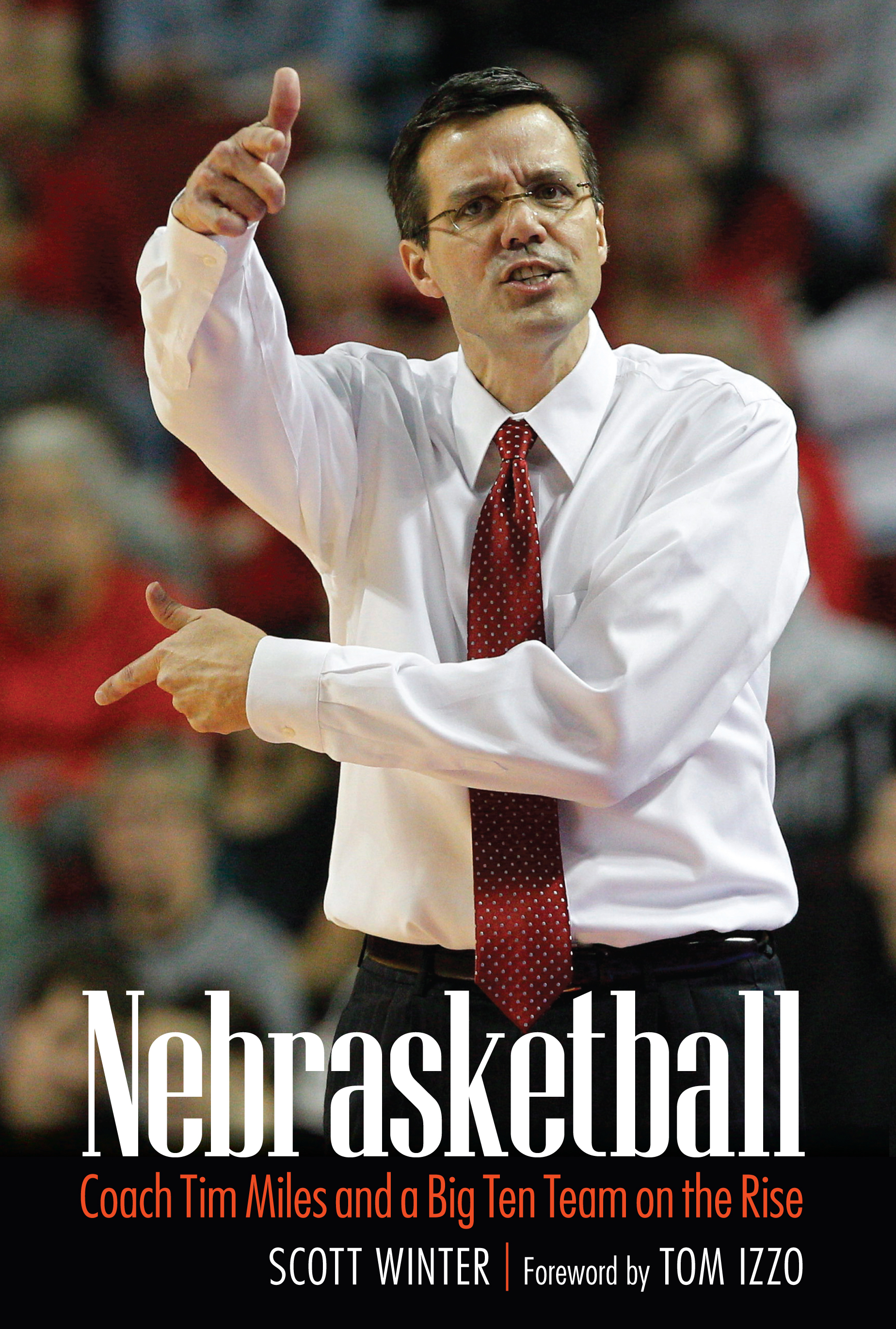
Nebrasketball
SCOTT WINTER
Nebrasketball provides a full-access account of Tim Miles’s path to Nebraska and his team’s inaugural season in the $186 million Pinnacle Bank Arena. With full access to Miles and the team, Scott Winter provides basketball fans with an intimate look at a rising star in college basketball, detailing what it’s like to coach an NCAA men’s program today with all of its triumphs and struggles, along with Miles’s larger story as a transformational coach who has made Nebraska basketball, and other college programs, relevant.
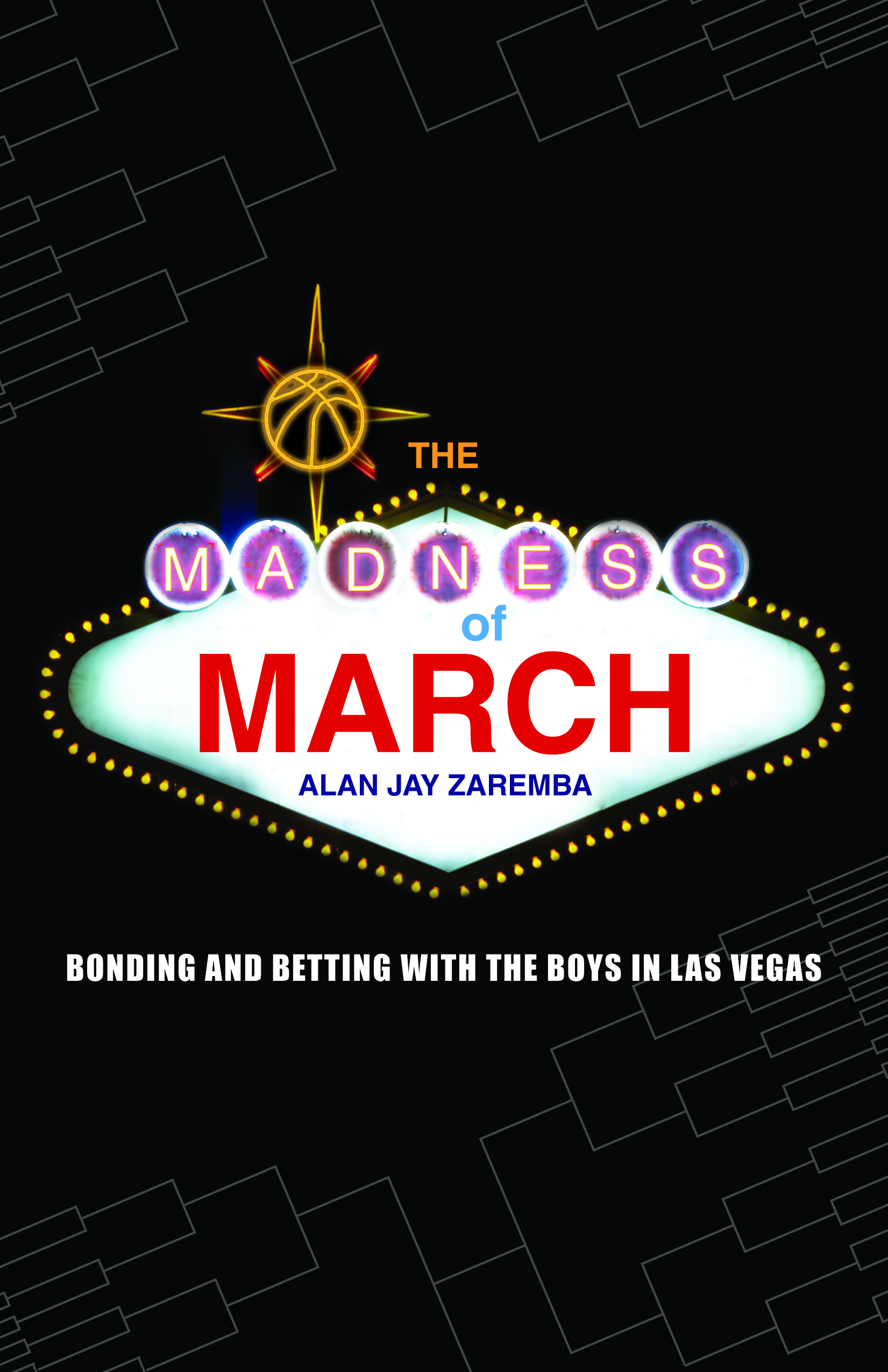
The Madness of March
ALAN JAY ZAREMBA
Alternating between humorous accounts of gamblers’ exploits and cultural theories on sports in society, Zaremba provides an engaging analysis of the sporting ritual that such gambling has become. With forays into the history of the tournament, the background of sports betting, and a little betting of his own, Zaremba raises the question of whether this subculture of March Madness is a blessing or a curse—and what, finally, it all means.
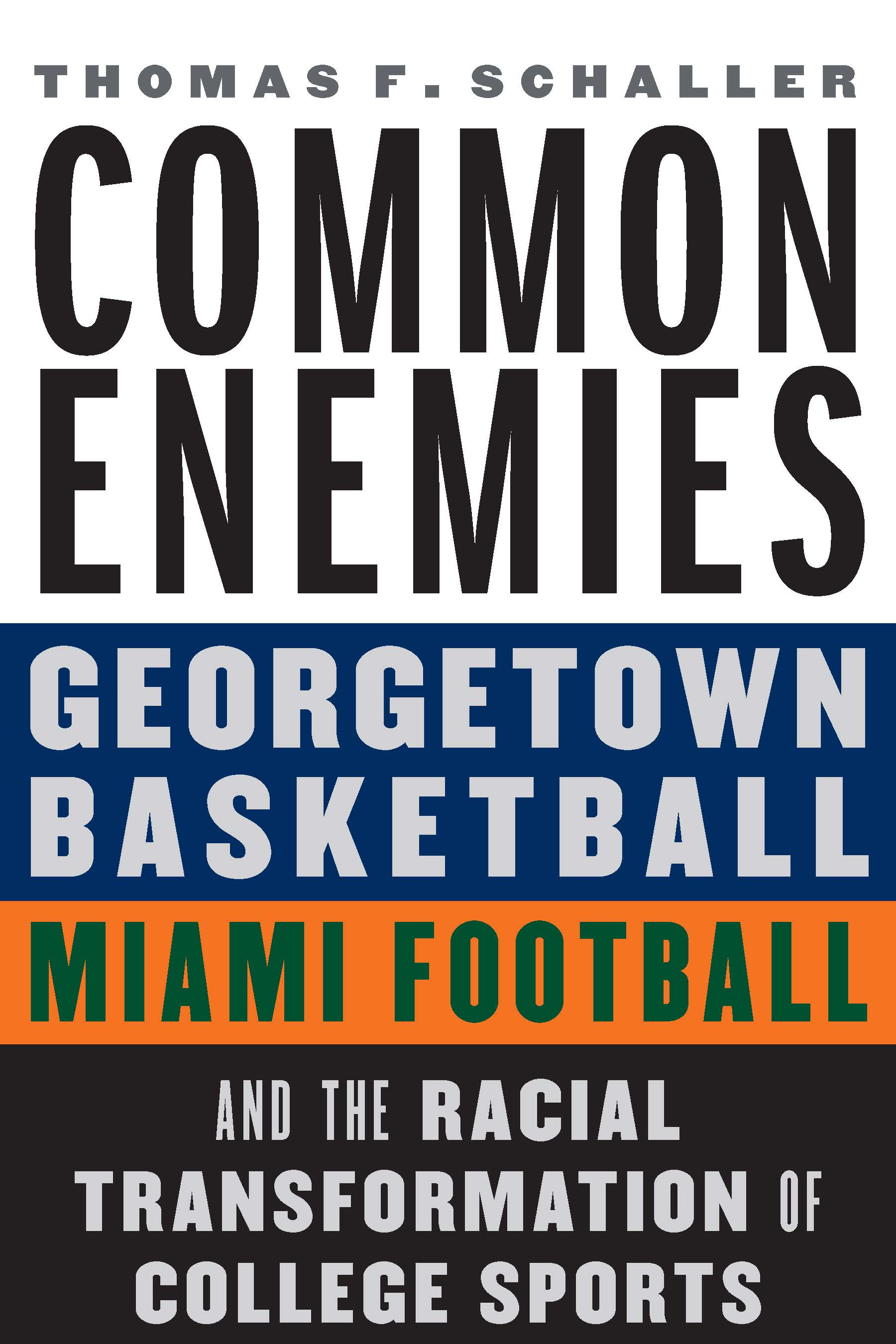
Common Enemies
THOMAS F. SCHALLER
During the 1980s Black athletes and other athletes of color broadened the popularity and profitability of major-college televised sports by infusing games with a “Black style” of play. At a moment ripe for a revolution in men’s college basketball and football, clashes between “good guy” white protagonists and bombastic “bad boy” Black antagonists attracted new fans and spectators. And no two teams in the 1980s welcomed the enemy’s role more than Georgetown Hoya basketball and Miami Hurricane football.
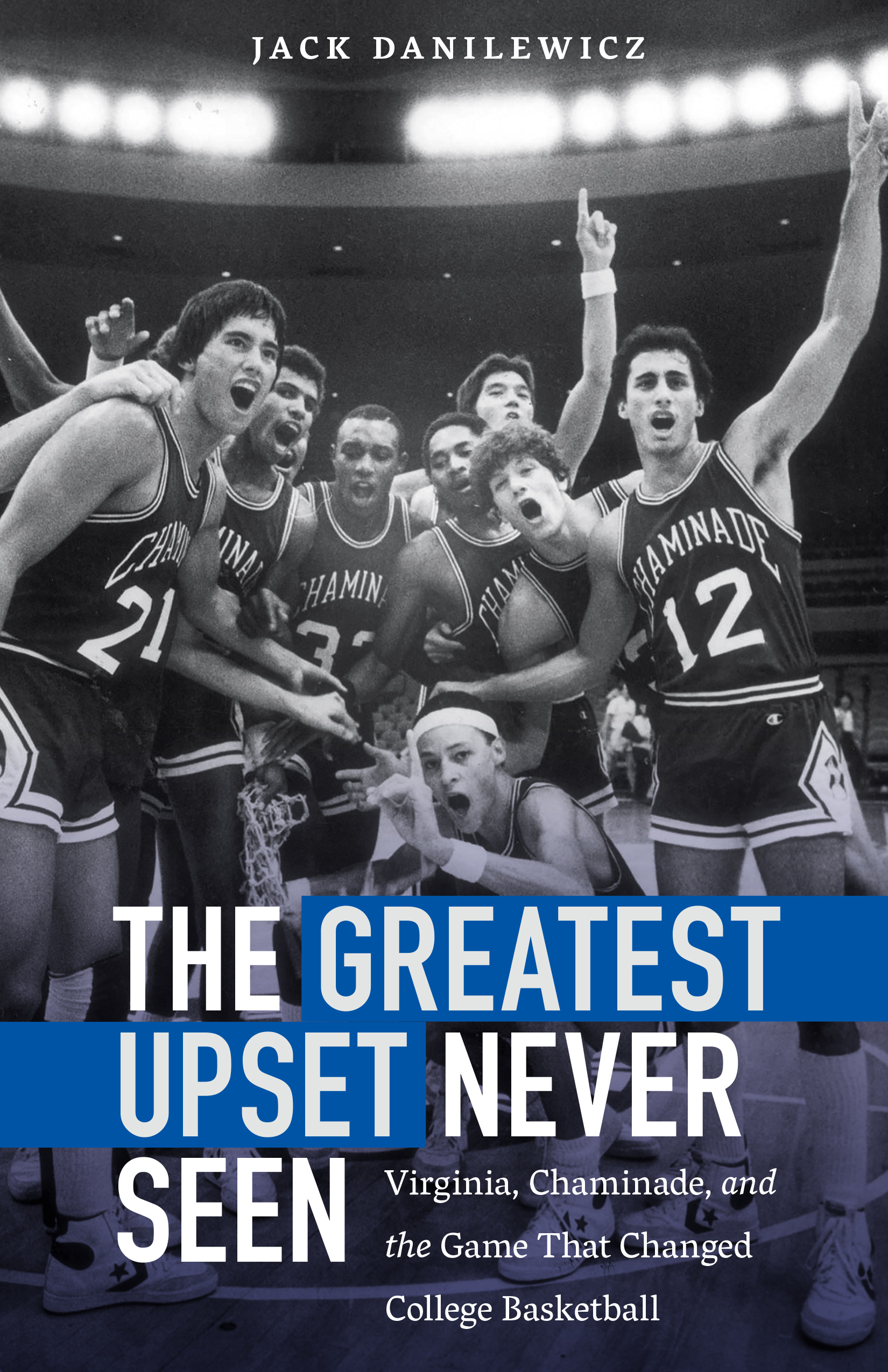
The Greatest Upset Never Seen
JACK DANILEWICZ
No one had really heard of Chaminade University—a tiny NAIA Catholic school in Honolulu with fewer than eight hundred undergraduates—until its basketball game against the University of Virginia on December 23, 1982. The Chaminade Silverswords defeated the Cavaliers, then the Division I, No. 1–ranked team in the nation, in what the Washington Post later called “the biggest upset in the history of college basketball.” Virginia was the most heralded team in the country, led by seven‑foot‑four‑inch, three‑time College Basketball Player of the Year Ralph Sampson. The Greatest Upset Never Seen relives the 1982–83 season, when Chaminade put small‑college basketball and Hawaii on the national sports map.
The Chosen Game
CHARLEY ROSEN
A few years after its invention by James Naismith, basketball became the primary sport in the crowded streets of the Jewish neighborhood on New York’s Lower East Side. Participating in the new game was a quick and enjoyable way to become Americanized. Jews not only dominated the sport for the next fifty‑plus years but were also instrumental in modernizing the game. Through interviews and lively anecdotes from franchise owners, coaches, players, and referees, The Chosen Game explores the contribution of Jews to the evolution of present-day pro basketball.

The Rebounders
AMANDA OTTAWAY
Unlike the stories of most visible Division I college athletes, Amanda Ottaway’s story has more in common with those of the 80 percent of college athletes who are never seen on TV. The Rebounders follows the college career of an average NCAA Division I women’s basketball player in the twenty-first century, beginning with the recruiting process when Ottaway is an eager, naive teenager and ending when she’s a more contemplative twentysomething alumna.

Numbers Don’t Lie
YAGO COLÁS
A typical NBA game can yield approximately 2,800 statistical events in thirty-two different categories. In Numbers Don’t Lie Yago Colás started with a simple question: How did basketball analytics get from counting one stat, the final score, to counting thousands? He discovered that what we call “basketball”—rules, equipment, fundamental skills, techniques, tactics, strategies—has changed dramatically since its invention and today encompasses many different forms of play, from backyards and rec leagues to the NBA Finals.

Boston Ball
CLAYTON TRUTOR
Boston Ball charts how a trio of coaches, seemingly out of nowhere, started a basketball revolution: Pitino at Boston University, Calhoun at Northeastern University, and Williams at Boston College. Toiling in relative obscurity, they ignited a renaissance of the “city game,” a style of play built on fast-breaking up-tempo offense, pressure defense, and board crashing. Part of a fraternity of great coaches—including Mike Jarvis, Kevin Mackey, and Tom Davis—they unknowingly invented Boston Ball, a simultaneously old and new path to the top of college basketball.

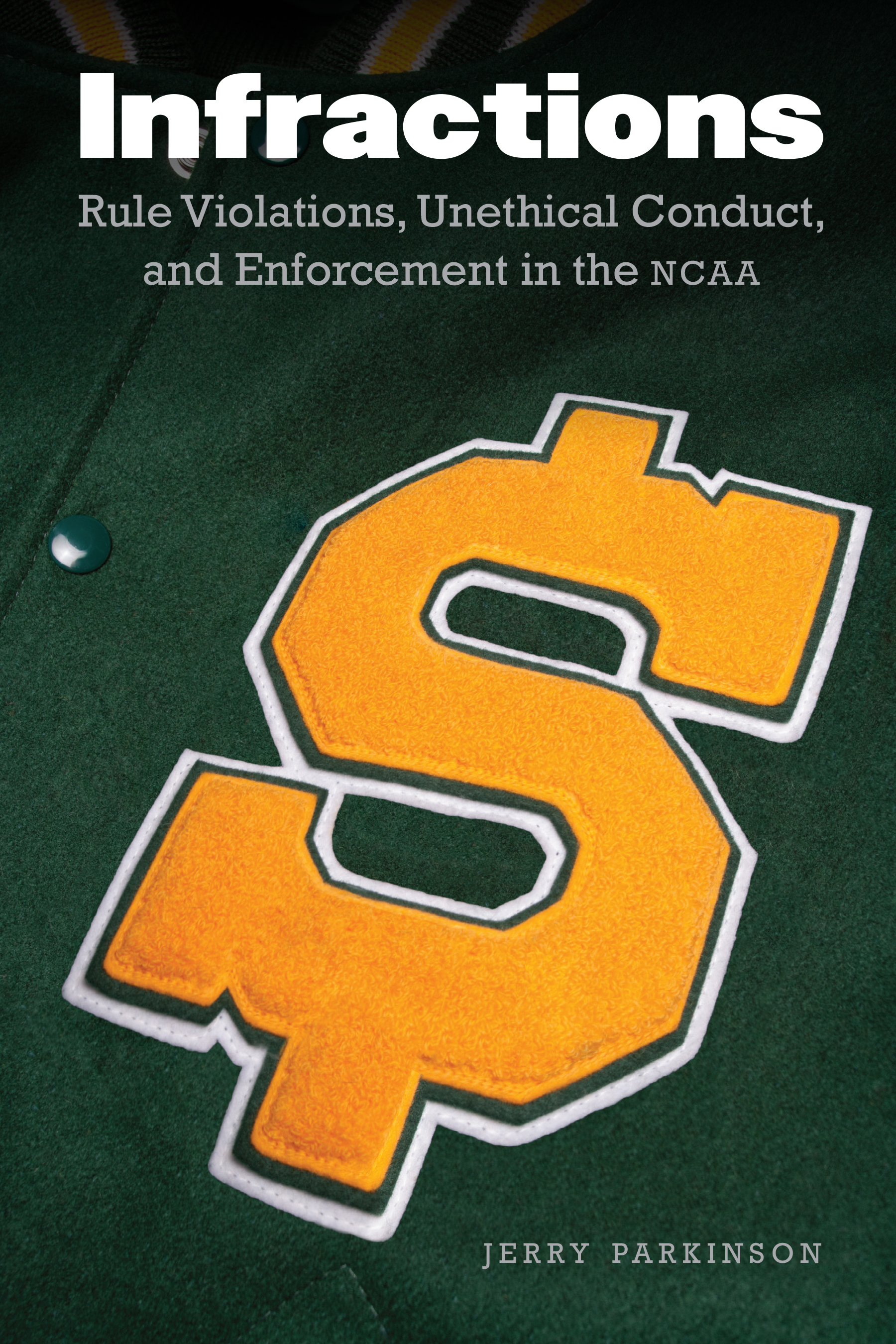
Infractions
JERRY PARKINSON
Jerry Parkinson spent nearly ten years, from 2000 to 2010, as a member of the NCAA’s Division I Committee on Infractions, participating in over one hundred major infractions cases. He came away from that experience—and the experience of reading extensive commentary on infractions cases—with the conviction that most observers do not understand the NCAA’s rules-enforcement process, despite the amount of public attention many major cases receive. Parkinson uses his insider’s perspective, along with illustrative stories, to help readers understand how the NCAA’s rules-enforcement process really works.
For further reading, check out our Basketball Reading List or our Sports, Media, and Society series.

